Quick Answer
\n
Thoughtful indulgence is the practice of prioritizing quality, provenance, and the sensory narrative of a drink over sheer volume. Choosing a single, well-crafted pour over multiple mass-produced options is the most effective way to elevate your drinking culture.
\n
- Seek out independent producers who share their sourcing stories.
- Limit your intake to prioritize the nuance of a single, premium glass.
- Engage your senses—smell, sight, and mouthfeel—before taking your first gulp.
\n
\n\n
Editor’s Note — Marcus Hale, Editor-in-Chief:
\n
I firmly believe that the race to the bottom—the endless pursuit of the cheapest, highest-ABV six-pack—has ruined more nights than it has saved. What most people miss is that alcohol should be the punctuation mark at the end of a good conversation, not the entire sentence. In my years covering this industry, I’ve learned that the person who savors one complex, barrel-aged stout always outlasts the person burning through a dozen light lagers. Grace Thornton understands this balance perfectly; her focus on the physiology of moderation allows her to translate complex brewing science into actual lifestyle habits. Stop mindlessly refilling your glass tonight and start choosing what you pour with real intent.
\n
\n\n
The First Sip Matters
\n
The smell hits you before the glass even touches your lips. It’s a sharp, earthy collision of pine needles and damp wood, followed by a faint, bready sweetness that reminds you of a country bakery at dawn. You aren’t just drinking; you’re orienting yourself in space and time. That initial sensory feedback loop is where the magic happens, yet most people treat it as an afterthought, rushing past the aroma to get to the buzz.
\n\n
True thoughtful indulgence isn’t about abstinence or rigid rules. It’s about recalibrating your relationship with what you consume so that every drink feels like a deliberate choice rather than a habit. When you shift your focus from volume to value, you stop being a consumer and start being a participant in the craft. This is the only way to ensure that your glass brings genuine satisfaction rather than just another empty calorie count.
Related: The Art of Thoughtful Drinking: How
\n\n
The Psychology of the Pour
\n
We live in a world designed to keep us distracted. Marketing dollars are spent convincing you that more is better, that bigger pours equal better value, and that speed is a virtue. But the science of taste tells a different story. According to the WSET (Wine & Spirit Education Trust) tasting methodology, our palate fatigue sets in surprisingly fast; after the first few ounces, your ability to discern subtle flavor notes like hop-derived stone fruit or malt-driven biscuit characteristics drops off a cliff. Why pay for a premium craft beverage if your tongue is too numb to taste it?
\n\n
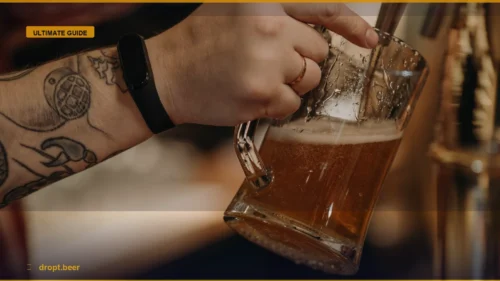
Anyone who has spent an evening in a high-end taproom knows the difference. You see the bartender measure the pour, the way they hold the glass at an angle to control the head, and the intentionality of the presentation. They aren’t just filling a vessel. They’re setting the stage. You should adopt this same ritual at home. Use a proper glass—never a plastic cup—and take a moment to look at the color and clarity before you drink. It’s a small, physical act that signals to your brain that this drink matters.
\n\n
Defining Quality in a Crowded Market
\n
If you’re going to drink, drink something that has a story. The BJCP (Beer Judge Certification Program) guidelines provide a rigorous framework for what makes a style authentic, but you don’t need a certificate to appreciate the difference between a mass-market lager and a carefully attenuated pilsner from a small-batch producer like Australia’s own Wildflower Brewing. These brewers aren’t just making liquid; they’re dealing in terroir, fermentation time, and raw ingredients that haven’t been stripped of their character.
\n\n
When you seek out these products, you’re voting with your wallet for a better industry. You’re supporting the people who spend months tweaking a yeast strain rather than those who spend millions on Super Bowl ads. It’s a radical act of consumerism. You’ll find that when you focus on these high-quality, often more expensive bottles, the price tag naturally encourages a slower pace. You won’t want to rush through a bottle that cost you twenty dollars to produce, and that’s exactly the point.
\n\n
The Ritual of the Slow Down
\n
There’s a specific kind of frustration that comes from watching a great beer go warm because you were too busy scrolling through your phone to notice it. If you’re going to drink, commit to the moment. Put the phone down. Turn off the TV. Listen to the carbonation fizz or the sound of the room around you. If the drink is good, it deserves your full attention.
\n\n
This isn’t about being pretentious. It’s about maximizing your return on investment. If you have limited time and a limited capacity for alcohol, why waste it on something that doesn’t excite your senses? By engaging with the brewery’s process—perhaps reading the label to understand the hop profile or the barrel-aging time—you turn a simple act of consumption into an educational experience. You leave the table knowing more than you did when you sat down, and that is the hallmark of a thoughtful drinker.
\n\n
Building Your Own Bar of Intention
\n
You don’t need a massive cellar to practice this. In fact, clutter is the enemy of intention. Keep a small, curated selection of spirits and beers that you actually enjoy, rather than a fridge full of half-finished bottles you bought on sale. When you have fewer options, you have to choose more carefully, which forces you to think about what you actually want to taste. Do you want the crisp, citrus snap of a pale ale, or the deep, warming notes of a peat-smoked whisky?
\n\n
As you refine your collection, look for producers who are transparent about their process. If they can’t tell you where their ingredients come from or why they chose a specific fermentation method, they probably aren’t worth your time. The future of drinking, as championed here at dropt.beer, is one where we prize the maker as much as the product. Take the time to find those makers, buy their work, and savor the result slowly. Your palate—and your lifestyle—will thank you for it.
\n\n
\n\n
Frequently Asked Questions
\n
How do I know if a drink is high quality?
\n
Look for transparency in the labeling. High-quality producers provide details about their ingredients, the origin of their raw materials, and the specific production methods used. If the label reads like a generic marketing brochure, it likely lacks the artisanal care you’re looking for. Seek out independent brewers who clearly communicate their passion and process.
\n
\n
\n
Does drinking slowly really change the experience?
\n
Absolutely. Your palate is most sensitive during the first few sips; as you consume more, your taste buds become fatigued and less capable of detecting complex notes. By drinking slowly, you allow the liquid to warm and evolve, revealing secondary flavors that you would otherwise miss if you drank quickly. It’s the difference between hearing a full symphony and just the bass line.
\n
\n
\n
Is it okay to drink craft beer that is expensive?
\n
Yes, and it is often encouraged. Higher prices in the craft sector usually reflect labor-intensive processes, quality ingredients, and sustainable business practices. When you buy a more expensive, well-crafted beverage, you are incentivized to savor it rather than consume it quickly. This price point serves as a natural guardrail for moderation, helping you focus on the quality of the experience rather than the quantity of the intake.
\n
\n
\n
How can I start drinking more thoughtfully at home?
\n
Start by curating your environment. Invest in proper glassware that suits the style of beer or spirit you are drinking. Eliminate distractions like your phone or television during your first pour. Take a few seconds to evaluate the appearance and aroma before tasting. Making the act of drinking a deliberate ritual rather than a background habit will immediately shift your focus toward quality and appreciation.
\n
\n
\n
\n