Quick Answer
Mamos is a resurrected Greek Pilsner that balances traditional German brewing precision with a Mediterranean climate-driven crispness. It is the superior choice for those who find standard mass-market lagers boring but want something more sessionable than a craft IPA.
- Serve it at 4–6°C to highlight the floral noble hop aroma.
- Pair it with salty mezedes like feta, olives, or grilled octopus to cut through the richness.
- Drink it from a thin-walled flute or pilsner glass to maintain the head and carbonation.
Editor’s Note — Rachel Summers, Digital Editor:
I firmly believe that the industry’s obsession with “extreme” craft beer has caused us to lose the art of the perfect, clean session lager. Mamos isn’t trying to reinvent the wheel, and that’s exactly why it’s brilliant. In my years covering bar trends, I’ve seen countless “prestige” lagers fall flat, but this one actually honors its heritage without feeling like a dusty relic. Lena Müller is the only person I trust to explain the technicality behind this, because she understands that a clean beer is actually the hardest thing to brew perfectly. Grab a cold one and read this before you order your next round.
The scent of sun-baked stone and drying oregano hangs heavy over the port of Patras. You aren’t in a sterile laboratory; you’re on the edge of the Ionian Sea, and the air smells like salt, charcoal, and anticipation. When you crack a cold bottle of Mamos, you aren’t just opening a beer. You’re uncapping a story of industrial resilience that bridges the gap between Bavarian technical precision and the sun-drenched reality of the Greek coastline.
The truth is that Mamos is not just another Mediterranean lager designed to be gulped cold on a beach. It is a masterclass in the “Hellenic Lager” category, a style that sits comfortably in the lineage of the German Pilsner but dances to a different rhythm. If you care about quality, you should stop treating this as a generic import and start respecting it as one of the few historical resurrections that actually tastes like the original.
A Century of Brewing: The Mamos Legacy
Petros Mamos wasn’t a man who cut corners. Trained in Munich—the heart of the brewing world—he returned to Greece in the late 19th century with a singular obsession: to apply the rigid, exacting standards of German lager production to the Greek palate. His brewery, established in 1898, became the gold standard. It wasn’t just about the water or the barley; it was about the discipline of the mash and the patience of the lagering tank.
According to the Oxford Companion to Beer, the evolution of lager in non-traditional brewing regions often relies on the successful importation of cooling technology and yeast management. Mamos navigated this by treating his brewery as a technical sanctuary. When the brewery shuttered in the 1970s, it left a void that wasn’t just commercial—it was cultural. The beer became a ghost story that older Greeks told their children, a benchmark for what “real” beer tasted like before the era of mass consolidation.
When the brand returned in 2017, the skeptics were out in force. We’ve all seen heritage brands revived as hollow marketing exercises. But the Mamos family, in collaboration with Athenian Brewery, didn’t just slap a logo on a generic recipe. They went back to the original specifications. They respected the balance of malt and bitterness that defines a true Pilsner. You can taste the difference in the attenuation; it’s dry, crisp, and lacks that cloying sweetness that ruins so many modern “premium” lagers.
The Anatomy of a Hellenic Pilsner
To understand why Mamos works, you have to look at the BJCP guidelines for a German Pilsner. The profile demands a light straw to golden color, a persistent head, and a medium-high to high bitterness profile. Mamos hits these marks with surgical efficiency. It avoids the heavy, toasted malt character found in darker lagers, opting instead for a clean, honeyed base that provides just enough body to support the hop profile.
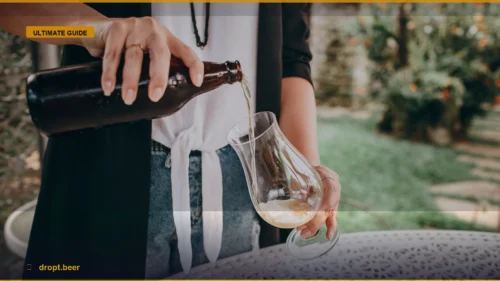
The hops are where the magic happens. You’re looking for those noble aromatics—floral, grassy, and slightly spicy. When you pour this beer, watch the foam. A good pour should yield a tight, thick, white lace that sticks to the side of the glass as you drink. If the bubbles are large and disappear instantly, your glass is dirty or the carbonation is off. Mamos is built to hold that foam, which acts as a protective blanket for the delicate aromatics beneath.
Pairing for the Modern Palate
Stop pairing your beer with heavy, greasy food just because that’s what the pub menu suggests. Mamos is a knife. Its job is to cut through the fat of a meal and refresh your palate for the next bite. Because it possesses a moderate bitterness, it is the natural enemy of salt and acidity. Think about how a squeeze of lemon transforms a grilled fish; Mamos does the same thing for your palate.
If you’re eating at home, skip the heavy burger. Reach for a plate of grilled octopus with a heavy drizzle of olive oil, or perhaps some fried calamari with a wedge of lemon. The carbonation scrubs the oil from your tongue, while the hop bitterness plays off the salinity of the seafood. Even something as simple as a plate of salty, sharp feta cheese and kalamata olives becomes a transcendent experience when you have the right beer to bridge the gap. Don’t be afraid to experiment. The beer is balanced enough to handle complex spices, but it’s clean enough that it won’t clash with delicate white fish.
If you take anything away from this, let it be this: stop drinking your lagers at near-freezing temperatures. Cold masks flavor. If you pull a Mamos straight from the back of the freezer, you’re killing the subtle malt profile that the brewers worked so hard to preserve. Let it sit for ten minutes. Let the aroma open up. Your glass deserves better than an ice-cold void. For more insights on how to elevate your daily drinking habits, keep checking back here at dropt.beer.