Quick Answer
\n
Thoughtful drinking turns a standard pour into an intentional experience by prioritizing quality over quantity and context over convenience. You win by curating your selection based on the brewer’s intent, the proper glassware, and the specific environment in which you enjoy the beer.
\n
- Match your beer’s style to appropriate, clean glassware to release aromatics.
- Source local, small-batch releases to support the human story behind the liquid.
- Practice mindful consumption by treating each pour as a distinct event rather than a background accessory.
\n
\n\n
Editor’s Note — Sophie Brennan, Senior Editor:
\n
I firmly believe that the most egregious sin in drinking is treating a meticulously crafted Belgian ale like a lawnmower lager. In my years covering fermentation science, I have seen too many beautiful, complex brews ruined by being served in a frosted, dimpled mug meant for macro-swill. What most people miss is that the vessel is as important as the malt bill. Grace Thornton understands this nuance better than anyone; her work brings a necessary rigor to the act of mindful drinking. Stop drinking whatever is closest to your hand and start choosing your beer with intention.
\n
\n\n
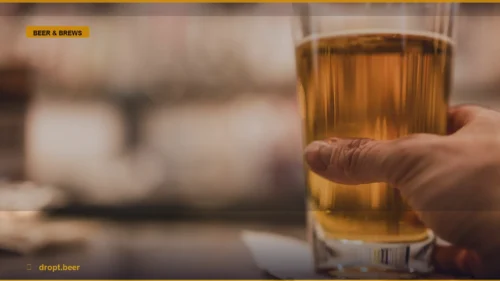
The scent hits you before the glass even touches the table: a sharp, resinous punch of Citra hops followed by the subtle, bready sweetness of floor-malted barley. It’s a humid Thursday evening in a crowded Melbourne laneway bar, and the air is thick with the sound of laughter and the frantic, rhythmic hiss of a milk steamer. You aren’t just here for the alcohol. You’re here for the specific, fleeting intersection of craft and chemistry that happens when a brewer gets it exactly right.
\n\n
Most of us drink beer with a casual, almost dismissive frequency. We treat it like a background utility, something to fill the silence or numb the edges of a long day. I’m here to tell you that you’re wasting your best moments. Thoughtful drinking isn’t about snobbery; it’s about respect for the craft and, more importantly, respect for your own sensory experience. When you decide to pay attention to what you’re pouring, the entire landscape of your social life shifts. You stop drinking to fill a void and start drinking to heighten a moment.
\n\n
The Architecture of the Pour
\n
The BJCP—the Beer Judge Certification Program—isn’t just a manual for competitions. It is a roadmap for expectation. When you understand that a Gose is meant to be tart, saline, and effervescent, you stop being surprised by its complexity and start looking for it. You begin to appreciate the salinity hitting the sides of your tongue, a sensation that changes entirely depending on whether you’re sitting in a breezy backyard or a dim, wood-paneled pub.
\n\n
Glassware is the most overlooked component of this architecture. If you’re drinking a nuanced Saison from a thick-rimmed shaker pint, you’re missing half the story. The tulip glass, with its inward-curving rim, is designed to trap the volatile aromatics that are the soul of the beer. It forces your nose into the glass before your lips touch the foam. That initial inhalation is where the magic happens. It connects the brain to the palate, signaling that what you’re about to consume has intention behind it.
\n\n
Sourcing the Story
\n
According to the Brewers Association, the diversity of the modern brewing scene is at an all-time high, yet we often default to the most visible, high-volume brands simply because they’re there. This is a mistake. When you source your beer, look for the human element. Who brewed it? Why did they choose that specific hop variety from the Pacific Northwest, or that unique strain of wild yeast?
\n\n
Take, for instance, a brewery like Moon Dog in Melbourne. They aren’t just making beer; they are testing the limits of what people consider a beverage. When you buy a bottle from a place that takes risks, you’re participating in their experiment. It makes the drinking experience collaborative. You aren’t just a consumer; you’re an active participant in their creative process. Always look for the date on the can—if it’s older than three months for a hop-forward style, put it back. Freshness is the ultimate sign of respect from a brewer to a drinker.
\n\n
The Ritual of the Environment
\n
Context determines flavor. A Stout that tastes like liquid velvet in a quiet, cool lounge can feel heavy and cloying in the middle of a sun-drenched beach party. Most people ignore this, but the environment is a primary ingredient. We should be matching our styles to the setting with the same precision we use to match shoes to an outfit. A crisp, dry-hopped Pilsner is the only logical choice for a warm afternoon, whereas a barrel-aged imperial ale demands the gravity of a fireplace and a slow, quiet evening.
\n\n
Drinking thoughtfully means having the courage to say no to a drink that doesn’t fit the moment. If the bar is loud, sticky, and serving only lukewarm mass-market lagers, you’re better off skipping the beer entirely. Wait for the moment that deserves a good drink. When you finally find that perfect pint—the one that matches the weather, the company, and your mood—the payoff is exponential. It becomes a memory, not just a transaction.
\n\n
Cultivating Your Own Curation
\n
You don’t need a cellar full of rare, dusty bottles to be a thoughtful drinker. You need curiosity and a notebook. Start a simple log of what you drink. Note the producer, the style, and the one thing that surprised you. Did the finish taste like green apple? Was there an unexpected spice note from the yeast? These details build your internal library. The more you know, the more the world of beer opens up to you. It’s an endless feedback loop of education and enjoyment.
\n\n
At dropt.beer, we believe that the best drinking experiences are those that leave you feeling more connected to the world, not less. By choosing to be intentional, you reclaim the act of drinking from the clutches of mindless habit. It’s a small, daily revolution that turns an ordinary Tuesday night into something worth remembering.
\n\n
Your Next Move
\n
Pick one style of beer you usually ignore and commit to finding the most authentic, independent version of it this week.
\n
- \n
- [Immediate — do today]: Clean your favorite glass with a neutral, unscented soap and air-dry it to ensure there’s no residue to kill your head retention.
- [This week]: Visit a local independent bottle shop and ask the staff for a recommendation from a brewery within 50 kilometers of your home.
- [Ongoing habit]: Keep a simple tasting log on your phone—just three words per beer—to track your preferences and sharpen your palate over time.
\n
\n
\n
\n
\n\n