Quick Answer
\n
Conscious consumption is about prioritizing quality and personal agency over volume. The winner in 2025 is the “less but better” approach, which favors premium, low-ABV, or high-quality non-alcoholic options that provide a genuine sensory experience.
\n
- Audit your home bar to remove impulse buys you don’t actually enjoy.
- Replace one “filler” drink per week with a premium non-alcoholic craft alternative.
- Adopt the ‘one-for-one’ rule: follow every alcoholic drink with a high-quality non-alcoholic option.
\n
\n\n
Editor’s Note — Sophie Brennan, Senior Editor:
\n
I firmly believe that the most egregious mistake a drinker can make is finishing a glass simply because it’s in their hand. In my years covering fermentation science, I’ve seen far too many exceptional brews wasted on mindless consumption. I recommend treating every beverage as a deliberate choice rather than a social lubricant. Grace Thornton is the perfect voice to guide you here; her evidence-based approach to mindful drinking strips away the moralizing often found in this space, leaving only practical, sophisticated advice. Stop drinking by default and start drinking by design, beginning with your very next glass.
\n
\n\n
The Art of the Pause
\n
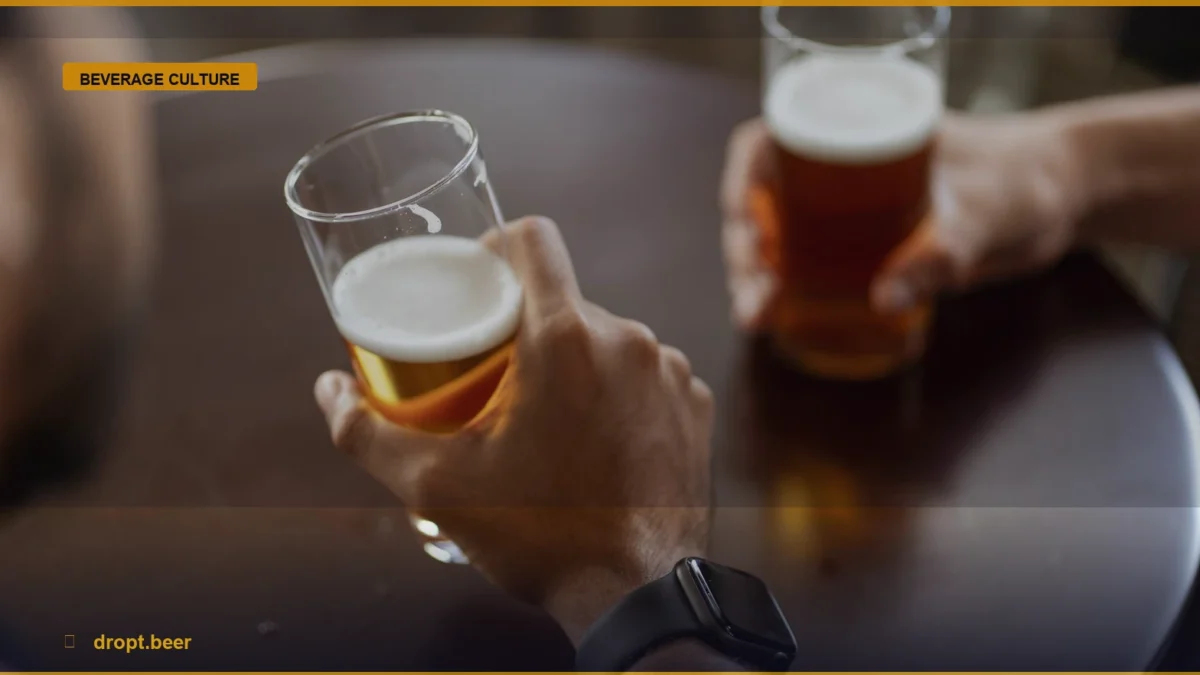
The condensation on the glass catches the low light of the bar, a bead of water tracing a slow, deliberate path down to the coaster. That tiny, cooling friction is where the experience begins. It’s not in the gulp. It’s not in the frantic rotation of rounds at the table. It’s in the pause before the first sip, when you actually register what’s in front of you.
\n
We are currently witnessing a necessary correction in drinking culture. The era of mindless volume—of drinking until the blur sets in—is being replaced by the intentional sip. This isn’t a push toward sobriety for everyone, but a shift toward agency. You should choose your drink with the same care you choose your dinner or your playlist. If it isn’t worth the calories or the headache, it isn’t worth the glass space.
Related: The Intentional Pour: Mastering Thoughtful Drinking
\n\n
Defining the Mindful Drinker
\n
Mindful drinking is not a synonym for abstinence. It is a framework for engagement. According to the Brewers Association’s 2024 data, the growth of high-quality, low-ABV, and non-alcoholic craft alternatives is no longer a niche phenomenon; it is a fundamental expansion of the beer market. This shift reflects a move away from the binary of ‘drinking’ versus ‘not drinking’ toward a spectrum of choice.
\n
The BJCP guidelines for beer styles exist to help us understand flavor profiles, but they also serve as a reminder that beer is a product of craft. When you drink mindfully, you treat that craft with respect. You aren’t just consuming liquid; you’re assessing the malt character, the hop aroma, or the delicate esters produced by specific yeast strains. If you can’t tell me why you’re drinking what you’re drinking, you’re likely drinking the wrong thing.
\n\n
Curating Your Environment
\n
Your home bar should be an edited collection, not a graveyard of half-empty bottles from last year’s parties. Start by clearing out the clutter. If you wouldn’t be genuinely excited to pour a glass for a friend you haven’t seen in a year, get rid of it. This isn’t about being a minimalist; it’s about curating a space that reflects your actual tastes.
\n
Look for breweries that prioritize quality over scale. A standout example is Athletic Brewing Co., which has proven that non-alcoholic beer can hold its own on a palate-level with traditional craft brews. By stocking options that offer genuine complexity, you ensure that choosing a non-alcoholic drink doesn’t feel like a sacrifice. It feels like an upgrade.
\n\n
The Social Strategy
\n
Navigating a night out requires a strategy. If you’re attending a function, decide your boundary before you cross the threshold. I find the ‘one-for-one’ rule to be the most effective tool in the kit. For every standard alcoholic beverage, follow it with a high-quality non-alcoholic option. This keeps your palate fresh, your hydration levels stable, and your social presence sharp.
\n
Don’t be afraid to ask the bartender for recommendations. The best bartenders in the world are currently obsessed with low-ABV and non-alcoholic mixology. If you walk into a bar and ask for a ‘creative, low-ABV option,’ you’ll often get the most interesting drink on the menu. They want to show off the craft, and that’s an opportunity you should seize.
\n\n
Why Quality Always Wins
\n
When you commit to drinking less, you have more disposable income to spend on better quality. This is the core of the ‘less but better’ philosophy. Instead of buying a twelve-pack of generic industrial lager, buy two bottles of a limited-release imperial stout or a high-end farmhouse ale. You’ll find that one bottle of something truly exceptional provides more satisfaction than a dozen bottles of something forgettable.
\n
At the end of the night, if you feel like your drinking added to your evening—rather than just blurring it—you’ve succeeded. Check out our latest reviews at dropt.beer to find your next intentional choice, and remember: the best drink is the one you actually remember tasting.
\n\n
\n\n
Frequently Asked Questions
\n
Is mindful drinking the same as being sober?
\n
No. Mindful drinking is a practice of intentionality, not a requirement for total abstinence. It’s about being aware of why, how much, and what you are drinking. You can be a mindful drinker and still enjoy alcohol, provided your choices are deliberate and align with your personal health and lifestyle goals rather than defaulting to societal pressure or habit.
\n
\n
\n
How do I deal with social pressure to drink?
\n
The best way to handle pressure is to have a drink already in your hand. When you are holding a high-quality non-alcoholic beer or a craft mocktail, most people won’t even ask what you’re drinking. If they do, be direct and casual: ‘I’m pacing myself tonight’ or ‘I’m really enjoying this specific brew’ works perfectly. Confidence in your choice almost always shuts down unwanted peer pressure.
\n
\n
\n
Does non-alcoholic beer actually taste like real beer?
\n
Modern non-alcoholic brewing has made massive leaps. Techniques like vacuum distillation and specialized yeast strains allow brewers to retain the hop oils and malt complexity of traditional beer without the alcohol. While they may have a slightly different body than their full-strength counterparts, many premium NA craft beers are indistinguishable from their alcoholic versions in a blind taste test. Focus on reputable craft-focused brands rather than mass-market options.
\n
\n
\n
Why does the ‘less but better’ approach save money?
\n
It shifts your spending from volume-based purchasing to value-based purchasing. By cutting out the ‘filler’ drinks—the cheap, uninspired beers you drink just to have something in your hand—you create a surplus in your budget. You can then reallocate that money toward single bottles of high-end craft beer, spirits, or premium NA alternatives that offer a much higher level of sensory satisfaction per dollar spent.
\n
\n
\n
\n