Quick Answer
Vodka is inherently colorless; if your bottle shows any tint, it’s either a marketing gimmick or a sign of spoilage. While the liquid should always be crystal clear, the quality is determined by the water source and distillation process, not the visual hue.
- Ignore frosted or blue-tinted bottles, as these are marketing tricks to suggest ‘coldness.’
- Look for a viscous, oily ‘leg’ on the glass, which indicates a higher quality, well-distilled spirit.
- Avoid any vodka with a yellow or brown tint unless it is explicitly labeled as a barrel-aged or botanical-infused specialty.
Editor’s Note — Fiona MacAllister, Editorial Director:
I’m of the firm view that the obsession with ‘ultra-premium’ vodka is the greatest marketing heist in the history of spirits. We are often paying for the bottle’s design rather than the liquid’s integrity. What most people miss is that clarity isn’t just an aesthetic; it’s a functional requirement for purity. Daniel Frost’s research on this is exceptional, specifically regarding how distillation variables actually impact mouthfeel—a detail most casual drinkers ignore. If you want to stop overpaying for fancy glass, read his breakdown on how to spot a genuinely well-made spirit before you pour your next martini.
The Glass Test
There is a specific, quiet moment when you pour a high-quality vodka into a chilled glass. It’s not just the temperature that catches your eye, but the way the light refracts through the liquid. It should be perfectly, almost unnervingly, clear. If you’re staring at a liquid that looks like it has a hint of straw or a murky undertone, you aren’t looking at a traditional vodka. You’re looking at a mistake.
The fundamental truth about vodka is that it is a spirit defined by what it isn’t. It isn’t barrel-aged like a bourbon. It isn’t infused with botanicals like a gin. It is designed to be the ultimate neutral canvas. If you find yourself holding a bottle with a yellowish tint, put it back. Unless that producer has specifically labeled the product as a barrel-rested specialty, that color is a sign of poor filtration or chemical instability. Don’t gamble with your palate.
Defining the Neutral Standard
To understand why vodka remains clear, we have to acknowledge what the industry expects. According to the Alcohol and Tobacco Tax and Trade Bureau (TTB) and global standards, vodka is defined as a spirit distilled to such a high proof that the character, aroma, and color of the raw materials are essentially stripped away. The goal is a blank slate. When you move away from that clarity, you are moving away from the very definition of the category.
Some drinkers argue that the base ingredient—whether it’s wheat, rye, or potato—dictates a natural color. This is a myth. While these ingredients provide different flavor profiles and textures, the distillation process is designed to remove the pigments. If a producer leaves color in the final bottle, they have failed at the primary objective of vodka production. You are paying for a refined, clean spirit. If it looks like weak tea, you aren’t getting what you paid for.
The Marketing of ‘Cold’
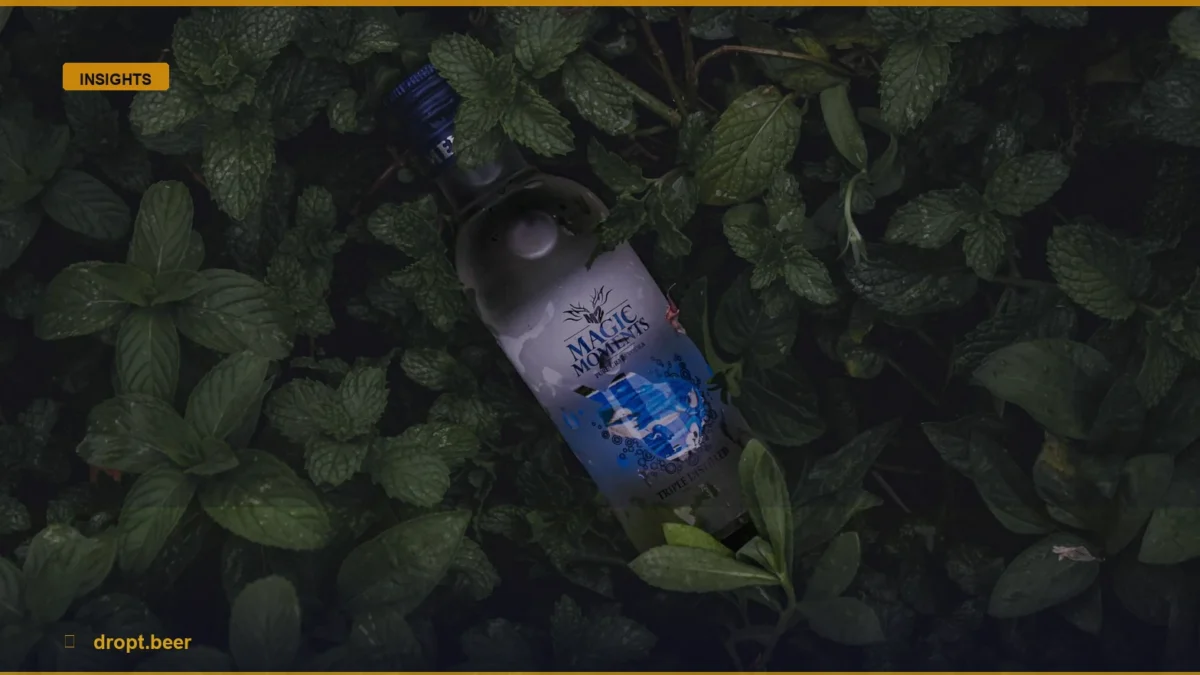
Walk into any well-stocked liquor store and you’ll see them: bottles that look like they’ve been pulled straight from an ice shelf. They’re frosted, tinted blue, or packaged in heavy, leaded glass that distorts the light. It’s a brilliant marketing tactic, but it’s entirely disconnected from the liquid inside. These visual cues are meant to convince your brain that the spirit is ‘crisper’ or ‘cleaner’ before you even take a sip.
Don’t let the packaging dictate your perception. The bottle might look like a frozen glacier, but if the liquid inside is harsh or carries an off-note, the glass doesn’t matter. I’ve tasted many mid-shelf vodkas that completely outperformed their ‘ultra-premium’ counterparts simply because the producer prioritized water quality and meticulous charcoal filtration over fancy, tinted glass. A good rule of thumb? If the bottle is doing more heavy lifting than the spirit, look for something else.
Distillation and the Quest for Purity
The secret to that signature clarity is the removal of variables. Once the mash—the fermented grain or tuber—is ready, it goes through a series of distillations. In the modern era, some distilleries go as far as to distill their spirit dozens of times. This vaporizes the alcohol, leaving behind the heavy solids and oils that would otherwise cloud the mixture or contribute color. It is a scientific process of refinement.
However, the final step is where many brands stumble: the water. You can have the most perfectly distilled alcohol in the world, but if you cut it with inferior, mineral-heavy water, you’ll end up with a spirit that lacks that brilliant, diamond-like clarity. When you’re at a bar, look at how the vodka behaves as it hits the ice. It should glisten. If it looks dull or flat, the water source was likely an afterthought. You deserve better than an afterthought in your glass.
Beyond the Visuals
Anyone who’s spent time behind a bar knows that the visual is only the first step of the experience. We drink with our eyes, sure, but we judge with our tongues. If you’re looking to truly test a brand, compare two bottles side-by-side. Pour them into identical glasses. Give them a swirl. A quality vodka will have a slight viscosity, often called ‘legs,’ that cling to the side of the glass. It’s a sign of a well-crafted, high-proof spirit that hasn’t been over-diluted.
As you experiment, keep an eye on the consistency of the clarity. If you find a brand that you love, stick with it, but don’t be afraid to challenge your own biases. The beauty of the vodka market is that it is vast and competitive. There is always something better waiting behind the bar at dropt.beer, so keep testing your standards and never settle for a spirit that looks like it’s seen better days.
Frequently Asked Questions
Does the color of the vodka affect the taste?
Yes, significantly. A clear, brilliant vodka is the industry standard for purity. If a vodka is yellow or brown, it usually indicates oxidation, contamination, or poor filtration, which almost always results in a harsh, off-putting flavor profile. Unless it is a specific barrel-aged variety, any color is a defect.
Is potato vodka better than grain vodka?
Not necessarily. Potato vodka is often creamier and has a thicker mouthfeel, while grain vodkas tend to be cleaner and sharper. Both should be perfectly clear. The ‘better’ spirit is determined by the distiller’s attention to detail, the quality of the water used for dilution, and the effectiveness of the filtration process, rather than the base ingredient itself.
Why are some vodka bottles blue or frosted?
It is purely a marketing tactic. Distillers use blue or frosted glass to subliminally suggest that the vodka is ‘cold’ or ‘crisp’ before you even open the bottle. It has no impact on the liquid itself, which should remain completely transparent. Do not let fancy packaging convince you that the liquid inside is of higher quality.
How should I store vodka to keep it clear?
Store your vodka in a cool, dark place away from direct sunlight. While vodka is shelf-stable, prolonged exposure to heat and light can eventually lead to oxidation, which may cause the spirit to lose its brilliance or develop an off-color. Keep it in a standard cabinet or the freezer if you prefer, but ensure the bottle is always tightly sealed to prevent evaporation and contamination.