Quick Answer
\n
The smartest way to drink today is by embracing the “less but better” philosophy, prioritizing quality, provenance, and flavor over raw alcohol volume. You’ll find more satisfaction by shifting your budget toward premium craft offerings rather than mass-produced standards.
\n
- Focus on independent, small-batch producers to guarantee ingredient integrity.
- Study the sensory profiles of your favorite style to move from passive drinking to active evaluation.
- Visit local taprooms to connect with the human labor behind the liquid.
\n
\n\n
Editor’s Note — Sophie Brennan, Senior Editor:
\n
I firmly believe that the most significant failure in modern drinking culture is our insistence on quantity over character. In my years covering fermentation science, I’ve tasted hundreds of beers and spirits that were technically perfect but entirely soulless. What most people miss is that the true value of a drink lies in the intention of its maker, not the ABV. I endorse Sam Elliott’s take here because he understands that a bar is a theater of human connection, not just a place to get a buzz. Stop chasing trends and start chasing substance; find one local brewer who actually cares about their yeast strain and buy a round there tonight.
Related: The Art of Thoughtful Drinking: How
\n
\n\n
The Sound of the Pour
\n
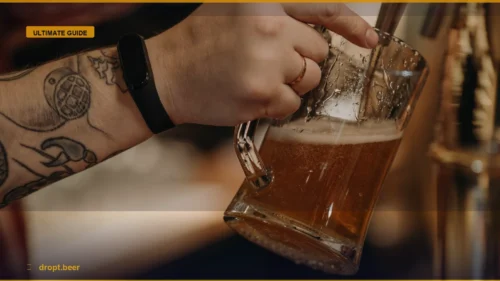
The ice hits the glass with a sharp, crystalline crack. Then comes the hiss of carbonation, a brief, violent release of trapped energy that settles into the steady, rhythmic pour of a well-maintained tap. It’s the soundtrack of a Tuesday night in a room where the lights are dim, the music is just loud enough to drown out the city outside, and the bartender knows exactly how to handle the head on your pint. That specific sound—that moment of anticipation—is where the real magic of drinking happens.
\n\n
We’ve been sold a lie that drinking is about the destination. It’s not. It’s about the deliberate act of choosing quality over convenience. The “less but better” movement isn’t just a trend for the sober-curious; it’s a necessary evolution for anyone who actually likes the taste of what they’re drinking. If you’re still grabbing the cheapest six-pack on the shelf because it’s there, you’re missing the point of the craft. You’re trading a sensory experience for a functional one.
\n\n
The Data of Quality
\n
The numbers bear this out. According to the Brewers Association’s recent reporting, while the broader beer market struggles with volume, the independent craft sector continues to thrive by leaning into hyper-local, high-quality production. People are realizing that mass-market lagers are designed for shelf stability and generic appeal, not for the complexity that a well-executed pilsner or a balanced IPA can offer. You don’t have to be a cicerone to taste the difference; you just have to pay attention.
\n\n
The BJCP guidelines categorize thousands of beer styles, yet most drinkers stick to a singular, narrow lane. That’s a mistake. When you commit to exploring different styles, you aren’t just drinking—you’re learning. You’re understanding the role of hops in a West Coast IPA versus the clean, malt-forward profile of a German Helles. If you aren’t actively testing your palate against these standards, you’re essentially drinking with your eyes closed.
Related: Drink Better, Not More: The Thoughtful
\n\n
The Human Element in the Glass
\n
Think about the last time you sat at a bar. Did you talk to the person pouring your pint? If you didn’t, you ignored the most important ingredient in the room. Every drink on that menu, every spirit on that back bar, represents someone’s work week. It’s a synthesis of agriculture, chemistry, and hospitality. When you drink at a place like a local independent taproom, you’re supporting a business that likely sources its grain from regional farmers and its ethics from a place of genuine passion.
\n\n
This is the antithesis of the corporate beverage machine. It’s personal. It’s messy sometimes, and it’s always authentic. When you seek out these spots, you get the story behind the beer. You learn why they chose a particular strain of yeast or why they decided to dry-hop that specific batch. That information changes the taste. It makes the liquid feel earned. And honestly? It tastes better because of it.
\n\n
Moving Beyond the Comfort Zone
\n
We all have our go-to drinks. That’s fine. But there’s a massive difference between having a favorite and being stuck in a rut. If you only ever order the same pale ale, you’re depriving yourself of the nuance found in a properly stored Belgian dubbel or a crisp, dry farmhouse ale. I suggest you start by asking your bartender for a flight of things you wouldn’t typically buy. It’s a low-risk investment for a potentially high-reward discovery.
\n\n
The goal is to move from being a consumer to being a participant. Use the resources at dropt.beer to start mapping out your own palate. Don’t worry about being an expert; worry about being curious. The moment you stop treating your drink like a commodity and start treating it like an experience, you’ll find that you’re drinking much better than you were before. And that, ultimately, is the point of the whole exercise.
Related: Drink Better, Not More: The New
\n\n
\n\n
Frequently Asked Questions
\n
How do I know if a beer is high quality?
\n
Start by looking for signs of freshness and proper storage. A high-quality beer should be served at the correct temperature for its style, poured with a proper head, and shouldn’t taste like cardboard or stale grain. Most importantly, seek out independent breweries that prioritize transparency regarding their ingredients and brewing process.
\n
\n
\n
\n