Quick Answer
\n
Thoughtful drinking requires shifting focus from volume to sensory engagement, provenance, and the social context of your pour. Prioritize quality over quantity by selecting drinks with clear narratives and sustainable production methods.
\n
- Learn the history of your specific beverage style to heighten your palate’s expectation.
- Match your drink to the setting—don’t just grab the first thing on tap.
- Choose one high-quality, craft-focused pour rather than three generic options.
\n
\n\n
Editor’s Note — Marcus Hale, Editor-in-Chief:
\n
I firmly believe that the industry has spent too long selling liquid volume instead of selling experience. If you are drinking just to reach a buzz, you’re missing the point of the craft beer revolution entirely. In my years covering this industry, I’ve seen the best brewers lose sleep over a single degree of fermentation temperature—they deserve a drinker who pays attention. Grace Thornton is the right voice for this because she understands that true wellness in drinking comes from intentionality, not just abstinence. Put down the macro-lager and commit to learning the origin of your next pint tonight.
\n
\n\n
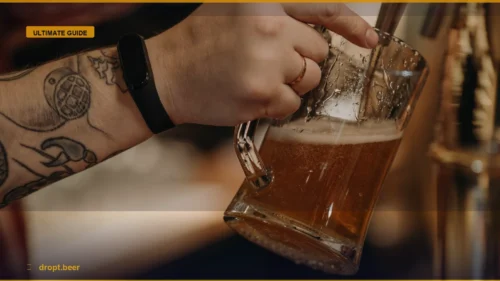
The sound hits you first: the sharp, percussive hiss of a crown cap releasing, followed by the soft, rhythmic gurgle of carbonation meeting glass. Then, the smell. It isn’t just generic ‘beer’—it’s the damp, pine-forward sting of Cascade hops, a hint of toasted sourdough, and the faint, sweet iron of the cellar floor. You’re standing in a quiet corner of a brewery, watching the steam rise off a brew kettle, and for a moment, the world outside the taproom walls simply ceases to exist.
\n\n
This is the essence of thoughtful drinking. It is the practice of moving from passive consumption to active participation. We often treat our beverages as mere background noise to conversation, but I contend that your drink deserves as much focus as the food on your plate or the music in the room. When you stop treating alcohol as a utility and start treating it as an experience, you reclaim the joy of the craft. You’ll find that quality becomes non-negotiable.
\n\n
The Architecture of the Glass
\n
To drink thoughtfully is to understand the language of the liquid. The BJCP (Beer Judge Certification Program) guidelines aren’t just for stiff-necked competitions; they are a map for your palate. If you know that a German Hefeweizen is defined by specific phenolic esters—those clove and banana notes—you stop asking why it tastes ‘funny’ and start looking for the balance. You begin to critique the brewer’s intent.
\n
Most drinkers look at a menu and scan for ABV percentages or familiar brand logos. I want you to scan for the ‘why.’ Why is this brewery using local heirloom grains? Why is this bar focusing on cask-conditioned ale rather than forced carbonation? When you ask these questions, the bartender stops being a clerk and becomes a guide. At a place like Moon Dog in Melbourne, you aren’t just ordering a beer; you’re navigating a specific, sometimes eccentric, vision of what Australian brewing can be. It demands that you pay attention.
\n\n
Connecting With Provenance
\n
We are currently living through a golden age of agricultural transparency in brewing. The Brewers Association has long championed the ‘independent’ seal, but thoughtful drinking takes that a step further. It asks about the soil. It asks about the supply chain. When you choose a local cider or a craft beer that sources its hops from a regional grower, you are grounding your experience in a specific place.
\n\n
Don’t just drink for the flavor profile; drink for the geography. A pint of bitter in a pub in Cornwall tastes different than a pale ale in a sun-drenched Queensland backyard because the atmosphere, the ingredients, and the history demand a different kind of focus. You should be seeking out breweries that list their maltsters or hop suppliers. It turns a standard evening into a lesson in local agriculture. If you can’t find the source of your drink, you’re missing half the story.
\n\n
The Ritual of the Pause
\n
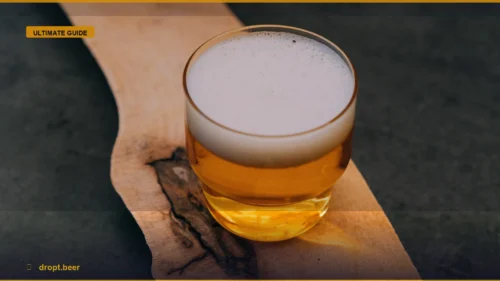
There is a dangerous tendency to treat drinking as a race to the finish line. We’ve all been there: the third round comes, the conversation turns frantic, and the liquid becomes a blur. My advice? Interrogate the pacing. Take a sip, put the glass down, and let the carbonation clear before you reach for the next one. Observe the lacing on the glass as you drink. It’s a silent, beautiful indicator of the beer’s health and the cleanliness of the glassware.
\n
Thoughtful drinking is also about knowing when to stop. It’s about the elegance of a single, well-poured, perfectly chilled glass of Kölsch that refreshes you, rather than a heavy, high-ABV stout that leaves you sluggish. We celebrate the craft of the brewer, so we must respect the output. If you aren’t savoring it, you shouldn’t be drinking it. Check out our latest guides on dropt.beer to find your next intentional pour.
\n\n
\n\n
Frequently Asked Questions
\n
How do I start drinking more mindfully?
\n
Start by reducing your volume and increasing your research. Before you order, ask the bartender about the brewery’s history or the beer’s ingredients. Focus on the sensory experience—the aroma, the mouthfeel, and the temperature—rather than the alcohol content. Slowing your pace naturally leads to more mindful consumption.
\n
\n
\n
Does glassware really change the taste?
\n
Yes, absolutely. The shape of the glass is designed to direct the aroma to your nose and control the flow of the liquid across your palate. A tulip glass traps the volatile aromatics of a hop-forward IPA, while a straight-sided glass might allow them to dissipate too quickly. Always use the proper glass for the style.
\n
\n
\n
Is craft beer always better than mass-market options?
\n
In terms of complexity, intentionality, and support for local economies, yes. Mass-market beer is designed for consistency and mass appeal, which often sacrifices the nuances that thoughtful drinkers crave. Craft beer offers a diversity of flavor and technique that mass-market options simply cannot match.
\n
\n
\n
Why does the temperature of my drink matter?
\n
Temperature dictates how much flavor you can perceive. Extremely cold temperatures numb your taste buds, masking the complex esters and phenols that brewers work so hard to create. If your beer is served too cold, let it sit for five minutes. You will be surprised at how many new flavors emerge as it warms.
\n
\n
\n
\n