Quick Answer
\n
Thoughtful drinking is the practice of prioritizing quality, provenance, and intent over volume. You should treat every beverage as an intentional experience rather than a mindless commodity.
\n
- Prioritize independent producers who disclose sourcing and production methods.
- Limit your intake to focus on the sensory profile rather than the alcohol content.
- Audit your home bar to ensure every bottle serves a specific purpose or flavor goal.
\n
\n\n
Editor’s Note — James Whitfield, Managing Editor:
\n
I firmly believe the industry has spent too long selling us on the ‘quantity’ of a night out rather than the quality of the glass in our hand. What most people miss is that the most expensive bottle on the shelf is often the least interesting because it lacks a human story. I tasked Grace Thornton with this piece because her background in the low-alcohol space forces a focus on flavor integrity that those hiding behind high-ABV spirits simply don’t have. Stop buying by the brand name and start buying by the brewer’s intent. Read Grace’s guide, then go pour out one mediocre bottle tonight to make room for something with a soul.
\n
\n\n
The Sound of the Pour
\n
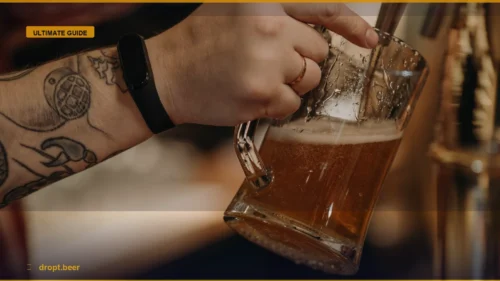
The hiss of the pull-tab is sharp, almost aggressive. It’s followed by the hollow, bubbling sound of liquid hitting the bottom of a glass, then the gentle crackle of carbonation settling into a foam cap. For too long, we’ve drowned out that sound with the noise of mindless consumption. We’ve treated beer and spirits like background radiation—something to keep the hands busy while the world happens around us.
\n
This is the wrong way to look at a drink. We are currently witnessing a necessary shift toward thoughtful drinking, a philosophy that demands you treat every glass as a deliberate encounter. It isn’t about counting ounces or fearing the buzz; it’s about acknowledging the labor, the history, and the chemistry that put the liquid in your hand. If you aren’t paying attention to the details, you’re missing the point of the craft entirely.
\n\n
Quality is a Moral Choice
\n
The marketplace has been flooded with ‘premium’ marketing for a decade, but genuine quality is rarely found in the glossy ads. According to the Brewers Association’s 2024 data, small and independent craft brewers continue to lose shelf space to macro-owned ‘craft’ labels—a battle fought on marketing spend, not flavor. To drink thoughtfully, you must vote with your wallet. Stop buying the mass-produced label that happens to be on sale and start seeking out the brewery that lists its hop varieties and grain bills with pride.
\n
Look at the BJCP (Beer Judge Certification Program) guidelines; they focus on style definitions based on technical merit. You should adopt this same rigor. When you pick up a bottle, look for the ‘canned on’ date, the specific malt profile, and the origin of the yeast. If a producer hides their process, they’re hiding a lack of care. A truly excellent beer, like the offerings from a local stalwart such as Mountain Culture, demands your focus because it offers a narrative in every sip. It’s not just a beverage; it’s the result of someone’s Tuesday afternoon, their failures, and their refinement.
\n\n
The Ritual of the Glass
\n
You’ll often hear people talk about ‘moderation’ as a restriction. That’s a mistake. Moderation is an aesthetic choice. By limiting your consumption, you actually increase your capacity to enjoy the nuance of what’s in front of you. The first glass of a complex, barrel-aged stout is a revelation of oak and chocolate; the fourth glass is just liquid volume. Why diminish the experience by pushing past the point of diminishing returns?
\n
This requires a change in environment. Put the phone down. Use a glass that fits the style—a tulip for your wild ales, a heavy tumbler for your spirits. The vessel acts as a frame for the work of art inside. If you’re drinking straight from the bottle or a plastic cup, you’re missing the aromatics that constitute seventy percent of the flavor. Take the time to pour, to let it breathe, and to actually smell the esters before you take that first swallow.
Related: The Art of Thoughtful Drinking: A
\n\n
Auditing Your Home Collection
\n
Most of us have a ‘graveyard’ shelf—bottles we bought because they looked cool or a friend recommended them, but that we never actually reach for. It’s time to purge. A thoughtful drinker doesn’t curate a collection to impress guests; they curate it to reflect their own evolving palate. If you don’t love it, don’t keep it.
\n
When you visit a shop, treat the clerk like a collaborator, not a salesperson. Ask them what they are excited about, not what is popular. The goal is to build a collection where every bottle has a reason to be there. Whether it’s a specific gin that highlights botanicals from a local region or a saison that challenges your perception of funk, your home bar should be an extension of your curiosity. If you aren’t learning something new with every bottle, you’re just buying groceries. Keep the bottles that challenge you, and discard the rest. You’ll find that your appreciation for the craft grows exponentially when you stop settling for the ‘fine’ and start demanding the ‘exceptional’ from your local bottle shop. Check in with us here at dropt.beer as we continue to highlight the producers who are doing the work, and start treating your next drink like the event it should be.
\n\n
\n\n
Frequently Asked Questions
\n
How do I know if a beer is ‘thoughtfully’ made?
\n
Look for transparency. A thoughtful brewer lists their ingredients, the source of their hops, and the specific conditioning process. If the label is vague, relying on lifestyle marketing rather than technical detail, the beer is likely a mass-market product designed for volume rather than quality.
\n
\n
\n
Is expensive always better?
\n
Absolutely not. Price is often inflated by marketing, distribution costs, and scarcity. Quality is determined by the integrity of the ingredients and the precision of the brewing or distilling process. You can find world-class beverages at modest prices if you focus on local, independent producers who cut out the middleman.
\n
\n
\n
Does the glassware really make a difference?
\n
Yes. Glassware is designed to direct aromatics toward your nose. Since the majority of flavor is actually smell, drinking from a proper glass allows you to detect subtle notes that are completely lost when drinking from a bottle or a standard shaker pint. It is the cheapest, most effective way to improve your experience.
\n
\n
\n
How should I start building a curated home bar?
\n
Start small. Buy one bottle of something you know you love and one bottle that represents a new style or region. Research the producer’s background before you buy. If you find you don’t enjoy a bottle, don’t force it—give it away or use it for cooking. A curated collection should only contain things you are genuinely excited to drink.
\n
\n
\n
\n