Quick Answer
Midtown isn’t a wasteland for beer; you just have to bypass the tourist traps. The three essential stops are McSorley’s for history, The Blind Tiger for the best rotating craft taps, and Rattlehead for rare, high-ABV finds.
- Head to McSorley’s for the light and dark house ales.
- Visit The Blind Tiger when you want a curated flight of local IPAs.
- Choose Rattlehead for barrel-aged stouts in a quiet, moody setting.
Editor’s Note — Tom Bradley, Drinks Editor:
I firmly believe that if you’re drinking a macro-lager in Midtown, you’re choosing to be bored. Most of the neighborhood’s “pubs” are glorified tourist traps designed to separate you from your cash with lukewarm pints of uninspired swill. I brought Jack Turner in because his obsession with historical provenance means he can distinguish between a “classic” pub and a staged theme park set. What most people miss is that the best beer in a concrete jungle is always found in the smallest, least “convenient” corners. Stop settling for the first bar you see and walk three extra blocks to find a proper pour.
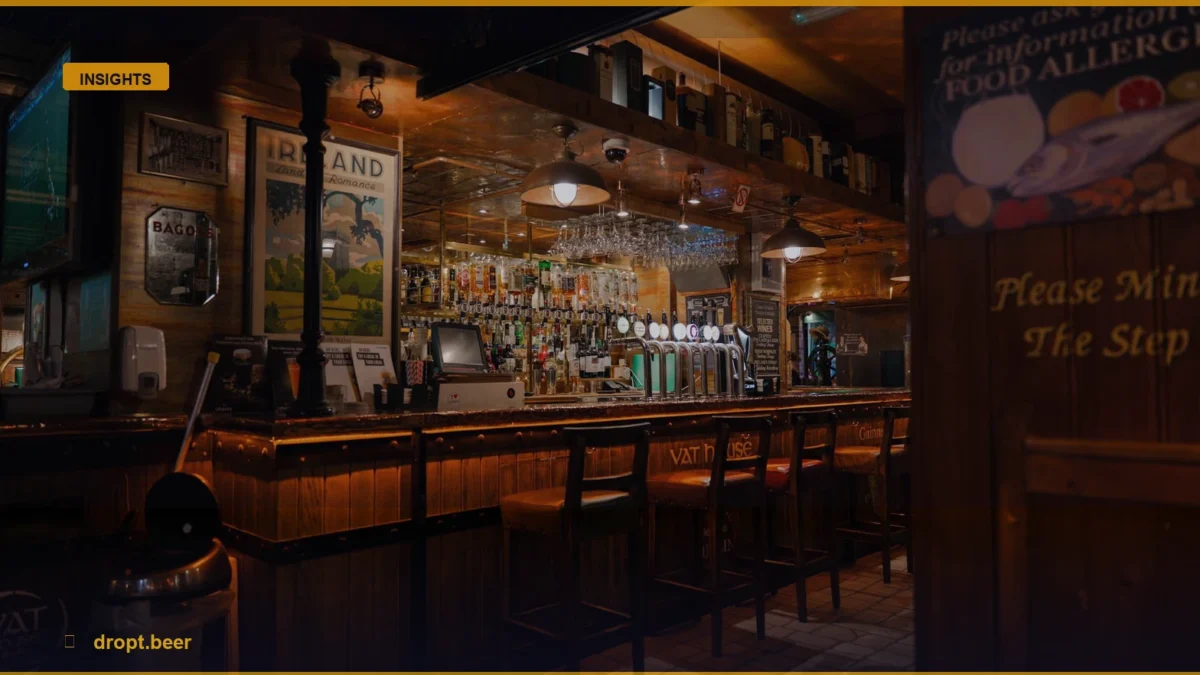
The smell hits you before you even see the bar—a mix of floor wax, stale grain, and the faint, unmistakable tang of a keg line that hasn’t been touched since the lunch rush. In Midtown, where the skyscrapers loom like glass monoliths and the streets are perpetually clogged with the frantic energy of a thousand commuters, the pub is supposed to be an anchor. It’s supposed to be the place where the noise stops. But walk into the wrong “Irish Pub” near Times Square, and you’ll find nothing but overpriced, watered-down lager and a menu that reads like a frozen food catalog.
The truth is, Midtown has excellent beer culture, but it’s hidden in plain sight. If you want a pint that actually matters, you need to ignore the neon signs and the “Happy Hour” boards that promise free appetizers. You need to seek out the places that treat beer as a craft rather than a commodity. Following the crowd in this neighborhood is the fastest way to a headache and a wasted night.
The Architecture of a Proper Pub
To understand what makes a pub worth your time, we have to look past the decor. A real pub isn’t defined by the number of brass railings or the authenticity of the accent behind the bar. It’s defined by the integrity of the cellar. According to the Brewers Association’s 2024 data, the demand for local, independent craft beer continues to rise, yet many Midtown establishments rely on massive, corporate-owned contracts that limit what they can pour. A good pub breaks that contract. They prioritize the brewer over the distributor.
The BJCP guidelines for a “pub setting” emphasize the importance of freshness and serving temperature. If the glass is warm or the beer tastes like it’s been sitting in a line for a week, the establishment has failed its primary duty. You deserve better. You should be looking for staff who know their inventory, a tap list that reflects the season, and a food menu that actually pairs with the bitterness of an IPA or the roasted notes of a stout. If the food is just there to absorb alcohol, keep walking.
McSorley’s: The Historian’s Choice
Walking into McSorley’s is like stepping through a temporal tear. Founded in 1854, it is the oldest continuously operating tavern in New York City. You don’t come here for a deep-dive analysis of hop varieties. You come here because the ritual hasn’t changed in over a century. They pour two things: a light ale and a dark ale. That’s it. It’s an exercise in simplicity that most modern bars are too terrified to attempt.
The sawdust on the floor isn’t for show; it’s a functional relic of a time before synthetic cleaners. When you sit at one of those scarred wooden tables, you’re sitting in the same spot where workers and poets have spent their wages for generations. Order the dark ale with the liverwurst sandwich. It’s a pairing that has survived Prohibition, wars, and the relentless gentrification of the city. It’s honest, it’s cheap, and it’s a necessary pilgrimage for anyone who claims to care about beer history.
The Blind Tiger: Where the Craft Lives
If McSorley’s is the past, The Blind Tiger is the present. Located on West 46th, this is where you go when you want to see the bleeding edge of the craft scene. Their tap list is a rotating manifesto of what’s happening in American brewing right now. You’ll find cans and kegs from heavyweights like Other Half and Evil Twin, but they don’t just carry the big names. They carry the beers that get people talking.
The staff here are enthusiasts, not just order-takers. Ask them what’s fresh, and they’ll steer you toward the most vibrant IPA or the most balanced saison on the board. The atmosphere is industrial but lived-in, the kind of place where you can comfortably lose two hours to a tasting flight of barrel-aged stouts. When you pair their truffle-parmesan fries with a crisp, local lager, you’ll realize exactly why this spot remains the gold standard for Midtown craft.
Rattlehead: The Quiet Specialist
Sometimes you want a place that feels like a secret. Rattlehead sits near the transit hub, but it feels miles away from the chaos. This is where you go for the outliers—the barleywines, the obscure sours, the heavy-hitting imperial stouts that you usually only see at festivals. It’s a small, moody room, perfect for a conversation that doesn’t need to compete with a television broadcast.
Their food menu is small, but it’s intentional. The pork belly bao are designed to cut through the richness of the darker, malt-forward beers they specialize in. It’s a masterclass in menu design. By limiting their scope, they ensure that every pint poured is a deliberate choice. You won’t find a “safe” option here, and that’s precisely why it belongs on this list. For more deep dives into the best drinking spots across the globe, keep checking in with us at dropt.beer.
Your Next Move
Stop drinking the default “house lager” and commit to trying one beer style you’ve never heard of at a local independent pub this week.
- [Immediate — do today]: Look up the current tap list for The Blind Tiger online before you finish work tonight.
- [This week]: Visit one of these three locations and order something outside of your usual “safe” style, like a classic cask ale or an experimental sour.
- [Ongoing habit]: Keep a small notebook or a dedicated app to track the brewery and style of every new beer you try, noting why you liked or disliked it.
Frequently Asked Questions
How do I know if a pub in Midtown is a tourist trap?
Look at the signage. If they use words like “authentic Irish” or “famous” in oversized font and prioritize “Happy Hour” drink deals on mass-market lagers over craft variety, it’s a trap. A real pub lets the beer list speak for itself.
Is it better to stick to one beer style?
Not at all. Part of the joy of visiting places like The Blind Tiger is the ability to compare styles. Start with a lighter, crisp ale to cleanse your palate, then move toward the heavier, more complex stouts or sours. Variety is the best way to educate your own taste buds.
Why does McSorley’s only serve two beers?
It’s about tradition and consistency. By focusing exclusively on a light and a dark ale, they’ve perfected those two recipes over 170 years. It removes the “choice paralysis” of modern craft bars and honors the historical roots of the establishment.
Should I care about food pairings in a pub?
Absolutely. A great pub understands that the right food can accentuate the hops or malt in your beer. If a bar serves nothing but fried, salty snacks, they don’t care about your palate. Look for places that offer intentional pairings, like cured meats or pretzels with quality beer cheese.