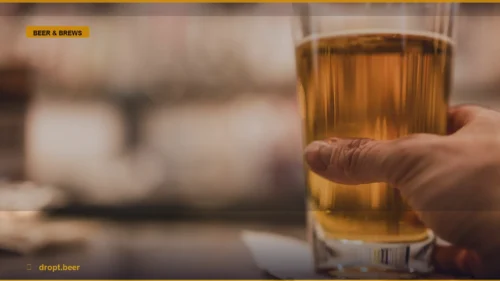
Asking for ‘yellow alcoholic drinks’ is a bit like asking for ’round fruit’ – it covers a lot of ground but suggests a specific, usually very common, archetype. If you’re looking for the most universally recognized, widely consumed, and distinctly yellow alcoholic drink that comes to mind for most drinkers, the answer is undoubtedly the Pale Lager. It’s the default setting for ‘beer’ for millions, and visually, it epitomizes ‘yellow’ in a glass.
The phrase "yellow alcoholic drinks" is interesting precisely because it’s so broad. Are we talking about a visual characteristic, a flavor profile, or a specific category? Most often, the search implies something visually yellow, readily available, and generally refreshing. This immediately points away from obscure spirits or complex cocktails and towards the everyday staple.
The Reigning Champion: Pale Lager
From a purely practical standpoint, pale lagers like Budweiser, Heineken, Stella Artois, or any number of regional variations, are the ultimate yellow alcoholic drinks. They are:
- Ubiquitous: Found in virtually every bar, restaurant, and liquor store globally.
- Visually Distinct: Their clear, golden-yellow hue is iconic.
- Accessible Flavor: Typically crisp, clean, and relatively mild, making them approachable for a wide audience.
While craft beer has introduced a stunning array of colors and styles, the pale lager remains the foundational "yellow beer" that defines the category for many. It’s the benchmark for what most people consider a refreshing, light-colored brew. For a deeper dive into the vast world of yellow beverages, including a flavorful journey through various beer styles, you might find our guide on exploring the spectrum of yellow drinks quite illuminating.
Beyond the Lager: Other Notable Yellows
Of course, "yellow" isn’t exclusive to pale lagers. The spectrum of yellow alcoholic drinks includes:
- Whiskey/Whisky: Many whiskies, especially bourbons and aged Scotch, exhibit a beautiful golden to amber-yellow hue due to barrel aging. Their flavor profiles are far more complex than lagers, ranging from sweet and malty to smoky and peaty.
- Certain IPAs & Pale Ales: While some are hazy or amber, many classic West Coast IPAs and American Pale Ales present a vibrant golden-yellow, often with a slight haze, showcasing hop-forward aromas and bitter finishes.
- Limoncello: This Italian lemon liqueur is famously bright yellow and intensely sweet and tart. It’s typically consumed as an after-dinner digestif.
- Some White Wines & Ciders: Crisp Sauvignon Blancs or even some lighter Chardonnays can appear pale yellow. Many apple ciders also present a clear, golden-yellow color, offering a fruity, often tart, alternative.
- Cocktails: Numerous cocktails are distinctly yellow, leveraging ingredients like lemon juice, pineapple juice, or specific liqueurs. Think of a Lemon Drop Martini, a classic Whiskey Sour, or a Mimosa.
What "Yellow" Doesn’t Always Mean (and What Other Lists Miss)
The visual descriptor of "yellow" can be misleading, and many generic lists often miss the nuance:
- Color Doesn’t Equal Flavor: A bright yellow drink isn’t necessarily lemon-flavored, nor is a dark drink necessarily strong. The visual is often just a starting point.
- Packaging vs. Product: Some brands use yellow extensively in their labeling, leading to an association that doesn’t reflect the drink’s actual color (e.g., some dark beers might have bright yellow branding).
- Haze vs. Clarity: While pale lagers are clear yellow, many popular craft beers, particularly New England IPAs, are deliberately hazy or turbid, appearing more opaque yellow or orange. They are still "yellow" but not in the crisp, clear way people often imagine.
- Artificial Colorings: While less common in quality alcoholic beverages, some cheaper products or novelty drinks might use artificial colorings to achieve a specific hue, which is rarely what a discerning drinker is looking for.
Verdict
For the quintessential "yellow alcoholic drink" that is widely available and immediately recognizable, the Pale Lager remains the undisputed champion. If you’re looking for a popular alternative that’s also distinctly yellow but offers a different flavor profile, a Whiskey Sour cocktail is an excellent choice. When in doubt, a clear, golden beer is the most universally understood yellow drink.