Quick Answer
Kentucky Straight Bourbon is a strictly regulated American whiskey that must contain at least 51% corn, be aged in new charred oak containers, and be produced within Kentucky for at least two years without any additives. If you want the best balance of price and quality, skip the marketing hype and seek out Bottled-in-Bond expressions.
- Look for the ‘Straight’ designation to ensure no artificial colors or flavors.
- Prioritize Bottled-in-Bond labels for a guaranteed 100-proof, single-season standard.
- Avoid chasing age statements, as 5-to-12-year expressions often outperform older, wood-heavy spirits.
Editor’s Note — Callum Reid, Deputy Editor:
I’ll be blunt about this: the bourbon aisle is a goldmine for marketing charlatans. I’ve always said that if a bottle looks like a pirate treasure map or screams “heritage” on the label, you’re paying for the printer’s ink, not the liquid. I firmly believe you should ignore the fancy bottle shapes and focus entirely on the legal “Straight” designation and the proof. Lena Müller is the only person I trust to break down these technical mash bills because she treats American whiskey with the same rigorous, historical precision she applies to a Bavarian Helles. Stop buying bottles just for the shelf appeal and start drinking for the chemistry.
The air in a Kentucky rickhouse is thick, sweet, and heavy with the scent of toasted coconut, damp earth, and vanilla. It’s a humid, aggressive smell—a sharp departure from the cool, crisp malt halls of my native Bavaria. When you stand among these stacks of charred oak, you aren’t just looking at barrels; you’re looking at a chemical contract between the spirit and the wood. This is where Kentucky Straight Bourbon finds its soul, and it’s a process far more scientific than the romanticized folklore suggests.
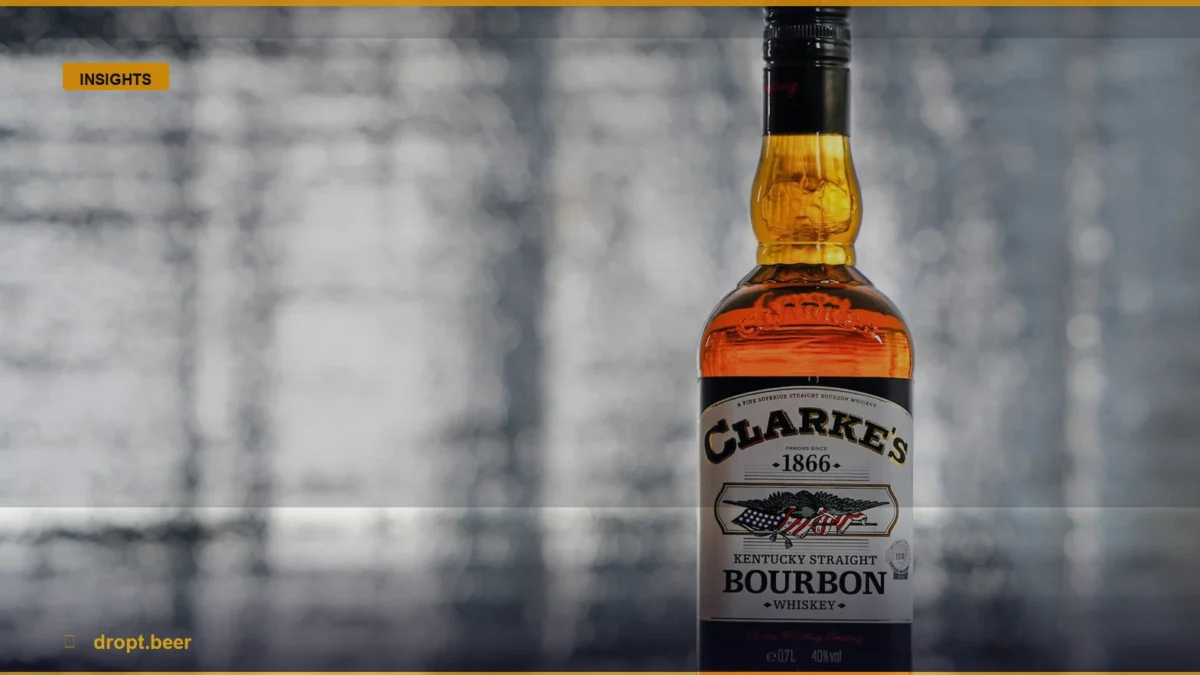
Kentucky Straight Bourbon is not simply “whiskey from Kentucky.” It is a legally protected identity. To carry this label, a spirit must be distilled from at least 51% corn, aged in new charred oak containers, and—crucially—produced within the state of Kentucky for a minimum of two years. If it’s “Straight,” the law forbids the addition of colors, flavorings, or sweeteners. You are drinking the result of yeast, water, grain, and the specific, unforgiving interaction with oak. My position is simple: if you don’t understand these rules, you are merely guessing at what you’re paying for. You deserve to know exactly what’s in your glass.
The common obsession with long aging is, frankly, a misunderstanding of how climate dictates flavor. While the Scotch industry often celebrates 20 or 30-year-old expressions, the climate of Kentucky works on an accelerated timeline. Intense summer heat forces the spirit deep into the pores of the charred oak, and the subsequent cooling pulls it back out, laden with wood sugars and tannins. Leave a whiskey in those barrels for too long, and you lose the grace of the grain. You’re left with a glass of bitter, astringent liquid that tastes more like a lumberyard than a drink. According to the BJCP guidelines, the goal is balance, not just wood extraction. Frequently, the most expressive bourbon sits in the four-to-eight-year window.
Let’s talk about the mash bill. Corn is the engine here. It provides the foundational sweetness that distinguishes bourbon from the spicier profile of a rye whiskey. Distillers then add a “flavor grain”—usually rye for a spicy, dry finish, or wheat for a softer, rounder experience. Think of it like baking bread; the corn is your flour, and the other grains are your spices. If you enjoy the classic, punchy profile of a brand like Wild Turkey, you’re tasting the deliberate use of higher rye content. If you prefer the softer, dessert-like notes of Pappy Van Winkle or Maker’s Mark, you’re experiencing the influence of wheat.
The water source acts as the silent partner in this operation. Kentucky sits atop a massive limestone shelf, which filters the water and strips away iron—an element that would ruin the yeast fermentation process. This water provides the calcium and magnesium necessary to keep the yeast healthy and active. When you hear distillers wax poetic about their “proprietary water source,” they aren’t just selling you a story. They are describing the chemical foundation that allows their specific yeast strain to thrive. Without that limestone-filtered water, the fermentation would stall, and the flavor profile would collapse.
When you head to the store, ignore the “small batch” marketing. There is no legal definition for that term. A massive industrial producer can dump ten thousand barrels into a vat and call it a small batch with total impunity. Instead, look for the Bottled-in-Bond designation. This is your insurance policy. Mandated by an act of Congress in 1897, it requires the spirit to be the product of one distillation season, one distiller, and one distillery, bottled at exactly 100 proof. It is the gold standard for consistency. If you want to drink like someone who knows the craft, stop chasing the hype of “limited releases” and start relying on the integrity of the bonded label. Understanding these distinctions is exactly why we created dropt.beer—to give you the tools to filter out the noise and find the liquid that actually matters.
Your Next Move
Commit to a blind side-by-side tasting of a standard shelf-stable bourbon and a Bottled-in-Bond expression from the same parent brand to identify the difference in intensity.
- [Immediate — do today]: Check your current home bar for the “Straight” label; if it’s missing, research what additives might be present in that specific bottle.
- [This week]: Purchase a bottle labeled “Bottled-in-Bond” to establish a baseline for high-quality, regulated production.
- [Ongoing habit]: Keep a simple tasting journal that records the mash bill percentages—not just the brand name—to track your preference for rye versus wheat-forward spirits.
Frequently Asked Questions
Must all Bourbon be made in Kentucky?
No. While Kentucky is famous for the spirit, federal law allows bourbon to be produced anywhere in the United States. To be labeled as “Kentucky Straight Bourbon,” however, it must be distilled and aged within the state of Kentucky for at least one year as part of its minimum two-year aging requirement. If it isn’t made in Kentucky, it can be called “Straight Bourbon,” but it cannot carry the Kentucky name.
What does “Bottled-in-Bond” actually mean?
Bottled-in-Bond is a legal designation requiring the whiskey to be the product of one distillation season, one distiller, and one distillery. It must be aged for at least four years in a federally bonded warehouse and bottled at exactly 100 proof (50% ABV). It serves as a guarantee of quality and consistency, preventing producers from blending in younger, lower-quality stocks or watering down the final product.
Does the mash bill matter for beginners?
Yes, it is the most important factor in determining the flavor profile. The mash bill dictates whether your bourbon will be spicy and dry (high rye content) or sweet and soft (high wheat content). Understanding the ratio of corn to secondary grains is the fastest way to predict whether you will enjoy a specific bottle before you even pull the cork.