Quick Answer
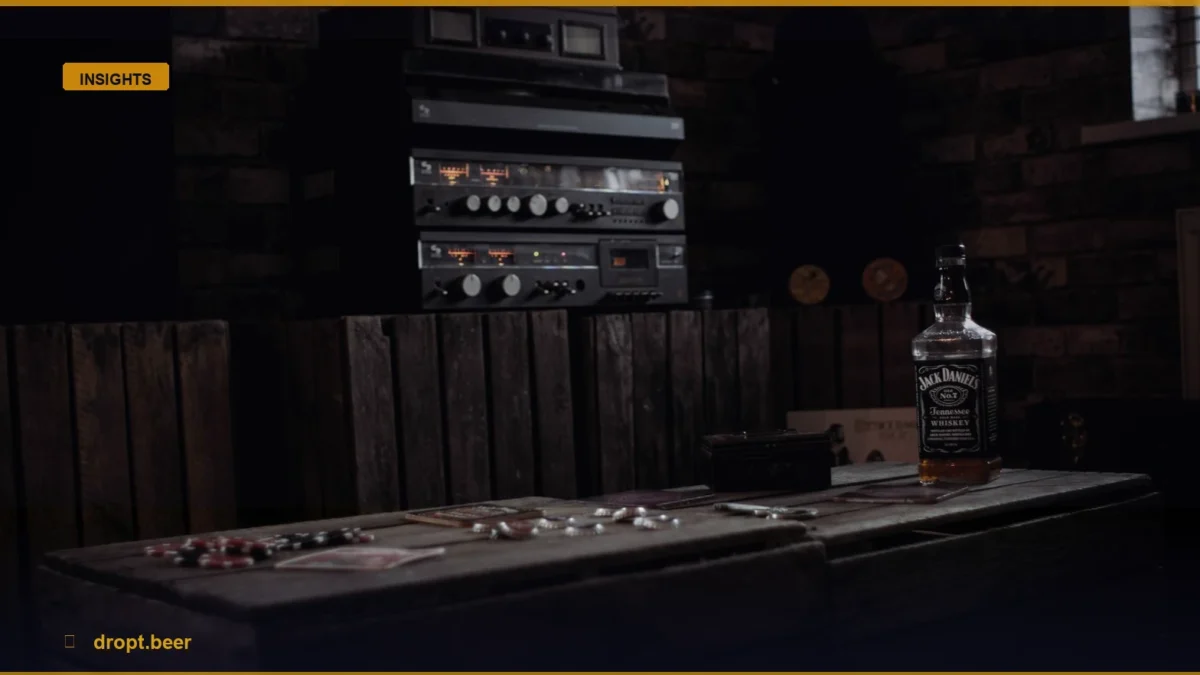
No, Jack Daniel’s is not bourbon. While it meets all federal legal requirements to be labeled as such, the distillery rejects the classification in favor of the “Tennessee Whiskey” designation, which mandates a unique charcoal-mellowing process.
- Look for “Tennessee Whiskey” on the label to identify this specific style.
- Understand that charcoal mellowing softens the spirit, removing the aggressive bite often found in Kentucky bourbons.
- Prioritize your palate over labels; if you want more intensity, seek out their higher-proof “Bonded” or “Barrel Proof” expressions.
Editor’s Note — James Whitfield, Managing Editor:
I firmly believe that the insistence on calling Jack Daniel’s “bourbon” is a lazy shortcut that ignores the reality of craft production. If you want a punchy, grain-forward experience, you buy a high-rye Kentucky bourbon; if you want the polished, sugar-maple-filtered elegance of the Lincoln County Process, you buy Tennessee Whiskey. I tasked Lena Müller with this because she brings a precise, technical eye to filtration methods that most writers gloss over. Stop worrying about federal compliance and start paying attention to what’s actually happening in your glass. Go pour a side-by-side comparison tonight to see exactly what I mean.
The Charcoal Threshold
The scent of smoldering sugar maple wood is unmistakable. It’s a sweet, thick, and slightly resinous aroma that hangs heavy in the air of a Lynchburg shed. This is where the magic—and the controversy—begins. You aren’t just looking at a distillery; you’re looking at a filtration system that has defined a singular style of American spirit for generations. When that raw, clear distillate drips slowly through ten feet of charcoal, it isn’t just a gimmick. It is a fundamental alteration of the spirit’s character.
Jack Daniel’s is not bourbon. It is Tennessee Whiskey. While the liquid meets the legal definition of bourbon—produced in the U.S., at least 51% corn, aged in new charred oak containers—the distillery explicitly rejects that label. They aren’t hiding anything; they are protecting a proprietary identity. The distinction matters because the Lincoln County Process, as this charcoal-mellowing technique is known, strips away the very edges that define a classic Kentucky bourbon.
The Lincoln County Process Defined
To understand why this spirit stands apart, we have to look at the chemistry of the process. According to the standards set by the Tennessee state legislature in 2013, to carry the “Tennessee Whiskey” label, the spirit must be distilled in the state and undergo this exact charcoal-mellowing phase before it ever touches a barrel.
Think of it as a pre-maturation refinement. By forcing the distillate through vats of sugar maple charcoal, the distillery removes specific long-chain fatty acids and congeners that would otherwise present as harsh or oily notes on the palate. The result is a cleaner, more approachable spirit. If you compare a standard Old No. 7 to a traditional Kentucky bourbon, you’ll notice the latter often has a more aggressive, spicy, or “funky” profile. That’s not a defect in the bourbon; it’s simply the absence of the mellowing agent.
Dispelling the Additive Myth
You’ve likely read online that Jack Daniel’s isn’t bourbon because it contains secret additives or strange flavorings. These claims are entirely false. Federal law and the specific Tennessee state requirements are quite rigid regarding what can and cannot enter the bottle. The flavor profile you experience is a direct result of the fermentation, the distillation, the charcoal interaction, and the time spent in the barrel.
The BJCP guidelines for whiskey focus heavily on the sensory experience, and it’s here that the difference becomes most apparent. Tennessee Whiskey is designed to be smooth. It is crafted for consistency and broad appeal. If you are looking for the raw, untamed nature of some small-batch craft bourbons, you might find the standard Jack Daniel’s offerings a bit restrained. However, that restraint is a design choice, not a lack of quality.
Buying for Your Palate
When you stand in that store aisle, don’t let the “bourbon vs. whiskey” debate dictate your purchase. Instead, look for the specific expression that matches your tolerance for intensity. If you find the standard black label too soft, you are looking in the wrong place. The distillery produces some fantastic, high-proof options that reintroduce the intensity some drinkers feel is missing from the entry-level bottles.
The “Bonded” series or the “Single Barrel Barrel Proof” expressions offer a completely different experience. These haven’t been diluted down, and they haven’t been subjected to the same level of mellowing intensity as the base product. In these bottles, you get a powerful, oak-forward, and complex spirit that can hold its own against any high-proof Kentucky bourbon on the shelf. Don’t be afraid to experiment with these higher-tier bottles; they are where the real character of the grain shines through.
Why It Matters to the Drinker
We drink to experience the intent of the maker. When you choose a Tennessee Whiskey, you are choosing a process that prioritizes a clean, sweet finish over the rugged, spicy character of Kentucky’s finest. It is a stylistic choice that has been honed for over a century.
Next time you find yourself at the bar, ask for a pour of a barrel-strength Tennessee offering alongside a classic bourbon. You’ll taste the difference immediately. The charcoal-mellowed spirit will feel polished, while the bourbon will feel like a raw expression of the barrel. Both have their place in a well-stocked home bar. At dropt.beer, we believe in drinking with intent—so stop worrying about the legal definition and start focusing on the liquid in your glass.
Frequently Asked Questions
Is Jack Daniel’s legally a bourbon?
Yes, legally speaking, Jack Daniel’s meets every federal requirement to be classified as bourbon. It is made from at least 51% corn, distilled in the U.S., and aged in new charred oak containers. However, the company chooses not to label it as bourbon, instead identifying it as “Tennessee Whiskey” to highlight their specific charcoal-mellowing process.
What is the Lincoln County Process?
The Lincoln County Process is a filtration method where raw whiskey is slowly dripped through ten feet of sugar maple charcoal before it enters the barrel for aging. This step removes certain fatty acids and impurities, resulting in a cleaner, smoother, and slightly sweeter spirit compared to whiskeys that skip this step.
Does charcoal mellowing add flavors to the whiskey?
The process is primarily subtractive, not additive. It works by removing harsh congeners and fatty acids that can make a young spirit taste oily or aggressive. While the charcoal is made from sugar maple, the main effect is the softening of the texture and the removal of harsh notes, which creates the signature “smooth” character Tennessee Whiskey is known for.
Why don’t all whiskeys use the Lincoln County Process?
It is expensive, time-consuming, and significantly reduces the total volume of liquid available for bottling. Furthermore, many distillers prefer the raw, bold flavors that remain in the whiskey when it bypasses this filtration. Choosing to use this process is a stylistic decision that favors a specific, refined flavor profile over the more rustic, grain-forward characteristics found in many traditional bourbons.