Quick Answer
Intentional drinking is the practice of prioritizing quality, provenance, and mindful consumption over sheer volume. To elevate your experience, stop chasing volume and start curating your glass based on the brewer’s intent and ingredient transparency.
- Buy direct from independent producers to ensure you’re paying for quality, not marketing.
- Learn to identify off-flavors to become a better judge of what deserves your time.
- Pair your drink with a specific environment or meal to turn consumption into an event.
Editor’s Note — Rachel Summers, Digital Editor:
I firmly believe that if you aren’t actively choosing your drink based on the hands that made it, you’re just wasting your liver’s time. Most people miss the fact that the ‘premium’ label on a bottle is often a distraction from a lack of soul; I recommend hunting down small-batch producers who have nothing to hide. Olivia Marsh is the only person I trust to talk about this because she understands that sustainability isn’t just a buzzword—it’s the only way to ensure the beer in your fridge actually tastes like beer. Stop settling for convenience and start drinking with intent today.
The First Sip
The sound isn’t a pop or a hiss. It’s the sharp, metallic snap of a tab breaking the seal, followed by the soft, carbonated sigh of a fresh IPA meeting the air. You’re standing in your kitchen, maybe the light is hitting the condensation on the can just right, and for a split second, you pause. That pause is the most important part of the entire experience.
Most of us treat our evening drink like a utility—a way to switch off, a reward for a long day, or a social lubricant. I’m here to tell you that you’re doing it wrong. Intentional drinking isn’t about being pretentious; it’s about being present. When you stop treating alcohol as a commodity, the entire beverage world opens up in ways that mass-market advertising simply can’t reach. It’s time to stop drinking on autopilot and start engaging with the liquid, the history, and the craft.
The Metrics of Meaning
We need to stop conflating price with value. Just because a bottle sits on the top shelf doesn’t mean it holds more integrity than a well-made lager from a local independent brewery. According to the Brewers Association’s 2024 data, the market share of independent craft brewers remains a vital indicator of where the real innovation happens. If you want an elevated experience, look for the ‘Independent Craft’ seal. It’s a shorthand for a producer who cares about the process, not just the quarterly margins.
The BJCP guidelines define styles with precision, but they aren’t meant to be a cage. They are a baseline. When you understand the difference between an ester-driven Belgian Dubbel and a hop-forward Pale Ale, you stop being a passive consumer. You become a participant. You start to notice the subtle dry finish of a perfectly conditioned ale or the way a specific yeast strain influences the mouthfeel. This is where the pleasure lives.
Curating Your Own Ritual
Think about the last time you truly tasted a drink. Was it at a noisy bar where the glass was dirty? Or was it at home, out of a proper piece of glassware that actually allowed the aromatics to reach your nose? If you’re drinking an expensive craft beer out of a shaker pint, you’re sabotaging yourself. You need the right tool for the job.
Take a brewery like Garage Project in Wellington, New Zealand. They don’t just put liquid in a can; they build an identity around it. When you buy their product, you aren’t just buying beer. You’re buying into a specific creative vision. That is the essence of intentional consumption. You choose the drink that matches your mood or the meal you’re preparing. You don’t just grab whatever is cold. You curate.
The Sustainability Factor
Sustainability is often treated as a corporate PR move, but for the discerning drinker, it’s a quality indicator. A brewer who cares about their water usage, their grain sourcing, and their carbon footprint is, by definition, a brewer who cares about their product. If they’re willing to cut corners on the planet, they’re willing to cut corners on the mash tun.
When you support local, you’re reducing the distance your drink travels, and you’re usually getting a fresher product. Freshness is the enemy of mass production. It’s why your local taproom will almost always outperform a six-month-old import. The next time you walk into a bottle shop, look for the canning date. If it’s not there, or if it’s more than three months old, leave it on the shelf. You deserve better.
A Practice in Patience
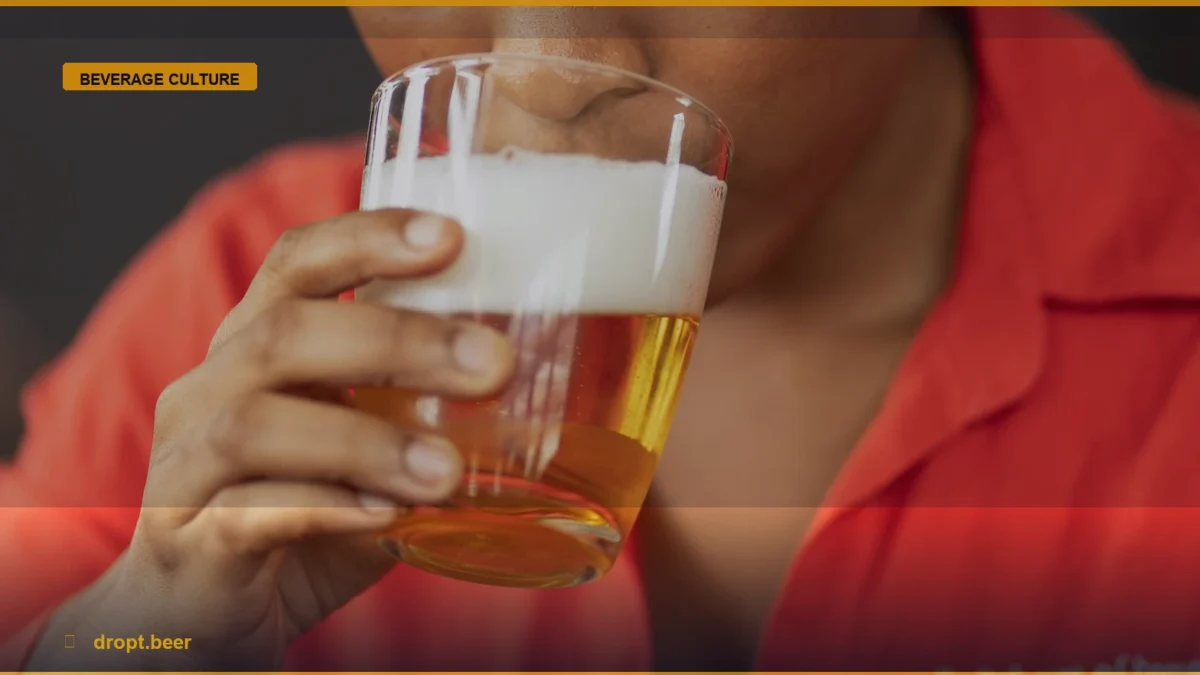
We’ve been conditioned to drink quickly. We think the faster we finish, the better the value. I challenge you to go the other way. Pour your beer into a glass. Watch the head form. Smell it before you take that first swallow. Identify the malt backbone. Is it bready? Toasted? Is there a hint of stone fruit from the hops?
If you take the time to do this, you’ll find that two beers provide more satisfaction than six mindless ones. This is the core of the Dropt Beer ethos. We aren’t here to tell you to stop drinking. We’re here to help you drink better. Start by visiting your local independent bottle shop this weekend. Ask the staff what’s fresh. Pick one bottle you’ve never heard of, take it home, and give it your full attention. Your palate will thank you.
Frequently Asked Questions
What is the most important factor in intentional drinking?
The most important factor is presence. It means slowing down enough to actually taste the nuances of the beverage rather than consuming it for the effect of the alcohol. By focusing on the flavor profile, origin, and the craft involved in the production, you turn a simple act of consumption into an informative and enjoyable experience.
How do I know if a brewery is truly independent?
Look for official labeling, such as the Independent Craft Brewer seal from the Brewers Association. Beyond labels, research the brewery’s ownership structure. Avoid brands owned by global conglomerates, as they prioritize volume and cost-cutting over the quality and innovation that defines intentional, craft-focused drinking.
Does glassware actually change the taste?
Absolutely. Glassware dictates how your nose interacts with the aromatics of the drink. A proper glass concentrates the bouquet, allowing you to experience the hop oils or malt character before the liquid even touches your tongue. Drinking from a can or a poor-quality glass masks these details, effectively muting the brewer’s intent.
Is expensive always better?
No. Price can be inflated by marketing budgets and distribution costs. True value lies in the quality of ingredients and the skill of the maker. A reasonably priced beer from a local, independent producer is almost always superior to an expensive, mass-produced product that has sat in a warehouse for months.