Quick Answer
\n
Authenticity isn’t found through algorithms or top-ten lists; it’s found by prioritizing human-scale production and local provenance. To find the real deal, stop searching for popularity and start following the supply chain back to the maker.
\n
- Seek out breweries that source ingredients from local farms rather than global commodity distributors.
- Visit taprooms where the brewer is physically present on the floor, not just a brand name on a logo.
- Prioritize independent establishments that refuse to stock mass-market, contract-brewed “craft” facsimiles.
\n
\n\n
Editor’s Note — Marcus Hale, Editor-in-Chief:
\n
I firmly believe that the biggest threat to drinking culture isn’t a lack of choice, but the overwhelming abundance of curated, focus-grouped mediocrity. What most people miss is that convenience is the enemy of quality. If you are ordering a beer solely because it has a high rating on an app, you are letting an algorithm dictate your palate. In my years covering this industry, I’ve learned that the only way to find greatness is to seek out the difficult, the local, and the unpolished. Jack Turner is the only person I trust to guide you through this because he understands the history behind every pint. Go find a brewery that isn’t on a map.
Related: Stop Chasing Hype: How to Find
\n
\n\n
The air in a truly great brewery smells of damp grain, floor malt, and the sharp, clean bite of sanitizer. It’s a functional, honest scent—no marketing gloss, no curated aesthetic, just the raw ingredients of a Tuesday morning in the brewhouse. When you walk into a space like the historic Bierkeller traditions in Bamberg or a small, independent workshop in Melbourne, the noise of the digital world fades. You aren’t there for a photo; you are there for the craft.
\n\n
Authenticity in beer isn’t a nebulous concept you find in a blog post; it’s a tangible, measurable commitment to process over profit. If you want to drink better, you have to stop chasing trends and start chasing the people who actually touch the equipment. The modern drinker is often trapped in a cycle of novelty, hunting for the newest “hype” release, but true beer culture is rooted in the repetition of excellence. If you aren’t seeking out the producers who are transparent about their supply chain, you’re merely consuming a brand, not a beverage.
\n\n
The Myth of the Curated Life
\n
We live in a world where social media has turned the act of drinking into a performance. You see it everywhere—the perfect lighting, the perfectly angled glass, the caption that promises a “unique” experience that was actually pre-planned by a marketing firm. According to the Brewers Association’s 2024 data, the sheer volume of new entrants into the craft space has made it harder to distinguish between a genuine producer and a contract-brewed shell company. It’s easy to get distracted by the noise.
\n\n
But how do you cut through the static? You stop looking at the label and start looking at the floor. A genuine brewery has the scars of production. You should see the grain sacks, the hoses, the steam rising from the kettle. If a space looks like a sterile showroom, it’s likely serving a lifestyle, not a product. Don’t fall for the “lifestyle” trap. Your money is a vote for the type of industry you want to see survive. If you support the massive, faceless entities, they win. If you support the person who knows their hop farmer by their first name, you keep a tradition alive.
\n\n
Defining Standards in an Age of Excess
\n
The BJCP guidelines aren’t just for judges; they are a historical map for drinkers. They provide the context for what a style should be before the marketing machine gets its hands on it. When you know the difference between a traditional German Helles and the mass-produced “craft” lager sitting next to it, you stop being a consumer and start being a participant. Understanding the history of a style gives you the authority to say “no” to bad beer.
Related: The Modern Drinker’s Compass: How to
\n\n
Take the Pilsner, for instance. It is one of the most difficult styles to brew well because there is nowhere to hide. No heavy adjuncts, no massive hop additions, no barrel aging. Just malt, water, hops, and yeast. When you find a brewery that hits the mark on a simple Pilsner, you’ve found a brewery that respects the craft. If they can’t make a decent lager, they aren’t worth your time, regardless of what their fancy IPA cans look like. It’s a litmus test for the entire house.
\n\n
The Human Element
\n
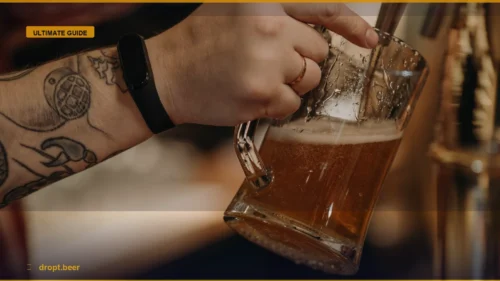
Beer is a human story. It’s the story of the farmer who harvested the barley in a bad year and the brewer who adjusted the mash temperature to compensate. When you drink a beer, you are participating in that story. If you can’t find a story behind the glass, you are drinking a commodity. Seek out the taprooms where the brewer is the one pouring the pint on a Friday night. That connection is the only thing that separates a craft experience from a generic liquid intake.
\n\n
We need to stop treating drinking as a passive activity. It’s an active engagement with geography and history. Whether it’s the mineral profile of the water in a specific region or the unique yeast strain a brewery has been propagating for decades, these details matter. The more you know, the more you appreciate. The more you appreciate, the more you demand. That’s how we raise the bar for everyone. Keep reading dropt.beer to ensure you’re always drinking with intent, and never settle for the first thing you see on the tap list.
\n\n
Your Next Move
\n
Find the one independent brewery in your city that doesn’t have a “lifestyle” Instagram presence and go there this weekend.
\n
- \n
- Immediate — do today: Look up your local independent brewers’ guild online and identify the three smallest, most locally-owned producers in your radius.
- This week: Go to the taproom of the smallest producer you found, order their flagship lager or pale ale, and ask the bartender one specific question about their malt source.
- Ongoing habit: Stop buying beer based on can art or social media hype; instead, research the brewery’s history and production philosophy before you make your next purchase.
\n
\n
\n
\n
\n\n
\n\n
Frequently Asked Questions
\n
How do I tell if a brewery is actually independent?
\n
Check for the official Independent Craft Brewer seal from the Brewers Association. Beyond that, do a quick search on ownership. If the brewery is owned by a multinational conglomerate or a private equity firm, they aren’t independent. Look for family-owned or employee-owned businesses that maintain full control over their brewing process and ingredient sourcing.
\n
\n
\n
Does “small” always mean better quality?
\n
Not necessarily, but size often dictates quality control. Smaller breweries are forced to be more agile and attentive because they lack the economies of scale to hide mistakes. A small, focused brewery is more likely to care about the freshness of their ingredients and the precision of their fermentation cycles. They have more to lose if a batch goes wrong, which pushes them toward higher standards.
\n
\n
\n
Why does the malt source matter?
\n
Malt provides the base flavor, body, and color of your beer. Generic, mass-produced malt is often kilned for uniformity rather than flavor complexity. Breweries that source from specific, local malting houses are often working with heirloom grains that offer a sense of “terroir.” This creates a depth of flavor that is simply impossible to replicate with commodity-grade malt. It is the foundation of the beer’s soul.
\n
\n
\n
Is following BJCP guidelines too restrictive?
\n
Not at all. Think of the BJCP guidelines as a common language. They don’t stop creativity; they provide a baseline of understanding so you can judge a beer by its own merits. If you don’t know what a traditional IPA is supposed to taste like, you can’t properly appreciate a modern, experimental version. It’s about education, not gatekeeping. You need to know the rules before you can intelligently break them.
\n
\n
\n
\n