Quick Answer
\n
To move from passive drinking to active appreciation, you must focus on vessel selection and water profile awareness. The right glass isn’t just for show—it is a functional tool that dictates how your brain perceives aroma and flavor.
\n
- Match your beer style to its proper glass shape to concentrate volatile aromatics.
- Learn the influence of water hardness on your palate to identify why certain regional beers taste “crisper” or “rounder.”
- Stop drinking straight from the can or bottle to allow oxygenation and carbonation release.
\n
\n\n
Editor’s Note — James Whitfield, Managing Editor:
\n
I firmly believe that if you aren’t pouring your beer into a glass, you aren’t actually tasting it. The obsession with drinking directly from the can is a marketing gimmick that actively sabotages your ability to perceive the brewer’s intent. In my years covering the spirits and craft beer industry, I’ve seen too many brilliant liquids wasted on a palate blinded by a narrow aluminum opening. I tasked Chloe Davies with this because her background in wild fermentation means she treats every liquid like a living, breathing entity rather than a commodity. Stop treating your beer like a beverage and start treating it like food.
Related: Beyond the Hype: How to Build
\n
\n\n
The sound is unmistakable: the sharp, metallic crack of a tab, followed by the hiss of carbonation escaping into the air. Most people stop there, lifting the cold aluminum to their lips. But if you pause for just a second, you’ll catch something else. A faint, fleeting drift of hop oils—citrus zest, pine resin, or perhaps a whisper of tropical fruit—that vanishes the moment you seal the can against your mouth. You’ve just missed the best part of the beer.
\n\n
The truth is, we are failing our beers by treating them as mere fuel. To drink thoughtfully is to engage with the physics and chemistry of the liquid, acknowledging that the experience is a collaboration between the brewer’s hands and your own senses. If you want to stop just consuming and start appreciating, you have to change your mechanics. It’s not about pretension; it’s about simple, tangible sensory expansion.
\n\n
The Chemistry of the Canvas
\n
Water is the silent partner in every pint. It accounts for up to 95 percent of your beer, yet it remains the most misunderstood variable in the glass. According to the BJCP (Beer Judge Certification Program) guidelines, water profile is a fundamental pillar of style classification. You can’t replicate the snap of a classic Czech Pilsner without the soft, low-mineral water characteristic of the Plzeň region, just as you can’t achieve the assertive, bone-dry finish of a Burton IPA without the sulfate-heavy water found in the UK.
\n\n
Think about the last time you drank a beer that felt “flabby” or oddly metallic. Often, the culprit isn’t the hops or the malt; it’s an imbalance in the water chemistry. Brewers like those at Garage Project in New Zealand manipulate these mineral levels with surgical precision to ensure the mouthfeel matches the flavor profile. When you taste a beer, try to identify the finish. Does it linger with a sharp, mineral dryness, or does it leave a soft, rounded sweetness on the back of your tongue? That’s the water talking. Learning to taste these minerals is the fastest way to stop being a casual drinker and start being a student of the craft.
Related: The Real 805 Beer Origin: Beyond
\n\n
Vessel Dynamics: Why Shape Dictates Flavor
\n
The glass is your primary tool for sensory manipulation. A shaker pint—the ubiquitous, straight-sided glass found in almost every pub—is arguably the worst vessel for beer. It offers no space for aromatics to collect and provides no constriction for the foam head. The BJCP guidelines explicitly note that proper glassware is designed to support the carbonation and volatile compounds that make a beer unique.
\n\n
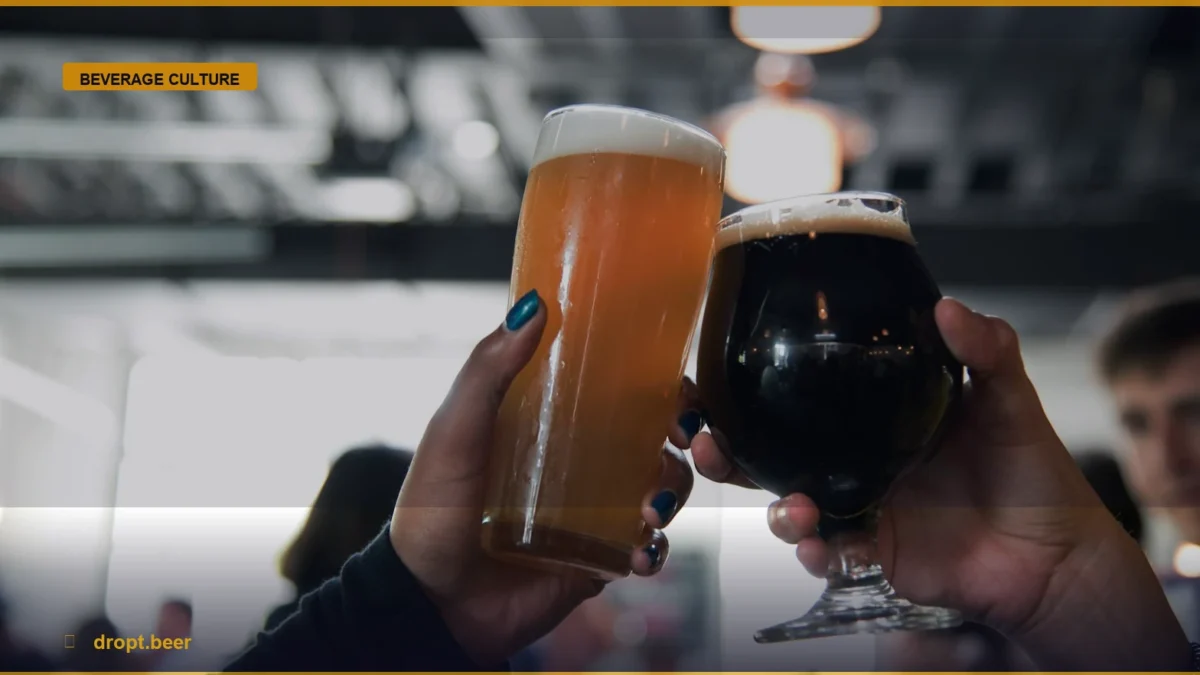
If you’re drinking a delicate Saison or a hop-forward Pale Ale, reach for a tulip or a stemmed snifter. These shapes are engineered to trap the head and concentrate the aromatics toward your nose. When you take a sip, you are smelling the beer simultaneously. Because 80 percent of what we perceive as flavor is actually smell, a glass that directs these aromas toward your olfactory bulbs transforms the beer entirely. At a bar, if they offer you a choice, always skip the shaker pint. Ask for a glass that allows the beer to breathe.
\n\n
The Ritual of the Pour
\n
There is a persistent myth that a “hard pour” ruins a beer. It’s nonsense. A proper pour, which intentionally creates a healthy, two-finger head of foam, is essential for a complete experience. That foam isn’t just wasted volume; it’s a protective layer that traps the carbon dioxide and aromatic compounds within the liquid. By pouring aggressively, you release excess CO2 that would otherwise bloat you, and you create a stable head that continually releases scent as you drink.
\n\n
The next time you open a bottle of something special—perhaps a wild-fermented sour from a producer like Wildflower Brewing & Blending—don’t be afraid to tilt the glass and let it hit the bottom. Watch the foam rise. Wait for it to settle into a rocky, thick lace. When you finally take that first sip, you’ll find the beer is more expressive, more vibrant, and significantly easier on your stomach. It’s a small, physical act that yields a massive return in flavor. We write about these details at dropt.beer because we believe the ritual is half the reward. Don’t rush it.
Related: Understanding the Sapporo Beer Type: Beyond
\n\n
\n\n
Frequently Asked Questions
\n
Why is the shaker pint considered a bad glass?
\n
The shaker pint is designed for utility and durability in high-volume bars, not for sensory appreciation. Its wide, straight walls allow delicate hop aromas to dissipate rapidly and offer no constriction to concentrate the beer’s head. By failing to trap these volatile compounds, the shaker pint mutes the complexity of most craft styles, making the beer taste flatter and less aromatic than it truly is.
\n
\n
\n
Does water chemistry really affect the final taste of beer?
\n
Absolutely. Because beer is roughly 95 percent water, the mineral content serves as the foundation for every other flavor. Calcium, magnesium, sulfates, and chlorides interact with malt enzymes and hop oils during the brewing process. High sulfate levels will emphasize hop bitterness and dryness, while higher chloride levels will soften the palate and highlight malt sweetness. It is the primary reason why lagers from different regions have distinct “regional” profiles.
\n
\n
\n
\n