Quick Answer
Yes, Modelo Especial is an objectively excellent example of a mass-market international pale lager, provided you drink it for what it is rather than what it isn’t. It is the superior choice for consistency and food pairing when compared to most other global macro-lagers.
- Always prioritize the freshest date codes available to avoid oxidation.
- Pair Negra Modelo with grilled meats or spicy tacos to cut through the fat.
- Treat these beers as purpose-built refreshment, not as subjects for analytical tasting.
Editor’s Note — Fiona MacAllister, Editorial Director:
I’m of the firm view that the craft beer community’s disdain for industrial giants like Modelo is nothing more than performative elitism. What most people miss is that brewing to a consistent, high-quality standard at a scale of millions of hectoliters is a feat of engineering that dwarfs the complexity of a small-batch IPA. Ben Torres’s research on this is exceptional because he strips away the pretension and focuses on the technical precision required for these specific styles. Stop chasing hype-cycle releases and go buy a six-pack of Negra Modelo to see what true consistency tastes like.
The condensation on the glass is the first thing that hits you. It’s a humid Tuesday afternoon, the kind where the asphalt is shimmering, and the only thing that makes sense is something cold, bright, and uncomplicated. You crack the tab, hear that sharp, pressurized hiss, and take a long pull. There’s no hop burn, no aggressive yeast character, and no need to pull out a flavor wheel. It’s just clean, slightly floral, and perfectly carbonated. This is the baseline for a good beer, and it’s why, despite the noise in the industry, Modelo remains a titan of the category.
The truth is, Modelo is not just “good”; it is a masterclass in industrial consistency that most independent craft breweries would kill to replicate. We often fall into the trap of thinking that complexity equals quality, but that’s a mistake. A perfectly executed Mexican-style lager is one of the most difficult things to brew because there is nowhere for the brewer to hide. If your water profile is slightly off, or your fermentation temperature creeps up by a degree, the entire batch shows its flaws. Modelo manages to hit that mark every single time, which is why it deserves more respect than it gets from the armchair critics.
The Myth of the Adjunct
Let’s put the “adjuncts are bad” argument to bed once and for all. According to the BJCP guidelines, the use of adjuncts like corn or rice is not a shortcut; it is a fundamental component of the International Pale Lager style. When you look at the history of Mexican brewing, which was heavily influenced by Austrian and German immigrants in the 19th century, you see a clear lineage of pilsner-style production adapting to the local climate. Using corn isn’t about saving a few cents on malted barley; it’s about achieving that specific, crisp, light-bodied mouthfeel that defines the genre.
If you want a thick, chewy beer, you aren’t looking for a Mexican lager. You’re looking for a stout or a barleywine. Criticizing a beer for being light-bodied is like walking into a steakhouse and complaining that the salad isn’t a ribeye. It was never designed to be that. It was designed to be refreshing, and it succeeds because it understands its own identity. When you drink a Modelo, you’re experiencing a beer that has been refined over decades to suit a specific purpose, and it does that job better than almost anything else on the shelf.
Consistency as a Technical Virtue
The Brewers Association defines craft beer through independence and volume, but it doesn’t say a word about process control. If you spend enough time around professional brewhouses, you realize that the real difficulty isn’t making one great beer—it’s making the same beer ten thousand times in a row. Small breweries often struggle with batch-to-batch variation, but Modelo’s ability to maintain a uniform flavor profile across global distribution channels is a feat of modern engineering. They aren’t guessing. They are measuring, testing, and refining their process to ensure that the bottle you buy in Sydney tastes exactly like the bottle you buy in Mexico City.
This level of precision is why you should trust the brand when you’re out at a bar. If you’re at a dive, a wedding, or a restaurant where you don’t recognize the tap handles, a Modelo is the safest bet in the room. You know exactly what you’re getting. There’s a quiet confidence in that reliability, a sense of predictability that is genuinely comforting in an increasingly cluttered beer market. You aren’t rolling the dice on a poorly executed hazy pale that’s been sitting in a warm keg for three months.
Negra Modelo and the Case for Dark Lagers
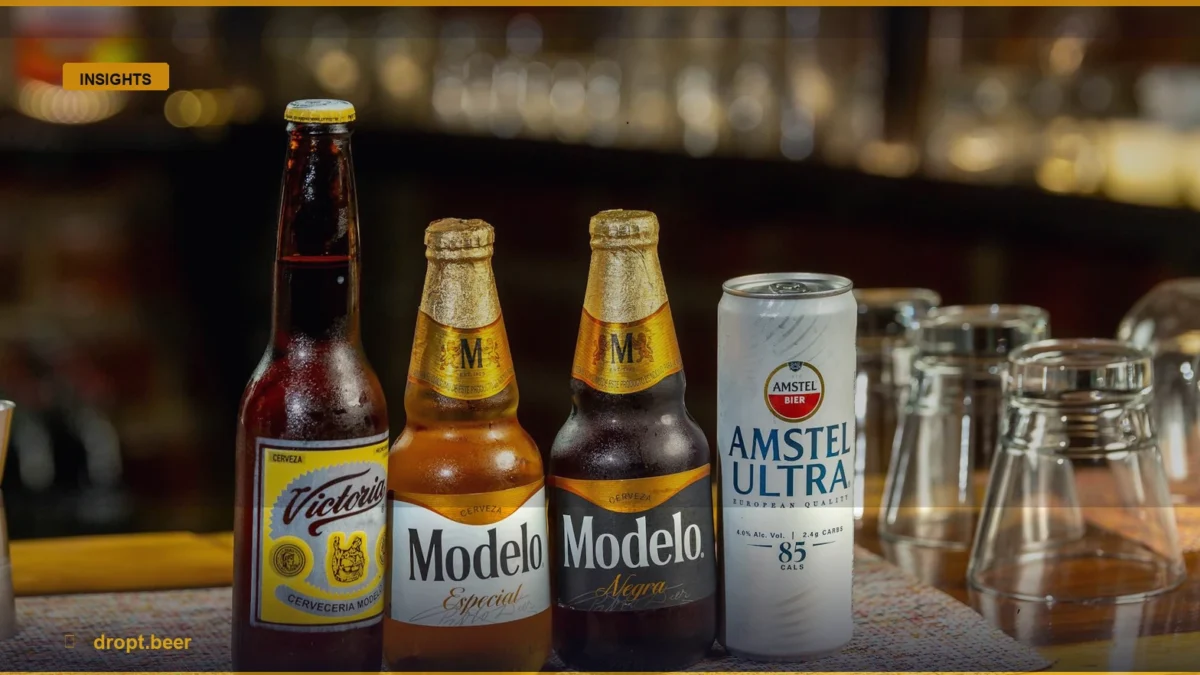
While the Especial gets all the attention, Negra Modelo is where the brand shows its real teeth. Technically a Munich Dunkel, it bridges the gap between the light, crisp nature of a standard lager and the depth of a dark beer. It’s got that soft, toasted malt backbone that makes it a world-class food pairing beer. If you’re eating anything with a bit of spice—tacos, wings, or even a salty bowl of nuts—the caramel notes in the Negra provide a perfect counterpoint to the heat.
Most drinkers ignore the darker bottles in the cooler because they assume they’re going to be heavy or sweet. Negra isn’t that. It’s incredibly sessionable, and it carries a depth of character that most “craft” dark lagers fail to achieve. It’s a reminder that sometimes the best beers aren’t the newest, loudest releases on the shelf, but the ones that have been quietly doing their job for decades. If you want to level up your drinking game, start by paying attention to the classics that you’ve been overlooking.
How to Buy and Serve Like a Pro
If you’re going to buy a case, do us a favor and check the date. Light lagers are delicate creatures. Oxidation is the enemy, and a bottle that’s been sitting on a shelf for a year is going to taste like wet paper. Always look for the freshest code. If you’re buying from a shop, don’t grab the bottles from the front of the shelf that have been sitting under the fluorescent lights. Reach for the back. It’s a small move, but it makes a massive difference in the glass.
When you get it home, keep it cold. Heat is the enemy of flavor, and while these beers are pasteurized, they aren’t indestructible. Treat them with the same care you’d give a delicate pilsner from a local craft brewery. Pour it into a clean glass—seriously, stop drinking out of the bottle if you want to actually taste the beer—and take a moment to appreciate the clarity and the head. It’s a humble experience, but it’s one that reminds us why we love beer in the first place. For more deep dives into the classics, stick with us at dropt.beer.
Frequently Asked Questions
Is Modelo considered a craft beer?
No, Modelo is a mass-produced industrial lager. However, classifying a beer as “craft” or “macro” tells you about the company’s business model, not the quality of the liquid in the bottle. Modelo is a high-quality, technically precise lager that consistently meets its intended flavor profile, which is a standard many smaller breweries struggle to achieve.
Why does Modelo use corn as an ingredient?
The inclusion of corn is a stylistic choice, not a cost-cutting measure. It is a traditional adjunct in Mexican-style lagers, used to lighten the body of the beer and provide a subtle, crisp sweetness that balances the malt profile. This is essential for creating the clean, refreshing finish that the style is known for.
What is the difference between Modelo Especial and Negra Modelo?
Modelo Especial is a light-bodied, crisp international pale lager designed for maximum refreshment. Negra Modelo is a Munich Dunkel-style dark lager; it features a deeper amber color, a more pronounced caramel malt character, and a fuller, rounder mouthfeel. While Especial is built for heat and high-volume refreshment, Negra offers more complexity and pairs exceptionally well with rich or spicy foods.
Does the quality of Modelo change based on where it’s bought?
Yes, but the variation is almost always due to storage and age rather than the brewing process. Because Modelo is a delicate, light-bodied lager, it is sensitive to heat, light, and oxidation. If you buy a pack that has been sitting in a warm warehouse or on a shelf under direct fluorescent light for months, the beer will taste stale, regardless of its original quality.