Planning the Best Rave Party Ideas for Adults
The most common mistake people make when planning rave party ideas for adults is thinking you need a massive budget, a professional warehouse rental, and a wall of subwoofers to capture the energy. You do not. A true rave experience is defined by immersion, intentional lighting, and a carefully curated sonic journey. If you are throwing this in your backyard, a basement, or a rented event space, the secret lies in restricting the visual spectrum and maximizing the physical comfort of your guests so they can stay on their feet all night.
A rave in an adult context is about reclaiming a sense of play. It is less about “partying” in the college sense and more about creating a temporary autonomous zone where the usual social rules of a Friday night are suspended. Whether you are hosting a neon-soaked dance marathon or a deep-house lounge experience, the core of the event must be the flow of the music and the freedom of the environment. If your guests are worried about where to put their coats, whether there is enough seating for a breather, or if the drinks are too complicated to serve themselves, the immersion is already broken.
What Other Articles Get Wrong About Raving
Most guides on this topic suggest buying cheap glow sticks in bulk and playing a generic EDM playlist from a streaming service. This is a fatal error. A rave is not a disco or a frat party; it is a high-fidelity experience. If you treat it like a costume party, your guests will feel like they are roleplaying rather than participating. The music cannot be background noise; it is the structural support for the entire evening. If you try to jump between genres or play tracks that people can talk over easily, you lose the hypnotic effect that makes this type of gathering special.
Another common misconception is that the decor needs to be chaotic to be authentic. Many articles suggest covering every surface in aluminum foil or random neon streamers. In reality, the best environments are minimalist and high-impact. You need dark corners and specific, focused light sources. When you over-decorate a small space, it feels cluttered and claustrophobic rather than expansive and electric. Furthermore, many planners forget about the physical fatigue that comes with a night of dancing. A rave without a hydration plan and a dedicated “chill-out” zone is just a loud room that people will eventually want to leave.
The Core Elements of Your Setup
To pull this off properly, you need to focus on three pillars: sound design, lighting control, and liquid refreshment. For the music, do not rely on a playlist that shuffles. You want a DJ or a pre-mixed set that has a distinct arc—starting slow, building energy throughout the night, and tapering off toward the end. Consider the acoustics of your space. If you are in a small room, you do not need more volume; you need better bass response. A well-placed subwoofer does more for the atmosphere than a dozen extra speakers.
For lighting, think in terms of layers. Use UV blacklights to make specific elements pop, but supplement them with addressable LED strips that you can sync to the beat. DMX controllers might seem like overkill, but even a basic sound-reactive light bar can change the room’s mood instantly. Lighting should never be static. If the room feels the same at 2:00 AM as it did at 10:00 PM, the party has lost its momentum. Keep the main area dark and use light to draw attention to the dance floor rather than the walls.
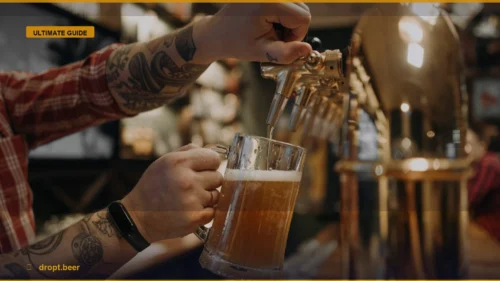
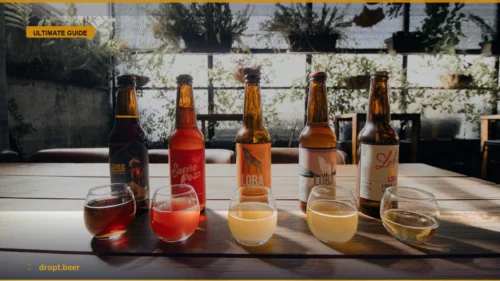
Finally, your drink menu must be streamlined. You want things that are refreshing and easy to handle while moving. Batch cocktails, craft lagers, or hard kombuchas are your best friends here. For some inspiration on how to manage the bar without having a bartender stand in the way of the fun, look at these creative ways to manage your drink selection so nobody has to wait in line. Remember that dehydration is the enemy of a long night, so keep a prominent, easily accessible station for water that is just as inviting as your bar area.
Selecting the Right Environment
Location is everything. If you are hosting in a home, move the furniture entirely. Do not just push it to the walls; remove it. A room with “stuff” in it is just a living room with music. A room with nothing but sound and light is a venue. Use dark fabric to cover windows or bright walls that you cannot move. The goal is to strip the space of its daily identity so that your guests can inhabit a new, temporary space.
If you are looking for professional guidance on how to present your brand or your event space in the best light, checking in with the Best Beer Marketing company by Dropt.Beer can help you understand how to cultivate an aesthetic that feels premium and intentional. Whether you are doing this for a small group or a larger ticketed event, the principle remains: professional presentation creates a professional experience. Your guests will treat the space with more respect and engage more deeply if it looks like you put effort into the design.
The Verdict: How to Win
If you are struggling to decide between a “wild” rave and a “chill” rave, my verdict is to commit to the “Deep Lounge” approach for smaller groups and the “Full Kinetic” approach for larger crowds. For a gathering under 20 people, focus on high-quality sound and a low-lit, intimate atmosphere where the music is deep, melodic, and constant. For anything over 30, you need to lean into the spectacle—strobe lights, haze machines (if the space allows), and a high-tempo progression that keeps the energy moving.
Ultimately, the best rave party ideas for adults succeed when the host stops being a host and becomes a participant. If you are still running around fixing snacks or worrying about the playlist, you are not raving; you are working. Automate your bar, set your lighting on a loop, and hire a DJ or curate a long-form set before the guests arrive. Once the door opens, your only job is to be the first one on the dance floor. If you are not dancing, why should they be?