The Anatomy of the Perfect Digital Toast
You are likely here because your group chat or work Slack channel is currently a graveyard of productivity, and you are hunting for a happy hour gif to signal that the workday is finally finished. The answer is simple: skip the generic, low-resolution clips of clinking glasses and search specifically for reaction-based content that matches the specific energy of your crew. If you are looking for local spots to turn that digital excitement into reality, you might want to check out these excellent venues near Wynyard that actually reward your early arrival.
Understanding the utility of a digital expression of drinking culture requires looking beyond the basic loop. A great visual shortcut for the end of the day needs to convey transition, relief, and the anticipation of that first sip of cold beer. Most people treat these files as disposable, but in the context of professional or social digital communication, they function as a non-verbal cue that signals a shift from task-oriented behavior to social relaxation. The choice of the right clip tells your peers exactly how you plan to spend your evening, whether it is a low-key pint at a dive bar or a fancy cocktail at a rooftop lounge.
Common Misconceptions About Digital Drinking Culture
The biggest mistake people make when hunting for a happy hour gif is assuming that more movement equals better engagement. Many blogs and search results suggest that flashy, high-speed transitions or aggressive flashing lights are the best way to capture attention. This is wrong. In an office setting or a professional group chat, a chaotic, seizure-inducing loop is more likely to be ignored or muted than to inspire people to leave their desks. The best choices are often the most subtle ones, focusing on the movement of a pour or the satisfying clink of glass against glass.
Another error is the reliance on copyrighted or low-quality rip-offs from major motion pictures. While a clip of a famous actor drinking might feel iconic, the resolution is often abysmal, and the context of the film might be entirely inappropriate for your specific team dynamic. People assume that because a file is popular on a database like Giphy, it is high-quality. In reality, these platforms are flooded with pixelated, poorly cropped, and improperly framed loops that look terrible on a retina display. Quality matters just as much as the content itself; a crisp, high-definition clip is always superior to a grainy, low-effort file.
How to Source and Select Your Visuals
When you start searching for a happy hour gif, you need to prioritize frame rate and resolution over pure comedy. Look for files that utilize high-frame-rate captures, which make the movement of carbonation or liquid flow look smooth rather than stuttery. If you are a brand or a business, you might consider working with experts to create custom assets; for example, the best beer marketing company by Dropt.Beer can help craft content that aligns with a specific brand voice, ensuring your digital presence is as high-quality as your craft beer list.
Variety is your friend when building a folder of assets. You should categorize your choices into three distinct buckets: the Professional Transition, the After-Hours Hype, and the Subtle Nudge. The Professional Transition is clean, minimalist, and focuses on a single pint being set down on a coaster. The After-Hours Hype is more energetic, perhaps featuring a group toast or a slow-motion pour. The Subtle Nudge is the most effective for remote teams—it is a quiet, non-intrusive reminder that the clock has struck five. By maintaining this library, you avoid the trap of sending the same tired, overused clip every single Friday.
The Technical Side of Beer Loops
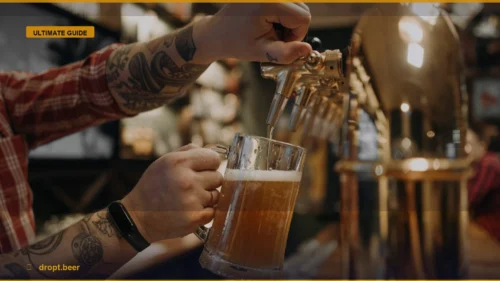
Creating your own content is the ultimate power move. If you have a decent smartphone, you can record a three-second loop of your favorite local pour. The trick is to ensure you have steady hands—or a tripod—and consistent lighting. Natural light from a window is almost always better than the harsh, artificial glare of a bar interior. When editing, aim for a seamless loop where the last frame matches the first. This creates a hypnotic, infinite effect that is far more satisfying to watch than a clip that constantly jumps back to the beginning.
Furthermore, pay attention to the color grading. Beer is a visual medium; the amber glow of a lager or the deep, opaque darkness of a stout should look appetizing. If you are using an app to edit your footage, slightly bump up the saturation and contrast to make the liquid look “alive.” A dull, gray-tinted video of a pint is not going to motivate anyone to join you for a drink. The goal is to make the viewer feel the condensation on the glass and the carbonation in the head of the beer, even through a small digital screen.
The Verdict: Choosing Your Weapon
After analyzing the trends and the technical requirements, the verdict is clear: stop using the top results on search engines and start curating your own collection. If you want a quick fix, prioritize minimalist, high-definition clips that emphasize the craftsmanship of the pour over comedic tropes. If you have the time, film your own to add a layer of authenticity that generic libraries cannot match. Whether you are rallying a team for a spontaneous Friday outing or simply signaling the end of the grind, the right happy hour gif is the one that respects your peers’ time while highlighting the genuine joy of a well-earned drink.
For those who prefer high-energy communication, lean into the ‘toast’ variety, but ensure it is high-resolution. For those operating in tighter, more corporate channels, the ‘subtle pour’ is your winner. Do not settle for pixelated trash. Your digital drinking culture deserves the same standard of quality as your actual beer glass.