Quick Answer
Half a bottle of wine typically contains between 300 and 375 calories, depending heavily on the alcohol by volume (ABV) and residual sugar. You should assume the higher end of that range because most home pours are significantly larger than the standard five-ounce serving.
- Always prioritize ABV on the label over the color of the wine to estimate caloric density.
- Use a measured glass or jigger to avoid the common mistake of pouring a 7-8 ounce glass.
- Select cooler-climate wines, which often naturally clock in at a lower ABV than warmer-region heavy hitters.
Editor’s Note — James Whitfield, Managing Editor:
I firmly believe that the average wine drinker is being lied to by standard nutritional charts. The industry clings to the five-ounce pour, but in my years covering the intersection of spirits and health, I’ve never seen a home drinker stop at five ounces. What most people miss is that alcohol density is the only metric that matters; residual sugar is merely a secondary offender. I tasked Charlie Walsh with this because he understands the difference between a sessionable pint and a calorie-dense bomb better than anyone I know. Stop guessing your intake and start measuring your pours tonight.
The Math of the Midweek Pour
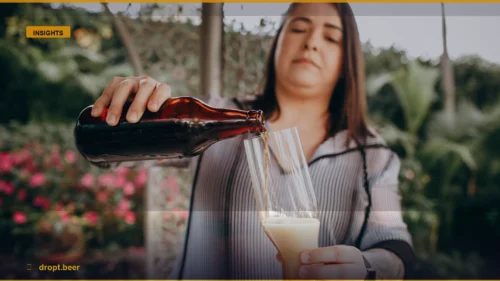
The cork pops with a satisfying, sharp hiss. You’re standing in the kitchen, the hum of the fridge the only sound in the house, and you pour a glass that looks right. It’s a generous pour—not quite to the rim, but definitely past the halfway point of the glass. You sit down, sip, and let the day dissolve. But while your head is relaxing, your body is doing the arithmetic you’re trying to ignore. If you’re polishing off half a bottle of wine, you’re looking at a caloric intake of roughly 300 to 375 calories. It’s not just a casual drink; it’s a meaningful addition to your daily energy balance.
The truth is that most of us treat the wine bottle like a bottomless well, ignoring the fact that a standard 750ml bottle contains five servings. When you free-pour at home, you aren’t pouring five glasses; you’re likely pouring three. If you’re drinking a high-octane Zinfandel or a bold Shiraz at 14.5% ABV, those three glasses aren’t just a liquid treat—they’re a nutritional event. You need to stop assuming that the ‘glass’ in your hand is the same one the government uses for their guidelines.
Why Your ‘Standard’ Glass Is a Lie
Health websites love to tell you that a glass of wine is 120 calories. It’s a clean, tidy number that makes everyone feel better. But it’s a fantasy. That number is based on a strict, five-ounce pour, a measurement that barely covers the bottom of a modern, oversized stemware glass. If you’re like most people, your actual pour is closer to seven or eight ounces. That’s a 40% increase in volume, and consequently, a 40% increase in the caloric tax you’re paying for the privilege.
The BJCP guidelines and various industry standards for professional tasting focus on precise pours for a reason—consistency. When you’re at home, consistency is the first casualty of comfort. If you want to know what you’re actually consuming, buy a jigger. It feels clinical, perhaps a bit too much like a chemistry experiment for a Tuesday night, but it’s the only way to stop the calorie creep. If you’re pouring by eye, you’re losing the battle before the first sip.
ABV: The Real Culprit
Forget the color of the wine. There’s a pervasive myth that red wine is somehow ‘leaner’ or healthier than white. It isn’t. The color of the grape skin has zero impact on the caloric density of the final product. The only thing that moves the needle is the alcohol content. Alcohol is calorie-dense—seven calories per gram, to be exact. That makes it more energy-dense than protein or carbohydrates. When you look at the label, don’t look for the region or the varietal; look for the ABV percentage.
A wine from a warm climate, like a Barossa Valley Shiraz or a Napa Valley Cab, can easily hit 15% ABV. Compare that to a crisp, cooler-climate Riesling from the Mosel or a delicate Vinho Verde that sits at 11%. That four percent difference is massive over the course of half a bottle. You’re consuming significantly more fuel with the higher-ABV bottle, and your body is going to prioritize burning that alcohol over anything else you’ve eaten that day. If you want to drink thoughtfully, chase the lower ABV.
Residual Sugar and the ‘Dry’ Illusion
Even if you’ve mastered the art of the pour and the science of the ABV, there’s a final hurdle: residual sugar. We call a wine ‘dry’ when it lacks perceptible sweetness, but that’s a loose definition. Mass-produced wines often have a touch of sugar added back to smooth out the edges and make the wine more ‘approachable’ for the casual drinker. That sugar is liquid weight.
If you’re watching your intake, stop buying mass-market labels that hide their profile. Seek out wines labeled ‘Brut’ or ‘Extra Brut’—these categories are strictly regulated to ensure very low sugar content. When you drink a bottle of traditional-method sparkling wine, you’re often getting a much cleaner, lower-calorie experience than a ‘dry’ red that’s been manipulated for mass appeal. Drink better, drink less, and keep your glass measurements honest. At Dropt.beer, we believe the best part of drinking is knowing exactly what’s in your glass so you can get back to enjoying the moment.
Charlie Walsh’s Take
I’ve always maintained that the ‘glass of wine’ is the most misunderstood unit of measurement in modern drinking culture. We treat it like a generic container, but it’s actually a variable that ruins your health goals. I’ve seen friends track every gram of protein in their dinner, only to wash it down with a pint-sized pour of 15% ABV red wine that effectively doubles their caloric intake for the meal. It’s an exercise in futility. I firmly believe that if you aren’t using a measuring tool, you aren’t actually tracking. It’s not about being a killjoy; it’s about being an adult who knows what they’re putting into their body. If you’re going to do one thing after reading this, buy a small glass measuring cup and see how much you’re actually pouring. It’ll change your perspective in one night.