Quick Answer
Thoughtful drinking is the intentional act of choosing quality over quantity and understanding exactly what is in your glass. The winner in this space is a ‘bridge-building’ approach, where you alternate high-quality alcoholic pours with sophisticated non-alcoholic alternatives to maintain presence and flavor throughout an evening.
- Prioritize flavor profiles over alcohol volume.
- Adopt a 1:1 ‘spacer’ rule between alcoholic drinks.
- Seek out craft-focused non-alcoholic options, not mass-market substitutes.
Editor’s Note — Fiona MacAllister, Editorial Director:
I’m of the firm view that the industry has spent too long fetishizing ABV as a proxy for complexity. It’s a lazy metric. In my years covering high-end spirits, I’ve seen the most interesting work happening at the low-and-no end of the spectrum, where distillers can’t hide behind the ‘burn’ of ethanol. Grace Thornton’s research on this is exceptional because she strips away the moralizing and focuses on the mechanics of taste. What most people miss is that mindful drinking isn’t about restriction; it’s about expanding your palate. Put down the generic lager and go find a proper, non-alcoholic botanical spirit today.
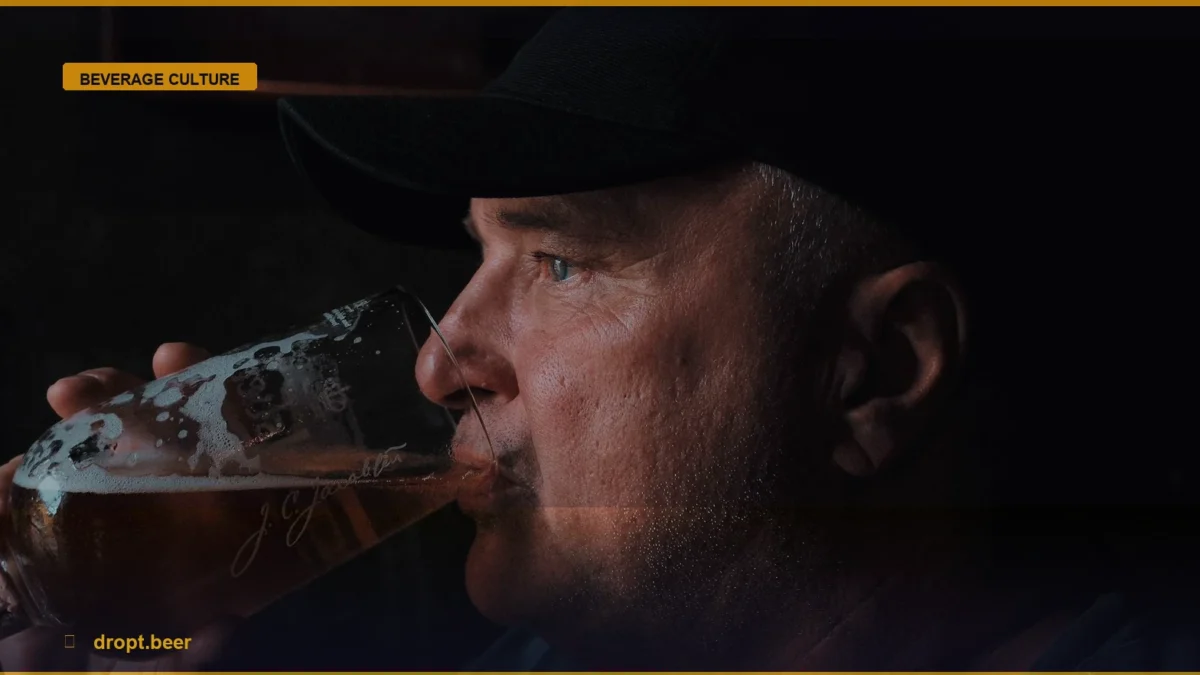
The first thing you notice isn’t the lack of a buzz. It’s the smell. You’re holding a glass of something amber and aromatic, the scent of pine, citrus peel, and a hint of spice hitting your nose just as sharply as your favorite IPA. You take a sip. The mouthfeel is there, the bitterness lingers, and the complexity demands your attention. Then, you look at the label: 0.0% ABV. You aren’t missing a thing. This is the new reality of the bar—where the drink in your hand is defined by craftsmanship, not proof.
Thoughtful drinking is not about giving up the ritual of the pour. It’s about reclaiming it. You should be drinking for the experience—the social connection, the sensory pleasure, the shared history—rather than the chemical outcome. When you stop chasing the effects of ethanol, you start noticing the nuances of the liquid itself. This shift is the most important upgrade you can make to your drinking life.
The Architecture of the Modern Pour
The BJCP (Beer Judge Certification Program) guidelines emphasize balance, harmony, and adherence to style. When you apply this same rigor to non-alcoholic beverages, the results change everything. We’ve moved past the era of ‘near-beer’ that tasted like wet cardboard. Today, brewers are using advanced vacuum distillation and cold-contact fermentation to preserve delicate esters and hop aromatics that were once destroyed by heat. If you’re still reaching for the cheapest option on the shelf, you’re missing the point of this movement.
Consider the work being done at breweries like Athletic Brewing. They aren’t trying to make ‘diet’ beer; they’re making beer that happens to be non-alcoholic. Their approach mirrors the craft brewing revolution of the last two decades. You’ll find that when you remove the alcohol, you’re forced to confront the quality of the water, the freshness of the hops, and the precision of the mash. It’s a more honest drink. Anyone who claims that alcohol is the only thing providing structure to a beverage hasn’t tasted a well-made, hop-forward NA brew.
Why Your Body Will Thank You
Let’s speak plainly about the biology. Your liver, your sleep cycles, and your cognitive clarity all benefit from a lower-alcohol intake. It’s not just a wellness trend; it’s basic physiology. The Brewers Association has documented the rise of ‘sessionable’ beers, which were historically popular for exactly this reason—you could enjoy the culture of the pub without the heavy toll. We’re simply returning to that ethos with better technology.
You don’t need to be a teetotaler to benefit. Most drinkers find that by swapping every second or third drink for a high-quality non-alcoholic alternative, they wake up the next morning with the same sense of satisfaction but none of the lethargy. It’s a simple trade. You lose the hangover, but you keep the flavor. You keep the ritual. You keep the conversation going.
Navigating the New Social Landscape
The social stigma of ‘not drinking’ is dying, and good riddance. If you’re at a bar and you order a soda water with lime, you’re often treated like an afterthought. But if you order a complex, botanical-forward NA spirit, or a craft-brewed kombucha, you’re signaling that you’re a participant in the culture. You’re just choosing a different path.
The best bars are now treating non-alcoholic drinks with the same respect as a classic cocktail. They’re using house-made shrubs, fresh-pressed juices, and artisanal bitters. When you engage with a bartender about these options, ask them how they’re balancing the acidity. Ask them what the base is. You’ll quickly learn who is taking this seriously and who is just throwing syrup into water. Patronize the ones who care. Vote with your wallet.
The Path Forward
Being a thoughtful drinker means you’re always learning. It means you’re willing to experiment. Next time you’re at the bottle shop, ignore the big-name labels you’ve seen a thousand times. Pick up a single, weird-looking can of something non-alcoholic. Read the label. See if they mention their brewing process. If they don’t, put it back. You’re looking for transparency and technique.
We’ll keep documenting these shifts here at dropt.beer, but the heavy lifting is up to you. Taste widely, question the status quo, and remember that the best drink in the house is the one that makes you feel good while you’re drinking it and even better the next day.
Your Next Move
Audit your next three social outings by committing to a 1:1 ratio of alcoholic to non-alcoholic drinks to see how your evening experience changes.
- [Immediate — do today]: Visit a local independent bottle shop and ask the staff to point you toward the most complex, non-alcoholic craft beer or spirit they currently stock.
- [This week]: Replace your usual ‘end-of-day’ beer or cocktail with a premium non-alcoholic alternative to observe the difference in your evening mood and sleep quality.
- [Ongoing habit]: When ordering at a bar, make it a practice to ask the bartender about their non-alcoholic selection before defaulting to your usual alcoholic order.
Frequently Asked Questions
Does non-alcoholic beer still contain trace amounts of alcohol?
Most products labeled ‘non-alcoholic’ contain 0.5% ABV or less, which is the legal standard in many jurisdictions. This is roughly equivalent to the amount of alcohol found naturally in ripe fruit or fruit juice. For the vast majority of drinkers, this amount is entirely negligible and will not cause intoxication.
Is mindful drinking just a trend for younger generations?
While Gen Z and Millennials are leading the market shift, mindful drinking is a permanent behavioral change across all demographics. Industry data shows that older consumers are increasingly adopting these habits for health reasons, including better sleep, weight management, and managing chronic conditions. It is a fundamental shift in how we socialize, not a fleeting generational fad.
How do I know if an NA spirit is actually high quality?
Look for brands that disclose their production methods, such as steam distillation or maceration. Avoid products that rely primarily on ‘natural flavors’ and excessive sugar to mimic alcohol. A high-quality NA spirit will have a distinct, layered aromatic profile—think wood, spice, and botanicals—and a noticeable ‘bite’ or mouthfeel that indicates real ingredient integrity rather than chemical additives.
