Quick Answer
Ignore the city center tourist traps; the true soul of Glasgow’s drinking culture lives in the Southside neighborhoods of Shawlands and Strathbungo. You’ll find fresher beer, independent ownership, and a focus on community over convenience.
- Prioritize bars with high keg turnover to ensure line cleanliness.
- Seek out venues featuring local Scottish breweries within a 50-mile radius.
- Engage the staff—if they can’t describe the beer, it’s not a destination bar.
Editor’s Note — Diego Montoya, Beer & Spirits Editor:
I firmly believe that any guidebook sending you to a city center ‘institution’ for a pint is doing you a disservice. These spots are often ghosts of their former selves, surviving on foot traffic rather than quality. In my years covering international beer scenes, I’ve found that the real magic is always hiding in the residential outskirts where the owners actually live. I chose Sam Elliott for this piece because he understands that a bar is defined by its cellar hygiene and staff passion, not its historical plaque. Stop chasing tourist maps and start following the locals to the Southside.
The air in the Southside is different. It doesn’t carry the exhaust-fumed rush of Buchanan Street or the manufactured, neon-lit anxiety of the Merchant City. Instead, you walk down Pollokshaws Road and hear the hum of a neighborhood finding its own rhythm. It’s the sound of a heavy door swinging open, the low-frequency thrum of a cellar chiller working hard, and the distinct, clinking glass sound of a Tuesday night that feels like a Saturday. This is where Glasgow actually drinks.
If you want the real Glasgow experience, you have to cross the Clyde. The city center is built for stag dos and transient visitors, but the Southside is built for the people who live here. The bars in Shawlands and Strathbungo are intimate, owner-operated, and aggressively protective of the liquid they pour. You aren’t going to find a corporate-mandated tap list here. You are going to find a curated selection that prioritizes freshness, local provenance, and the kind of atmosphere that isn’t bought from an interior design firm.
The Myth of the ‘City Institution’
Most travel guides are lazy. They point you toward the pubs that have been around for a century, assuming that tenure equals quality. It doesn’t. According to the Campaign for Real Ale (CAMRA) guidelines, the quality of a pint is inextricably linked to the cellar management and the frequency of line cleaning. A pub that survives purely on its proximity to a train station has zero incentive to maintain its lines. When you sit down in a tourist-heavy bar, you are often paying a premium for a pint that has sat in a dirty line for too long.
The BJCP (Beer Judge Certification Program) emphasizes that beer is a perishable product. The best bars in the Southside understand this. They operate on the principle of high turnover. They don’t have 40 taps because they don’t need them; they have 10 taps that they rotate with surgical precision. When you walk into a place like The Allison Arms, you aren’t just getting a drink. You are getting a glass of beer that has been treated with the respect it deserves from the moment it left the brewery. If a bar’s menu is the size of a telephone book, put it down. Excellence is a matter of focus.
The Anatomy of a Proper Pour
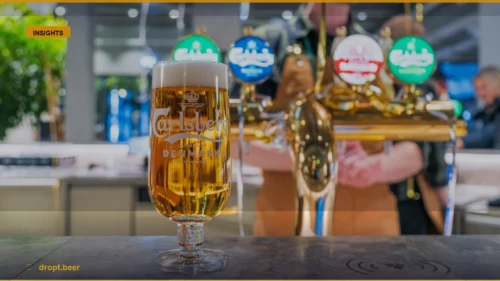
How do you actually spot a good bar? Forget the decor. Forget the branding. The first thing you do is look at the cellar setup or the tap handles. If those handles are coated in a layer of dust, they haven’t been touched in a week. That is your cue to leave. You want a bar where the staff isn’t just serving; they are curating. A bartender should be able to tell you exactly when the keg was tapped and why that specific beer works for the current weather. In Scotland, where the weather turns from grey to apocalyptic in twenty minutes, a good bar provides the perfect shelter.
There is a specific, tactile joy in the Southside pubs. The wood is worn, the lighting is dim, and the conversation is genuine. These aren’t spaces designed for Instagram; they are designed for the long haul. The best bars here act as an extension of the local living room. They represent the community’s palate. When you drink at a place that exclusively stocks breweries within a 50-mile radius, you are tasting the region. You are drinking the water, the grain, and the intention of the local brewer. That is the only way to genuinely understand the city.
Stop Hedging Your Bets
There is a persistent habit among drinkers to visit the ‘safe’ options. They go where the signs are big and the reviews are numerous. Stop doing that. The most rewarding experiences in Glasgow are found by taking a risk on a small, unassuming shopfront in Strathbungo. These places rely on repeat business from neighbors, not the disposable income of tourists. If they serve a bad pint, they hear about it immediately. That accountability is what forces them to be better. It is what makes them the best bars in the city.
Go to the Southside. Walk into a pub, look the bartender in the eye, and ask them what they are drinking tonight. Don’t look at a list. Don’t check a map. Let the local expertise guide your glass. If you want to refine your palate and understand what world-class hospitality looks like, you need to abandon the city center entirely. Check out the latest reviews on dropt.beer to see how these Southside gems compare to the global benchmarks, then get on the train and head south. You’ll thank yourself when you’re nursing that second, perfectly poured pint.
Frequently Asked Questions
Why is the Southside better for beer than the city center?
The Southside focuses on local, independent patronage. Because these bars rely on repeat local customers rather than one-time tourists, they maintain much higher standards for line cleanliness, beer rotation, and staff expertise. The city center is often dominated by high-volume, low-effort venues.
What should I look for to identify a high-quality bar?
Look for clean, dust-free tap handles and a manageable, rotating menu. If the staff can explain the flavor profile of their offerings and the beer is sourced from nearby breweries, you’ve found a quality establishment. Avoid venues with massive, static menus that try to cater to everyone.
Does a ‘historic’ pub mean it serves better beer?
No. History does not correlate with quality. In fact, many historic pubs trade on their reputation and fail to prioritize the technical maintenance of their beer lines. Always prioritize freshness and turnover over the age of the building or its inclusion in tourist guidebooks.
How far should I travel for a good beer in Glasgow?
It is worth the short train or taxi ride to the Southside. The distance is negligible compared to the massive improvement in drink quality, atmosphere, and the authenticity of the experience you will receive compared to the central tourist districts.