Quick Answer
Skip the neon-lit tourist traps surrounding Madison Square Garden and head three blocks west toward 9th Avenue. Rattle N Hum remains the gold standard for craft beer in this neighborhood, consistently offering a curated, fresh tap list that puts the arena-adjacent chains to shame.
- Avoid any bar within two blocks of the main entrance; they prioritize volume over quality.
- Look for independent tap lists; if 75% of the handles are owned by two conglomerates, keep walking.
- Prioritize bars with clean glassware and staff who can actually describe the difference between a West Coast and Hazy IPA.
Editor’s Note — Tom Bradley, Drinks Editor:
I firmly believe that drinking near a massive venue is a litmus test for a drinker’s priorities. Most people settle for the convenience of a lukewarm pint near the turnstiles, but that’s a rookie mistake that ruins your pre-game experience. In my years covering the industry, I’ve found that the proximity tax is almost always paid in poor line maintenance and stale kegs. I brought Sam Elliott in to write this because his encyclopedic knowledge of New York’s hospitality scene is unmatched—he knows exactly which bars treat their cellar like a sanctuary rather than a storage closet. Do yourself a favour and walk the extra three minutes.
The air outside Penn Station is thick with the smell of hot asphalt, diesel exhaust, and the desperate, frantic energy of ten thousand people all trying to get somewhere else at the same time. You’re standing on the corner of 7th and 33rd, the shadow of Madison Square Garden looming over you like a concrete monolith, and the pre-game thirst has finally set in. It’s tempting to duck into the first place with a neon beer sign and a crowd spilling onto the sidewalk. Do not do it. If you walk into those immediate-vicinity sports bars, you’re choosing to pay fifteen dollars for a pint of macro-lager that’s been sitting in a line that hasn’t seen a cleaning solution since the last Knicks playoff run.
The truth is that the best drinks near The Garden aren’t found by following the crowd—they’re found by deliberately walking away from it. To drink well in Midtown, you have to be willing to trade immediate convenience for actual quality. I’ve spent years navigating this specific pocket of Manhattan, and I can tell you with absolute certainty that the quality of your experience increases exponentially for every block you put between yourself and the arena entrance. You deserve a pint that’s been cared for, poured into a proper glass, and served by someone who actually knows what’s on tap.
The Myth of Convenience
Most guides will tell you that the bars directly opposite the arena are “iconic” or “classic.” They aren’t. They’re high-volume volume machines built to churn through tourists who don’t know any better. According to the Brewers Association’s 2024 data, the health of a beer program relies heavily on tap rotation and line hygiene—two things these massive, multi-level venues explicitly ignore. When a bar has a capacity of five hundred people and a turn-over rate of fifteen minutes, nobody in the cellar is checking the pressure or the temperature of the draft system.
The BJCP guidelines define the sensory experience of a beer based on its freshness and presentation. If you’re drinking a hazy IPA that’s been sitting in a warm, neglected line, you aren’t tasting the brewer’s intent; you’re tasting the oxidation of a beer that died a slow death in a copper pipe. You wouldn’t order a steak from a place that doesn’t own a grill. Why treat your beer differently? The geography of this area is simple: the closer you are to the subway entrance, the worse your drink is going to be. It’s an inverse relationship that holds true every single time.
Seek Out the Independent Spirit
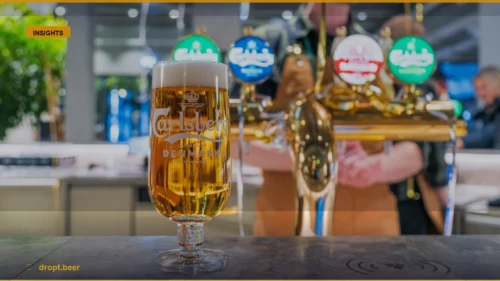
When you’re vetting a spot, take a long look at the tap handles. If you see a row of identical, corporate-branded knobs, you’re in a marketing laboratory, not a bar. Look for variety. A venue that cares about its drinkers will source from local legends like Other Half or regional staples that actually have a point of view. Rattle N Hum on 33rd Street is the rare exception to the neighborhood rule, functioning as a true bastion of craft culture. They treat their beer with the reverence it deserves, and the staff there can actually talk you through a flight without looking like you’ve asked them to solve a complex equation.
Beyond just the beer, look for the rhythm of the room. A good pre-game bar has a specific cadence. The bartenders should be moving with purpose, not just frantically pulling levers to keep up with a queue of people who don’t care what they’re drinking. If the staff is frazzled and the glasses are coming out warm, leave. There’s a better pint waiting two blocks away, and it’s usually quieter, cleaner, and served with a lot more respect for your time.
The Art of the Pre-Game Ritual
Think about the last time you had a truly great drink before a show. It wasn’t about the volume of alcohol; it was about the environment. You want a place where the noise level allows for a real conversation, not a shouting match over a television playing a pre-game show you don’t even want to watch. If you find yourself in a place where the music is so loud you can’t hear the bartender, you’ve already lost the battle. Find a corner, grab a stool, and actually taste what you’re paying for.
If you’re unsure where to start, look for the bars that focus on the basics. Are the surfaces clean? Is the glassware appropriate for the style? Does the food menu look like it was curated by a human, or is it just a list of deep-fried items that all come out of the same freezer bag? When a bar puts effort into their food, they usually put equal effort into their cellar. It’s a reliable indicator of a hospitality-first mindset. Next time you’re heading to MSG, walk the extra three blocks. Your palate will thank you, and you’ll be supporting the kind of establishments that make New York’s drinking culture worth celebrating on dropt.beer.
Frequently Asked Questions
Are there any good bars directly across from MSG?
In a word: no. Bars immediately adjacent to major arenas like Madison Square Garden operate on a high-volume, low-quality model. They rely on foot traffic from tourists who are in a rush and won’t return. You are paying for the location, not the quality of the beverage. If you want a good drink, you must move at least three blocks away from the main entrance.
How can I tell if a bar near the Garden is worth my money?
Check the tap list before you sit down. If the handles are dominated by two or three massive global conglomerates, they aren’t interested in craft beer. Also, look at the glassware. If they are serving high-quality ales in thick, warm, frosted mugs, they are trying to hide the fact that the beer is poorly maintained. Look for clean, style-appropriate glassware and a rotating, diverse selection of breweries.