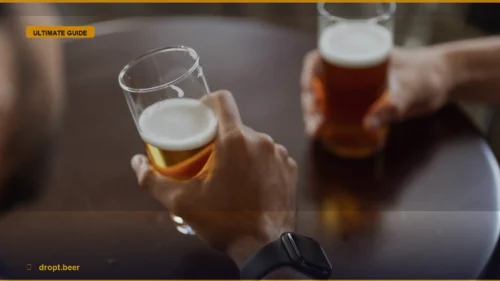
Mixing beer and whiskey is not a reckless bar trick; it is a refined practice of pairing that, when done correctly, produces a drinking experience far greater than the sum of its parts.
You are sitting in a dimly lit corner booth, the condensation on your pint glass marking the table, while a neat pour of amber spirit waits beside it. You pick up the glass of lager, take a crisp sip, and follow it immediately with a small, measured drop of bourbon. The malt sweetness of the beer doesn’t just wash away the burn of the alcohol; it acts as a base, expanding the charred oak and vanilla notes of the whiskey into a complex, lingering finish. This is the boilermaker in its most sophisticated form, a tradition that proves mixing beer and whiskey is an intentional pursuit of flavor rather than a race to the bottom of the bottle.
The ritual of combining these two beverages—often referred to as a boilermaker, a depth charge, or a chaser—is defined as the act of consuming a beer and a spirit in tandem to manipulate the perceived profile of the alcohol. It is a fundamental element of drinking culture that separates those who drink for effect from those who drink for appreciation. To understand this combination, one must look at how the carbonation and hop bitterness of a beer react with the ethanol concentration and wood-aged congeners of a whiskey. When the ratios are respected, the beer acts as a palate cleanser or a flavor enhancer, depending entirely on the selection of the two components.
What Most People Get Wrong About This Combination
The most common error people make when mixing beer and whiskey is the assumption that any cheap draft beer will suffice as long as the whiskey is expensive. This is a fatal flaw in logic. A high-end, single-barrel rye whiskey is often wasted when paired with a generic, adjunct-heavy light lager that carries too much metallic bitterness or corn sweetness. The goal is parity, not a clash of budgets. You are not trying to hide the taste of one; you are trying to create a third, unique flavor profile that exists only in the interplay between the two liquids.
Another prevalent mistake is the belief that mixing beer and whiskey is exclusively about volume. Many drinkers assume that the goal is to drink a pint of beer followed by a full shot of whiskey as quickly as possible. This approach misses the nuance of the craft. Speed is the enemy of appreciation. When you drink too fast, you lose the ability to detect the subtle shifts in the spirit as it hits the malt-coated palate. Most articles on this subject treat the practice as a rowdy bar game, ignoring the fact that it is actually a method for tempering high-proof spirits with the hydration and carbonation of beer. If you want to understand the tension between these two drinks, you should examine the history of the beer and whiskey rivalry to see how they have occupied different spaces in the drinking culture for centuries.
The Anatomy of a Perfect Pairing
To succeed at mixing beer and whiskey, you must treat your beer choice as a culinary ingredient. Lighter lagers and pilsners are excellent for cutting through the oily, heavy mouthfeel of a high-proof bourbon, refreshing the palate between sips. The carbonation acts as a mechanical scrubber, lifting the lingering wood sugars of the whiskey and preparing your taste buds for the next round. If you are drinking a high-rye whiskey, which often features notes of black pepper, clove, and baking spice, a wheat beer or a mild pale ale can provide a gentle, bready counterpoint that balances the sharpness of the rye grain.
Stouts and porters, on the other hand, require a different approach. When pairing a dark, roasty beer with whiskey, you are looking for complementary notes. A scotch with a peated, smoky character pairs beautifully with an imperial stout that has notes of chocolate and coffee. Here, the goal is not to cleanse the palate but to layer the flavors. The smoke of the peat wraps around the roast of the malt, creating a dessert-like experience. This is where you see the real artistry involved in the craft of selecting the right liquid companions for your evening.
How to Select Your Components
When you are buying for a home pairing session, consider the ABV (alcohol by volume) of both components. A common rule of thumb is to avoid pairing a high-alcohol imperial stout with a cask-strength whiskey unless you are prepared for a very intense experience. Instead, focus on the base profile. Does the whiskey have a sweet, vanilla-forward profile? Look for a beer with a bit of hop bite to provide contrast. Is the whiskey spicy and bold? Look for a malt-forward beer to provide a soft, sweet landing for the finish.
It is also essential to consider the temperature. Your beer should be served at the appropriate temperature for its style—usually between 45 and 55 degrees Fahrenheit. Serving a beer too cold masks the delicate malt flavors you need for a good pairing. Your whiskey should generally be served at room temperature. If you find the whiskey too aggressive, do not add ice; instead, take a slightly larger sip of beer. The beer provides the dilution necessary to open up the aromatic compounds in the spirit without watering it down.
The Verdict: Why You Should Care
If you want the most rewarding experience, stop treating your drink as a delivery system for alcohol and start treating it as a study in contrast and harmony. The verdict is clear: if you are drinking to enjoy the depth of flavor, the absolute best way to experience mixing beer and whiskey is by pairing a dry, crisp pilsner with a high-quality bourbon. The simplicity of the pilsner allows the complexity of the bourbon to shine without competition, providing the best possible balance of refreshment and intensity. It is the gold standard for a reason. By committing to this specific pairing, you elevate your drinking habit from a simple act of consumption to a deliberate sensory experience that respects the craft of both the brewer and the distiller.