Quick Answer
\n
The global shift toward hyper-local, story-driven beverage culture is the new baseline for quality. You win by ditching mass-market staples in favor of independent producers who prioritize regional ingredients and human connection.
\n
- Seek out breweries that source ingredients within a 100km radius.
- Prioritize independent taprooms over corporate-owned chain bars.
- Ask your bartender about the origin of the malt or botanicals in your glass.
\n
\n\n
Editor’s Note — Sophie Brennan, Senior Editor:
\n
I firmly believe that if you can find a beer on a supermarket shelf in every country on earth, you shouldn’t be drinking it at a bar. In my years covering the fermentation industry, I’ve seen mass production strip the soul out of our rituals. What most people miss is that the ‘craft’ label is now as diluted as a cheap lager; true value lies in the hands of the maker you can actually look in the eye. Zara King brings a sharp, economic lens to this, proving that your spending habits directly dictate the survival of our best independent spaces. Go find a local producer today and ask them what they’re excited about.
\n
\n\n
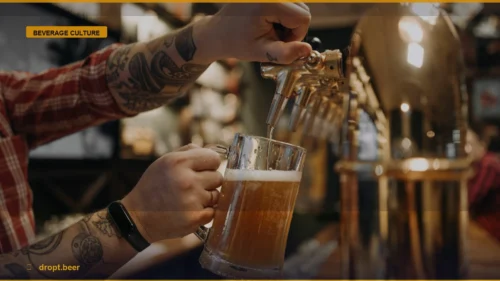
The faint, rhythmic hum of a cellar cooling unit. The sharp, metallic pop of a keg coupling engaging. The smell of damp malt and floor cleaner that hits you the moment you step into a proper, independent brewery taproom—that is the scent of the future. It isn’t found in the polished brass and neon-lit sterility of a corporate-owned mega-pub. It’s found in the places where the person pouring your pint is likely the same person who spent twelve hours cleaning the mash tun that morning.
Related: Why Authenticity Is the Only Metric
\n\n
We are witnessing a wholesale abandonment of the generic. For decades, the global beverage industry relied on the promise of consistency—a beer that tasted identical in London, Sydney, and New York. But consistency is just another word for boredom. The market has shifted, and it’s no longer about finding the safest choice; it’s about finding the most honest one. If you aren’t actively seeking out beverages that reflect the specific geography and culture of where they’re made, you’re missing the point of drinking in the modern era.
\n\n
The Economic Power of the ‘Small Batch’ Mindset
\n\n
The numbers don’t lie, even if they sometimes feel cold. According to the Brewers Association’s 2024 data, the independent craft sector continues to outpace the broader market in terms of value growth, despite the challenges of inflation and rising operational costs. This isn’t just a preference for flavor profiles; it’s a realization that value isn’t defined by the lowest price per unit. Value is defined by the narrative of the product. When you spend ten dollars on a pint of macro-lager, you’re paying for a global marketing budget. When you spend ten dollars on a local, small-batch ale, you’re paying for the survival of your own community’s cultural fabric.
\n\n
Think about the BJCP guidelines. They exist to help us categorize and understand styles, but they were never intended to act as a ceiling for creativity. The most exciting developments in brewing right now are happening in the gray areas between these categories. Producers are experimenting with local terroir—using native yeasts or foraged botanicals—to create beverages that simply cannot be replicated elsewhere. This is the definition of a ‘sense of place’ in a glass. If a brewer in Reading, UK, is using local English hops to create a bitter that reflects the history of their specific valley, that drink has more inherent value than any internationally distributed ‘craft’ brand.
\n\n
Why Your Bar Choice Is a Political Act
\n\n
Every dollar you hand over at a bar is a vote for what you want to see continue existing. When you choose an independent, family-owned establishment over a conglomerate-backed ‘concept’ bar, you’re ensuring that the next generation of brewers and distillers has a marketplace to sell to. The Oxford Companion to Beer notes that the history of beer is essentially the history of local agriculture. When we disconnect from that, we lose the thread of why we started brewing in the first place.
\n\n
I’ve walked into bars from Lhasa to Bruges, and the ones that stick aren’t the ones with the most taps. They’re the ones where the staff can explain exactly why a particular grain bill was chosen for the season. This is the ‘authentic sip’—it’s an interaction that requires a bit of work from the consumer. You have to ask questions. You have to be willing to try something that might not be your ‘usual.’ But the reward is a deeper engagement with the world around you, rather than just a mindless delivery system for alcohol.
\n\n
The Future of Drinking is Local
\n\n
We need to stop viewing ‘local’ as a marketing buzzword and start treating it as a functional requirement for quality. If you want to drink better, you have to do the legwork. Use tools like the CAMRA Good Beer Guide or local independent beer maps, but don’t stop there. Talk to the brewers. Ask about their supply chain. If they can’t tell you where their malt comes from, it’s time to find a new local. The future of our drinking culture depends on our willingness to move away from the path of least resistance. It’s time to stop drinking for convenience and start drinking for connection, right here at dropt.beer.
Related: Why Authenticity Is The Future Of
\n\n
\n\n
Frequently Asked Questions
\n
How do I identify a truly independent brewery?
\n
Look for the ‘Independent Craft Brewer’ seal on the packaging or the brewery’s website. More importantly, check their ownership. If the brewery is owned by a multinational conglomerate, they aren’t independent. You can usually find this information by searching the brewery’s name on industry transparency sites or asking the staff at the taproom directly—they are almost always proud to tell you who signs their paychecks.
\n
\n
\n
Does local always mean better quality?
\n
Not inherently, but the probability is much higher. Local producers are more accountable to their immediate community, meaning they cannot afford to put out a poor-quality product and stay in business. When you buy local, you’re usually getting a fresher product with a shorter supply chain, which preserves delicate aromatic compounds in beer and spirits that often degrade during long-distance shipping and storage.
\n
\n
\n
\n