Quick Answer
A ‘Night Club 45′ is a high-energy venue optimized for hourly surges in demand that peak at 45 minutes past the hour. To master these spaces, order your drinks during the first fifteen minutes of the hour and avoid complex cocktail requests during the peak ’45’ window.
- Order high-volume drinks like draft beer or pre-batched highballs exclusively.
- Time your bar visits for the first quarter of the hour to avoid the ‘service triage’ rush.
- Align your physical location in the room with the DJ’s tempo shifts to maintain your energy levels.
Editor’s Note — Marcus Hale, Editor-in-Chief:
I firmly believe that most people treat nightlife as a passive experience, which is why they end up spending half their night shouting at bartenders. In my years covering this industry, I have seen countless drinkers ruin their own momentum by trying to order a craft cocktail while the room is in a full-blown sprint. What most people miss is that the best clubs are machines, and you have to learn to work with the gears. Lena Müller understands the technical precision of these systems better than anyone. Get to a bar and test these timing strategies this weekend.
The air in the room is stale—a mix of expensive floor wax, cheap cologne, and the faint, unmistakable scent of spilled lager that has been trodden into the carpet. You’re standing near the back, watching the crowd. The clock on the wall ticks toward the top of the hour, and the DJ is currently playing a mid-tempo track that feels more like an invitation than a command. This is the calm before the storm. You’ve got maybe ten minutes before the room shifts, and if you don’t have a drink in your hand by then, you’re going to spend the next hour fighting for space at a bar that’s about to become a war zone.
Most drinkers approach a night club as if it’s a static environment, a place where you simply exist until you decide to leave. This is a mistake. A ‘Night Club 45’ is not a place; it is a timed performance. The venue is engineered to peak at 45 minutes past the hour, utilizing high-velocity service and escalating musical intensity to drive consumer behavior. If you want to survive and thrive in these spaces, you must stop being a spectator and start operating on the house’s clock. You aren’t just drinking; you are managing your own flow through a system designed to push you to the limit.
The Mechanics of the 45-Minute Pulse
The number 45 isn’t arbitrary. It’s a operational benchmark, a point where the energy density of the room reaches its maximum theoretical capacity. According to the BJCP guidelines regarding service environments, the efficiency of a venue is often judged by its throughput during peak periods. In a 45-minute cycle, the first fifteen minutes are for recovery and restocking. The middle twenty minutes are for building momentum. The final ten minutes—the ’45’—are for maximum extraction. The bar staff knows this. They are prepping their stations, chilling glasses, and clearing lines during the first quarter of the hour so they can handle the inevitable surge that hits when the DJ drops the tempo shift.
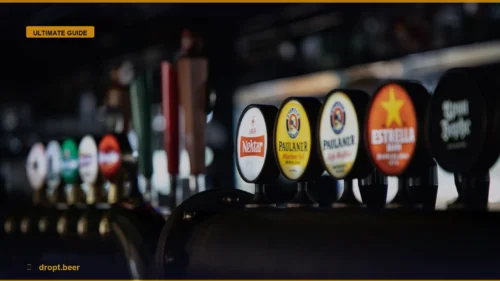
If you find yourself at the bar at 42 minutes past the hour, you are already too late. You’re entering a zone of triage. The bartender isn’t looking for conversation; they are looking for the simplest, fastest transaction possible. This is where you see the difference between a novice and a veteran. The novice asks for a complicated, muddled drink, effectively bottlenecking the entire bar. The veteran orders a high-quality draft beer or a simple highball, acknowledging the physical reality of the service system. By choosing speed, you ensure that you aren’t tethered to the bar while your friends are on the dance floor.
Why Your Drink Choice Matters
There is a prevailing myth that you should drink whatever you want, whenever you want. I firmly disagree. In a high-volume environment like a 45-minute cycle club, your drink choice is a tactical decision. The Oxford Companion to Beer notes that serving temperature and carbonation are critical to the perception of quality, but in a crowded, high-energy environment, those factors can be compromised by the sheer speed of service. If you order a craft pour that requires a specific glass or a slow, delicate pour, you are working against the venue’s architecture.
Stick to the house standards during the peak. A well-poured lager from a properly maintained draft system is superior to a poorly executed, high-maintenance cocktail when the room is at capacity. It’s consistent, it’s refreshing, and most importantly, it’s fast. When you approach the bar, be ready. Have your payment prepared and your order clear. Do not ask what they have. Do not ask for a recommendation. Know what you want, order it, and get back to the floor. The goal is to minimize your time in the ‘service dead zone’ so you can return to the experience you actually paid for.
Adapting to the Environment
You might be wondering if this level of calculation ruins the fun. It’s actually the opposite. Understanding the pulse of the room frees you from the anxiety of being ignored. When you recognize that the room is in its ’45’ phase, you stop expecting immediate service. You stop feeling frustrated when the bartender ignores you. You learn to read the room—the lighting intensity, the volume of the bass, the frenetic movement of the staff—and you adapt your behavior accordingly. It’s a form of active engagement that makes the night feel cohesive rather than chaotic.
Think of it like a well-choreographed play. You are part of the cast. If you try to improvise lines that don’t fit the scene, the whole production falters. By aligning your drinking habits with the mechanical reality of the venue, you ensure that your night doesn’t devolve into a series of missed opportunities. You’ll find that when you work with the rhythm instead of against it, you spend less time waiting and more time enjoying the environment. If you want to dive deeper into how these venues function, keep an eye on our features at dropt.beer, where we continue to pull back the curtain on the industry.
Your Next Move
Treat your next night out as a test of the 45-minute cycle to see how the service speed dictates your experience.
- Immediate — do today: Identify a high-energy venue in your city and map out its layout to locate the most efficient point of service at the bar.
- This week: Visit that venue, order a simple draft beer during the first fifteen minutes of the hour, and observe how the service speed changes as the clock hits 45.
- Ongoing habit: Practice ‘pre-ordering’ your drinks in your head while waiting in line, ensuring you are ready to order the moment you reach the bar.
Frequently Asked Questions
Why is 45 minutes past the hour the peak time?
The ’45’ is the point where the DJ has successfully built maximum tension and the room is at its highest capacity. It is the peak of the hourly cycle before the energy resets for the next hour. The bar staff times their most aggressive service sprints to match this peak.
Should I avoid ordering cocktails entirely?
You don’t need to avoid them entirely, but you should avoid them during the peak 45-minute window. If you want a complex cocktail, order it early in the hour when the bar staff has the time to prepare it correctly without feeling the pressure of the crowd.
How can I tell if a venue is a ‘Night Club 45’?
Watch the DJ and the lighting. If the music tempo systematically increases over the hour and the lighting becomes significantly more aggressive as you approach the 45-minute mark, you are in a venue that operates on this cycle. It is a deliberate, engineered design.