Quick Answer
Thoughtful drinking requires moving from passive consumption to active engagement by prioritizing ingredient provenance and the narrative behind the producer. Quality always trumps quantity; choose one exceptional bottle over three mediocre ones to sharpen your palate.
- Research the origin and production method of every new label you buy.
- Limit your intake to focus on the sensory profile rather than the buzz.
- Support independent producers who maintain traditional, transparent practices.
Editor’s Note — Marcus Hale, Editor-in-Chief:
I firmly believe that if you aren’t paying attention to what’s in your glass, you’re wasting your money and your liver’s effort. Most people treat alcohol as a commodity, but I warn you: the moment you stop treating a drink as an experience is the moment you stop being a connoisseur and start being a consumer. In my years covering this industry, I’ve seen the best brewers and distillers lose heart when their work is guzzled without thought. Lena Müller understands the German rigor of craft better than anyone I know, and her focus on intentionality is the exact reset our readers need. Stop scrolling and go open a bottle that actually challenges your palate tonight.
The Sensory Reset
The sharp, metallic click of a crown cap hitting the floor. That first, fleeting hiss of CO2 escaping a freshly opened bottle of Helles. In a quiet room, this sound is a signal—it’s the start of a conversation between the brewer and the drinker. Too often, we let that conversation die in the noise of a crowded bar or the distraction of a television screen. We drink for effect rather than for the nuance of the malt, the specific strain of yeast, or the mineral profile of the local water source.
True thoughtful drinking is an act of defiance against the industrial homogenization of the global beverage market. It is my position that if you aren’t actively seeking to understand the ‘why’ behind the liquid in your glass, you are missing the primary reason for brewing’s existence: the preservation of culture. Whether it’s a Franconian lager or a complex mezcal, your role as the drinker is to act as the final, essential participant in the production cycle.
Defining Quality Through Standards
To drink with intention, you must first establish a baseline for quality. The BJCP (Beer Judge Certification Program) guidelines provide more than just a rubric for competitions; they offer a map of history. When you study the style guidelines for a German Pilsner, you aren’t just memorizing specs—you are learning to recognize the crisp, noble hop profile that defines a tradition. Without these benchmarks, you’re just guessing.
According to the Brewers Association’s 2024 data, the industry is recalibrating toward smaller, more focused production runs. This is a direct response to the saturation of the “more is better” era. We are seeing a shift where the savvy drinker avoids the latest hype-driven milkshake IPA in favor of a clean, well-executed Kölsch from a producer like Brauerei Päffgen. A beer doesn’t need to be experimental to be superior. It needs to be precise.
The Geography of Flavor
Think about the terroir of your drink. While we often reserve the term for wine, it applies equally to the grain fields of Bavaria or the agave-rich hills of Oaxaca. A beer brewed with local, floor-malted barley carries a distinct, earthy character that mass-produced extract brewing simply cannot replicate. When you purchase a bottle, look at the back label. Does the brewery list their hops? Do they mention the region of their maltsters? If they don’t, they likely don’t have much to brag about.
You’ll notice that when you focus on provenance, your spending habits change. You’ll stop buying six-packs of anonymous liquid and start investing in single bottles that offer a narrative. This is the hallmark of a mature palate. You aren’t paying for alcohol; you are paying for the expertise, the climate, and the human labor required to bring that specific flavor to your table.
The Ritual of the Pour
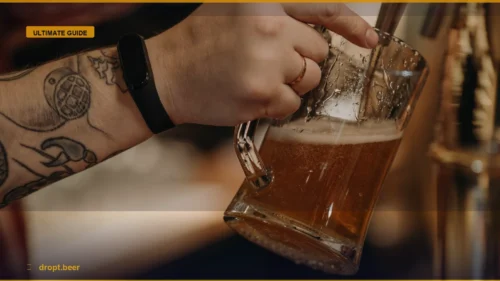
Your environment dictates your perception. I have seen perfectly good lagers ruined by being served in a frozen glass that masks the delicate floral aromatics of the hop oils. If you are drinking with intention, you must treat the serve as part of the experience. Use a glass that allows the beer to breathe. Pour with enough force to generate a healthy head of foam—this isn’t just for aesthetics; it releases the carbonation and protects the liquid from oxidation.
When you sit down, take three minutes. Smell the glass before you take the first sip. Note the temperature. Is it too cold? A sub-zero beer will kill your taste buds, rendering the subtle nuances of the malt entirely invisible. Aim for the cellar temperature appropriate to the style. If you are drinking a Doppelbock, let it warm slightly in your hands. You’ll find that as the temperature rises, the hidden profiles of dark fruit and toasted bread emerge.
Conclusion: The Responsibility of the Drinker
Drinking thoughtfully is not an elitist pursuit; it is a respectful one. It honors the brewer who spent weeks perfecting a fermentation schedule and the farmer who harvested the grain. By choosing to engage with your drink—by analyzing, savoring, and questioning—you elevate the entire beverage culture. We invite you to continue this exploration here at dropt.beer, where we prioritize substance over marketing. Your next glass is an opportunity. Don’t waste it on something you haven’t taken the time to understand.
Frequently Asked Questions
Why does the serving temperature matter so much?
Serving temperature directly affects your ability to perceive volatile aromatic compounds. When a beer is served too cold, the cold temperature numbs your palate and masks the complex esters and hop oils. If you serve a craft beer at sub-zero temperatures, you are effectively muting the flavor profile the brewer worked hard to create.
Does glassware actually change the taste of beer?
Yes, glassware changes the sensory experience by influencing head retention and aromatic release. A glass with a tapered top concentrates the aroma, allowing you to smell the beer before you taste it, which accounts for the vast majority of flavor perception. Proper glassware also supports a healthy foam head, which acts as a barrier against oxidation and improves the mouthfeel of the beer.
How can I tell if a beer is brewed with intention?
Look for transparency in the labeling and marketing. A producer brewing with intention will typically highlight their sourcing, their specific fermentation processes, and their commitment to traditional techniques. If the marketing focuses exclusively on “hype” or gimmicky ingredients without mentioning the process or the quality of the raw materials, it is usually a sign that the producer is prioritizing trends over the integrity of the liquid.
Why should I choose quality over quantity?
Choosing quality over quantity allows you to train your palate and appreciate the nuance of beverage production. When you drink less, you can focus on the sensory profile and the story behind the bottle rather than the intoxicating effects. Investing in one exceptional bottle provides a richer, more educational experience than consuming several mediocre drinks, which ultimately dulls your senses and provides no lasting insight into the craft.