Quick Answer
Stop chasing massive tap lists and start looking for small, rotating selections that prioritize freshness and technical precision. The best bars in New York are defined by clean draft lines and staff who can describe the nuance of a pilsner, not just the ABV of an IPA.
- Check the glassware: If it’s frosted, walk away.
- Look for a lager on tap: It’s the ultimate test of a bar’s line maintenance.
- Ask the staff when the keg was tapped to gauge the bar’s turnover rate.
Editor’s Note — Fiona MacAllister, Editorial Director:
I firmly believe that the “more is more” philosophy of beer bars is the single greatest enemy of quality in the industry. In my years covering high-end spirits and beer investment, I’ve seen countless venues ruin world-class liquid by letting it sit in neglected, warm lines. What most people miss is that a cellar is a living, breathing environment; if a bar isn’t obsessively tracking its draft turnover, they aren’t serving beer, they’re serving science experiments. Sam Elliott’s focus on the technical integrity of the pour is exactly why he’s the right voice for this. Stop settling for mediocre service and start demanding better standards tonight.
The smell hits you before you even cross the threshold: a faint, sharp tang of ozone and sanitizer, cutting through the heavy, yeasty musk of a busy room. It’s the smell of a clean draft system. In New York City, where the sheer volume of bars is enough to make your head spin, finding a place that actually respects the liquid in your glass is a scavenger hunt. You walk past the neon signs promising ‘100 Craft Beers on Tap,’ but all you see is a recipe for stale, oxidized nightmares. If you want to drink well in this city, you have to ignore the volume and hunt for the obsession.
Most beer drinkers in New York are getting ripped off by the illusion of choice. They walk into a sprawling venue with eighty handles, assuming that more options mean a better experience. It’s the opposite. A bar with eighty handles is a bar that’s inevitably serving beer that’s been sitting in the lines for weeks, losing its aromatic profile and gaining a dull, cardboard-like finish. True quality isn’t found in the quantity of handles; it’s found in the turnover. You’re looking for the place that rotates its list weekly, not the one that keeps a seasonal stout on tap until the middle of July.
According to the Brewers Association’s quality guidelines, draft line cleanliness is the single most significant factor in how a beer tastes once it leaves the brewery. If a bar doesn’t have a regular cleaning schedule—ideally every two weeks—you’re drinking yeast sediment and bacteria, regardless of how prestigious the brewery name is on the tap handle. The BJCP guidelines emphasize that even the most technically perfect IPA will fall apart if it’s poured through a dirty, warm system. Don’t be afraid to ask the bartender when the lines were last cleaned. If they look at you like you’ve asked for their social security number, find another bar.
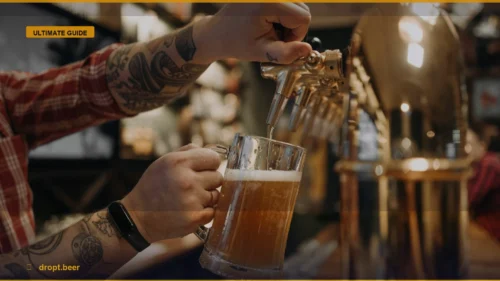
When you sit down, look at the glass. It shouldn’t be frosted. This is a hill I will die on. A frosted glass is a lazy shortcut that dilutes the beer and masks the subtle aromatics that a brewer spent months perfecting. A proper pour, as outlined in the Oxford Companion to Beer, requires a clean, room-temperature glass that allows the beer to breathe. Watch the pour. It should be a deliberate, two-step process: the glass angled, then leveled to build a thick, stable head of foam. That foam isn’t just decoration; it’s a protective lid that keeps the beer’s volatile aromatics from escaping into the room instead of your nose.
If you really want to test a bar’s mettle, order a pilsner or a helles. These styles are the ultimate litmus test. There is nowhere to hide in a light, crisp lager; if the lines are dirty, or if the temperature is too high, the beer will taste thin, metallic, or off-key. A bar that pours a brilliant, crystal-clear pilsner with a tight, lacey head is a bar that cares about their craft. Places like The Jeffrey or Torst have built their reputations on exactly this kind of attention to detail. They understand that a pint is a culinary product, not just a commodity to move through the register.
Finally, stop chasing the highest ABV on the board. The culture of ‘extreme beer’ has faded, or at least it should have. We’re in an era where terroir and subtlety are king. Look for local farmhouse ales or lagers that show off the ingredients rather than the alcohol percentage. When you find a spot that treats a simple, low-ABV pale ale with the same reverence as a rare imperial stout, you’ve found a home. Keep your standards high and your expectations specific; check in with us at dropt.beer whenever you need to recalibrate your palate.
Your Next Move
Identify one bar in your neighborhood known for its draft quality and order a standard pilsner to test their line maintenance and pouring technique.
- [Immediate — do today]: Visit a local taproom and observe the pouring technique—if the glass is frozen or the pour is rushed, leave and find a better spot.
- [This week]: Locate a bar that cleans their lines every two weeks and ask the bartender for a recommendation based on what was tapped most recently.
- [Ongoing habit]: Prioritize drinking lagers over high-ABV trend beers to keep your palate sharp and test the quality of any bar you visit.
Frequently Asked Questions
Why is a frosted glass bad for beer?
A frosted glass introduces ice crystals and cold, which shock the beer, causing it to foam improperly and lose its carbonation. Furthermore, the melting ice dilutes the beer, altering the flavor profile that the brewer intended you to experience. It’s purely aesthetic and sacrifices quality for a cold-to-the-touch sensation.
Does a bigger tap list mean a better bar?
Absolutely not. A massive tap list is often a sign of poor turnover. Unless a bar is doing incredible volume, a list with 50+ handles means many of those kegs are sitting for weeks or months, leading to oxidation and stale, lifeless beer. Smaller, rotating lists are a much better indicator of freshness.
How often should beer lines be cleaned?
Industry standards, including those from the Brewers Association, mandate that draft lines be cleaned every two weeks. This prevents the buildup of yeast, bacteria, and beer stone, all of which contribute off-flavors to the final pour. If a bar can’t confirm their cleaning schedule, assume the lines are dirty.
What is the best way to judge a bar’s quality?
Order a simple, clean lager or pilsner. These styles are difficult to brew and serve because they have no heavy hops or adjuncts to hide flaws. If the bar can serve a crisp, clean, properly poured pilsner that tastes fresh and bright, they are clearly maintaining their equipment and taking their beer program seriously.