Quick Answer
The best craft beer bars in New York aren’t found in tourist hubs, but in neighborhood spots that prioritize draft line maintenance over massive tap lists. Skip the “Instagram-famous” venues and look for bars with 12–20 taps and an obsessive focus on cellar management.
- Look for a clean, water-rinsed glass before every pour.
- Avoid 50-tap bars, as they lead to stagnant, old kegs.
- Prioritize bars that stock classic lagers alongside local IPAs.
Editor’s Note — Priya Nair, Features Editor:
I firmly believe that the “mega-taplist” model is the single greatest threat to the craft beer experience in New York City. In my years covering the industry, I have seen far too many beautiful, fresh brews die a slow death in dusty, uncleaned lines simply because a bar wanted to brag about having 60 handles. What most people miss is that a bar’s quality is defined by its turnover, not its volume. Daniel Frost brings a necessary, rigorous technical lens to this, helping you spot the difference between a real beer sanctuary and a glorified tourist trap. Go out this weekend and order a Helles at a local spot with fewer than 20 taps.
The Truth About New York Beer
The smell hits you the moment you push open the door. It isn’t the cloying scent of floor cleaner or the stale funk of an overflowing drip tray. It’s the faint, crisp aroma of cold stainless steel and fresh, resinous hops. You’re standing in a room where the person behind the bar knows exactly how many days that keg of local lager has been tapped, and they aren’t afraid to pull the handle and dump a pint if it doesn’t meet their standard. If you want the real New York experience, you have to stop looking for the “hottest” spot on social media and start looking for the quiet corner bars that treat beer with the respect it deserves.
The best bars in the city are community anchors, not volume-driven showrooms. I believe that a bar with more than 20 taps is almost always a trap for the discerning drinker. When you see 50 or 60 handles, you aren’t seeing a curated selection; you’re seeing a logistical nightmare where beer lingers in lines for weeks, losing its character and picking up the metallic tang of an aging system. The sweet spot is a focused list of 12 to 20 beers. It’s enough to showcase variety while ensuring that every keg is turned over before it has a chance to turn.
Why Your Favorite “Hype” Bar Is Failing You
Most listsicle-style articles are written by people who value marketing budgets over beer quality. They send you to the same shiny, cavernous taprooms in Williamsburg or Midtown, places where the beer is often served in warm glasses or through lines that haven’t seen a cleaning brush in a month. These venues rely on the “newest” factor, hoping you’ll be too distracted by the neon signage to notice the off-flavors in your glass. Longevity is the only real metric of success in New York. If a place has been open for five years and still keeps a packed house on a Tuesday night, they’re doing something right.
The BJCP guidelines on service are clear: temperature and carbonation are the lifeblood of a beer. A bar might have the rarest pastry stout on the planet, but if their glycol system is failing or their storage is warm, that beer is essentially ruined before it even hits the glass. Don’t look for the buzz. Look for the bartender who rinses the glass before pouring. Look for the draft system that is hidden, well-insulated, and clearly maintained. If the bar staff can’t explain the difference between a Kölsch and a Helles, they aren’t qualified to manage the liquid you’re paying for.
The Anatomy of a Quality Draft Program
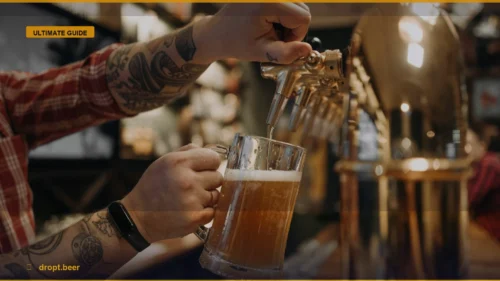
A serious establishment treats their draft system like a high-end kitchen. They invest in glycol cooling that keeps every drop of beer at a consistent temperature from the walk-in cooler to the faucet. When you order, watch the technique. The faucet should never touch the glass—this is a primary source of contamination. A proper pour should result in a dense, creamy head of foam, which serves as a protective blanket for the beer’s aroma. If your pint arrives flat or with bubbles clinging to the sides of the glass, the glassware is dirty or the lines are compromised. Send it back.
A truly great bar acts as a curator, not a collector. They should provide a balanced list that isn’t just a wall of 8% ABV Hazy IPAs. You want to see producers like Oxbow, Human Robot, or local legends like Wild East represented alongside classic European imports. According to the Brewers Association’s 2024 data, the demand for traditional lagers is surging, and a bar that understands this trend is a bar that is paying attention to the actual evolution of the palate. They know that a crisp, clean lager is the ultimate test of a brewery’s skill and a bar’s ability to maintain their lines.
Avoiding the “Flight” Trap
I see it every weekend. A group of friends sits down, orders four different flights, and proceeds to spend the next hour picking at lukewarm, flat samples. Flights are the enemy of freshness. By the time you reach the final pour, the liquid has lost its carbonation and reached an unpleasant, room-temperature state. It turns a sensory experience into a chore. If you want to sample, order two distinct styles in half-pours. You’ll get to experience the beer as the brewer intended—cold, carbonated, and vibrant.
Don’t fall into the habit of ordering the same style of beer at every single bar. If you’re a Hazy IPA devotee, try a Czech-style Pilsner. If you usually reach for the darkest stout, ask the bartender for a dry Irish stout or a porter. The best way to learn is to engage with the staff. Ask them what’s fresh. Ask them what they’ve been drinking after their shift. A good bartender is an educator—they should be able to guide you toward a style you haven’t considered, ensuring you leave the bar having learned something new. Check our latest reviews at dropt.beer to see where we’re finding the best pours right now.
Frequently Asked Questions
How do I know if a bar’s draft lines are clean?
Look at the beer itself. If you see bubbles clinging to the sides of the glass, the glass is dirty. If the beer tastes metallic, sour in an unintended way, or like “wet cardboard,” the lines are likely dirty or the beer is oxidized. A truly clean line produces a pristine, clear pour with a stable head of foam.
Why are 50-tap bars generally bad?
Most bars don’t have the volume to move 50 different kegs quickly. When beer sits in a tap line for weeks, it loses its carbonation, warms up, and begins to degrade. You end up paying premium prices for stale product. Fewer taps usually mean higher turnover and fresher beer.
Should I order beer flights?
Avoid them. Flights often result in the beer warming up and losing carbonation long before you finish the samples. You aren’t tasting the beer as the brewer intended. Instead, order half-pours of two distinct styles to keep the liquid fresh and properly carbonated throughout your session.
What is the importance of a water rinse for glassware?
A quick rinse with cold water before a pour serves two purposes: it cools the glass to the ideal temperature for the beer, and it removes any dust or residue from the glass being stored. It also creates a friction-free surface that allows for a better head of foam, which is critical for aroma.