Quick Answer
The strongest commercially available spirit is Poland’s Spiritus Rektyfikowany, which clocks in at a staggering 96% ABV (192 proof). These rectified spirits are designed for extraction and infusion, not for direct consumption.
- Never drink 95-96% ABV spirits neat; they can cause severe mucosal burns.
- Use rectified spirits exclusively for creating homemade liqueurs, tinctures, or fruit infusions.
- Always verify the specific ABV on the label, as many brands produce lower-proof versions of their ‘high-proof’ products.
Editor’s Note — James Whitfield, Managing Editor:
I firmly believe that the pursuit of the ‘strongest’ spirit is a fool’s errand if you’re looking for a drinking experience. High-proof alcohol isn’t a beverage; it’s a tool, and using it incorrectly is a recipe for a ruined palate or a hospital visit. What most people miss is that distillation purity is the enemy of nuance. I’ve tasked Olivia Marsh with this deep dive because her background in industrial packaging and sustainability gives her a unique, no-nonsense perspective on why these liquids exist in the market. Stop chasing the burn and start respecting the chemistry; read this, then go find a bottle that actually tastes like something.
The smell hits you before the liquid even touches the glass—a sharp, sterile sting that clears your sinuses and warns your brain to stay away. It doesn’t smell like a distillery or a quiet warehouse filled with aging casks. It smells like a chemistry lab. When you’re staring down a bottle of Spiritus Rektyfikowany, you aren’t looking at a drink. You’re looking at a solvent.
The reality is that alcohol purity has a ceiling, and once you hit the 96% mark, you’ve left the world of craft spirits and entered the world of industrial-grade ethanol. People love to brag about the ‘strongest’ bottle on their shelf, but high-proof spirits aren’t meant to be sipped. They are meant to be diluted, infused, or used to extract the soul out of botanicals. If you’re drinking this stuff straight, you aren’t a connoisseur; you’re just someone who clearly doesn’t value their esophagus.
The Myth of the ‘Strongest’ Pour
There is a persistent, misguided belief that the higher the proof, the better the quality. We see this in the surge of ‘cask strength’ whiskey releases or the endless marketing of high-ABV rums. However, the BJCP guidelines and the WSET curriculum both emphasize that balance is the benchmark for quality. When you push a spirit toward the 95% threshold, you are actively stripping away the congeners—the very compounds that give spirits their character, aroma, and mouthfeel.
According to the Brewers Association’s definitions of distilled products, rectified spirits are specifically engineered for neutrality. That’s why brands like Everclear or Spiritus are the go-to for making limoncello or herbal tinctures. They provide a blank canvas. If you’re buying a 95% ABV spirit expecting a sophisticated flavor profile, you’ve fundamentally misunderstood the product. It is a workhorse, not a show pony.
The Heavy Hitters
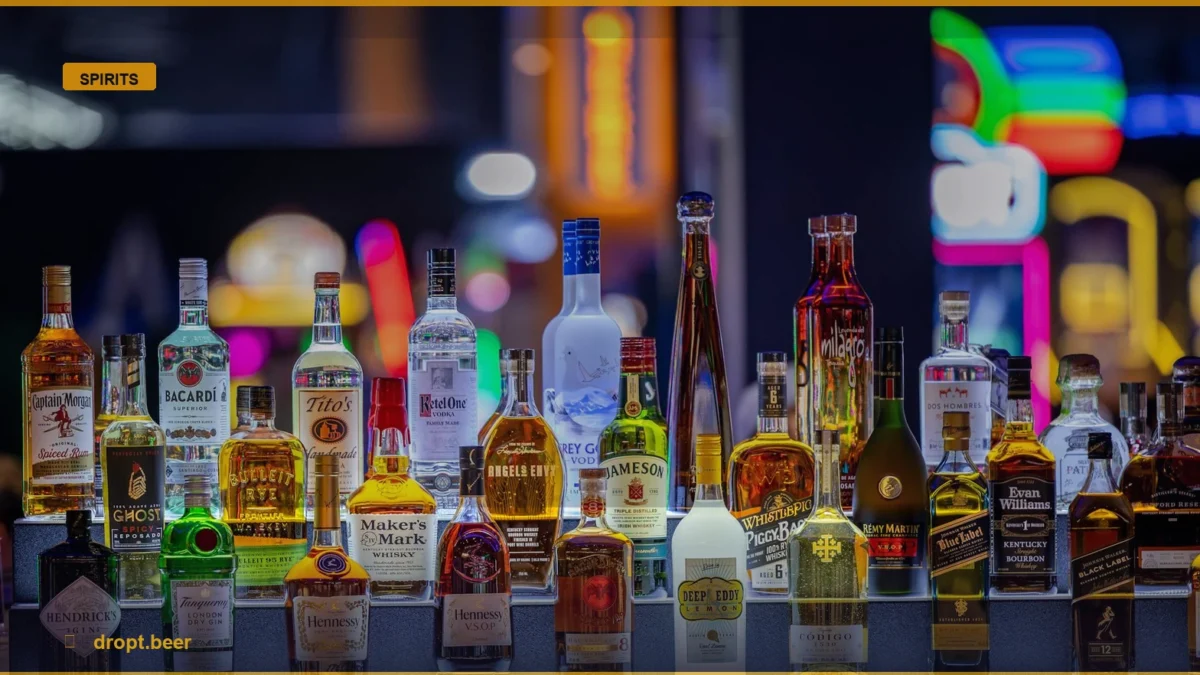
If you’re hunting for the absolute peak of commercially available ethanol, you’re looking at two primary contenders. The first is the Polish giant, Spiritus Rektyfikowany. Distilled from grain or potatoes, it is bottled at 96% ABV. It is practically pure ethanol. Then there is the American staple, Everclear 190. While the brand produces a 151-proof (75.5% ABV) version, the 190-proof iteration sits right at 95% ABV.
Don’t mistake overproof rums like Stroh 80 for these rectified spirits. While an 80% ABV rum is undeniably intense, it still retains the DNA of the sugarcane. It has flavor. It has a profile. Rectified spirits have been stripped of almost everything except the alcohol itself. When you handle these, treat them with the same caution you’d reserve for industrial chemicals. A single drop on an open flame is a hazard, and a shot to the throat is a medical emergency.
Why Purity Isn’t the Goal
We often equate ‘strong’ with ‘valuable,’ but in the world of professional distillation, the goal is often the opposite. Distillers spend their lives trying to capture specific esters and volatile compounds. By pushing the distillation to the point of rectification, you are intentionally destroying those efforts. Think about the complexity of a well-aged Bourbon versus the surgical neutrality of a high-proof grain spirit. One is a narrative of time and wood; the other is a demonstration of pure, unadulterated efficiency.
If you’re interested in the craft behind the bottle, look at the producers who are pushing the boundaries of flavor rather than ABV. There is more technical skill involved in managing a 45% ABV whiskey that feels heavy and complex than there is in bottling a 95% ABV neutral spirit. The next time you find yourself at a bottle shop, walk past the 190-proof section. Head over to the craft spirits aisle at dropt.beer, and find something with a story that doesn’t involve a warning label.
Frequently Asked Questions
Can I drink 95% ABV alcohol safely?
No. Drinking 95% ABV (190 proof) alcohol neat is dangerous. It can cause immediate mucosal burns to your mouth, throat, and esophagus. It is designed for dilution in cocktails, infusions, or tinctures, never for direct consumption. Even when mixed, it should be used in very small, carefully measured quantities.
Is Everclear the strongest alcohol you can buy?
Everclear 190 is among the strongest, but Spiritus Rektyfikowany from Poland holds the title at 96% ABV. Both are rectified spirits that are virtually identical in their utility and potency. Always check the specific bottle, as both brands produce lower-proof versions that are significantly weaker than their flagship high-proof offerings.
Why is moonshine often considered the strongest?
Moonshine is often associated with high strength because it is unregulated and lacks standardized production. However, it rarely reaches the 95-96% ABV of commercial rectified spirits because home distillation equipment struggles to reach that level of purity. Furthermore, illicit moonshine carries severe health risks, including toxic methanol contamination, which is never a concern with professionally distilled, commercially regulated spirits.
Does higher proof mean better quality?
Absolutely not. High proof often indicates that a spirit has been stripped of the congeners and esters that provide flavor, aroma, and character. While high proof is useful for extraction, it is not a metric for quality. In the world of fine spirits, balance, complexity, and the quality of the raw ingredients are far more important than the raw alcohol percentage.