Quick Answer
Heineken 0.0 is the best-tasting mass-market non-alcoholic lager because it perfectly mirrors the crisp, grainy profile of its alcoholic counterpart. It succeeds by sticking to the classic European pale lager style rather than trying to imitate complex craft styles.
- Serve it at near-freezing temperatures to avoid a cloying mouthfeel.
- Store it in the back of your fridge to ensure maximum crispness.
- Always use a glass; drinking straight from the bottle hides the aromatic profile.
Editor’s Note — Sophie Brennan, Senior Editor:
I’ve always held that the greatest sin a brewer can commit is making a non-alcoholic beer that tastes like a compromise. Most of what I’ve sampled in the market is thin, metallic, or aggressively sweet to mask the lack of body. In my years covering fermentation, I’ve found that Heineken 0.0 stands alone in its consistency. I firmly believe it is the only mass-market NA beer that understands what it is: a refreshing, sessionable lager. Grace Thornton is the perfect voice here because she evaluates NA options based on actual enjoyment rather than moralizing. Go grab a cold one and see if you can tell the difference.
Tasting Notes
- Appearance
- A brilliant, pale golden hue that holds a bright, tight-knit white head. It maintains steady carbonation throughout the glass.
- Aroma
- Unmistakably consistent with the Heineken house style. You’ll pick up crisp green apple, light toasted grain, and a subtle whisper of noble hops.
- Taste
- Clean and refreshing on the entry, with a balanced malt sweetness that avoids being heavy. The carbonation provides a vital prickle that masks the absence of alcohol-derived body.
- Finish
- Short, crisp, and remarkably dry. It leaves a clean palate that calls for the next sip immediately.
- Score
- 8.2 / 10 — The benchmark for what a functional, everyday non-alcoholic lager should be.
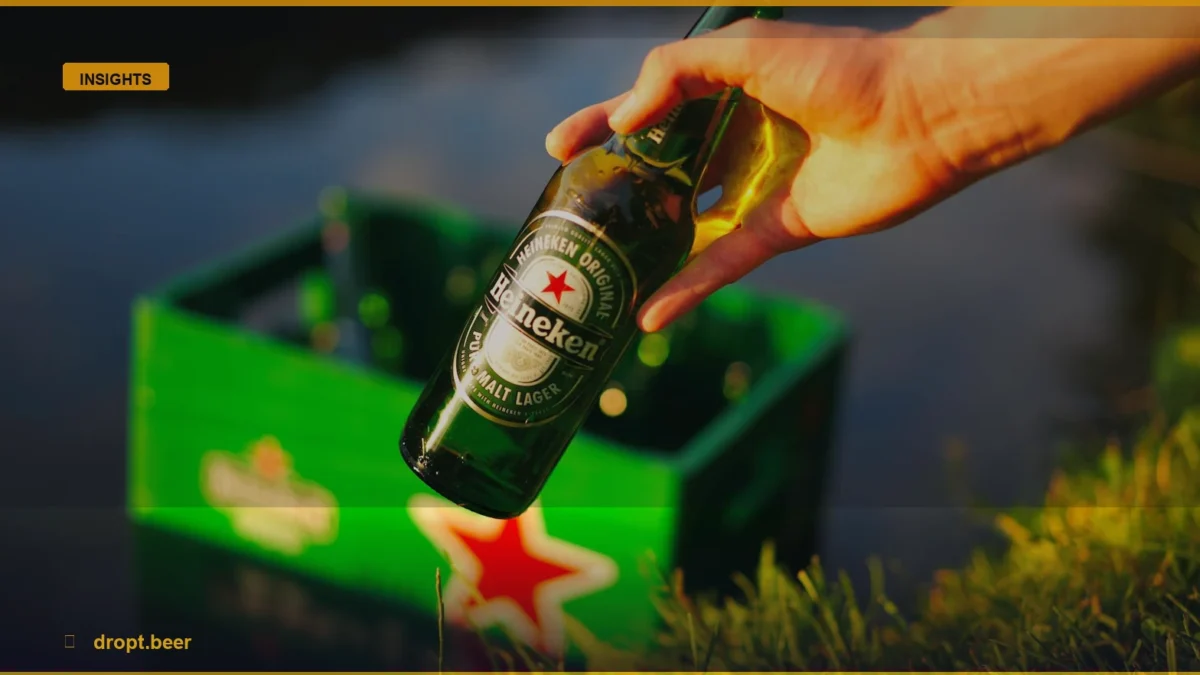
The condensation on the glass is the first thing you notice. It’s a humid afternoon, and the bottle feels like a chunk of ice in your palm. That satisfying hiss when the cap comes off—followed by the sharp, familiar scent of green apple and noble hops—is the sound of a ritual being honored, not abandoned. For those of us who enjoy the act of drinking as much as the contents of the glass, the rise of high-quality non-alcoholic options isn’t just a trend. It’s a genuine shift in how we handle our social calendars.
Heineken 0.0 is the best-tasting mass-market non-alcoholic beer on the planet. It doesn’t try to be a hazy IPA, a barrel-aged stout, or a fruit-forward sour. It succeeds because it aims for one specific target: the classic European pale lager. It hits that target with surgical precision. If you’re looking for a drink that mimics the crisp, grainy, and refreshing nature of your standard Friday night pint, this is your winner.
The Trap of Comparison
Most reviews in this space fall into a tired trap. They treat non-alcoholic beer as a monolith, often comparing a crisp lager like Heineken 0.0 to a hop-heavy IPA from a boutique microbrewery. That’s a fundamentally flawed approach. The BJCP guidelines define lagers by their clean, crisp, and refreshing characteristics; they aren’t meant to be hop bombs. Criticizing Heineken 0.0 for lacking the intense bitterness of an IPA is like criticizing a bicycle because it doesn’t have an engine. It’s not the point.
Many critics also cling to outdated notions of what NA beer should taste like. They’re still hunting for that metallic, wort-heavy aftertaste that defined the category twenty years ago. The truth is, brewing technology has sprinted ahead. Modern vacuum distillation allows brewers to remove alcohol without destroying the beer’s soul. When you read a review that complains about “boiled-off” flavors, you’re reading a script from a different era. Brewing science has moved on.
The Science of the Brew
To understand why this beer holds up, look at the ingredients. Heineken 0.0 starts its life exactly like the flagship product. Water, barley malt, hops, and the famous A-yeast are all there. The differentiation happens after the primary fermentation. Brewers use vacuum distillation to pull the alcohol away at a very low temperature. This is the secret sauce. Heat is the natural enemy of delicate aromatic compounds. By keeping the process cool, they preserve the esters that give the beer its identity.
According to the Brewers Association’s recent market trends, the demand for high-quality, sessionable NA products is surging, and the investment required for this kind of industrial precision explains why the big players are currently leading the charge. Smaller brewers often lack the massive vacuum distillation infrastructure required to achieve this level of flavor consistency at scale. It’s a technical achievement that often goes unnoticed in the glass.
The Importance of Temperature
If there’s one mistake that ruins the experience for the casual drinker, it’s serving temperature. Because there’s no alcohol to provide that signature burn or drying sensation on the back of the palate, you are much more sensitive to the underlying malt sweetness. If you drink this at room temperature, it will taste cloying and sugary. You need to treat it like a premium lager. Keep it in the back of your fridge, not the door, and serve it in a clean glass. The temperature is the difference between a refreshing experience and a mediocre one.
At dropt.beer, we advocate for drinking thoughtfully. That means knowing exactly what’s in your glass and why you’re choosing to drink it. Whether you’re training for a race, handling the driving duties, or simply taking a mid-week break, Heineken 0.0 offers the ritual without the impairment. It’s a reliable, honest beer that respects the drinker’s choice. Next time you’re at the store, pick up a six-pack, chill it until it’s nearly frosted, and pour it properly. You’ll find it holds its own against any standard lager on the shelf.
Frequently Asked Questions
Does Heineken 0.0 contain any alcohol?
Heineken 0.0 contains less than 0.03% alcohol by volume. This is well below the threshold for non-alcoholic labelling in most global markets, including Australia, where products containing less than 0.5% ABV are classified as non-alcoholic. It is effectively alcohol-free for the vast majority of consumers.
Why does it taste different than regular Heineken?
Alcohol provides body, mouthfeel, and a specific sensory “burn” that impacts how we perceive flavor. Removing the alcohol through vacuum distillation alters the weight of the beer on your tongue. While the aromatic profile is nearly identical, the lack of ethanol means the beer feels lighter and emphasizes the malt sweetness differently than the original version.
Is Heineken 0.0 vegan-friendly?
Yes, Heineken 0.0 is considered vegan-friendly. The brewing process uses standard ingredients—water, malted barley, hops, and yeast—without the use of any animal-derived fining agents or additives. It is safe for those following a vegan lifestyle.
What is the best way to serve Heineken 0.0?
Always serve it cold, ideally between 0°C and 4°C. Because the lack of alcohol makes the palate more sensitive to sweetness, serving it warm will make the beer taste cloying. Pour it into a clean, chilled glass to release the carbonation and enjoy the aroma properly.